
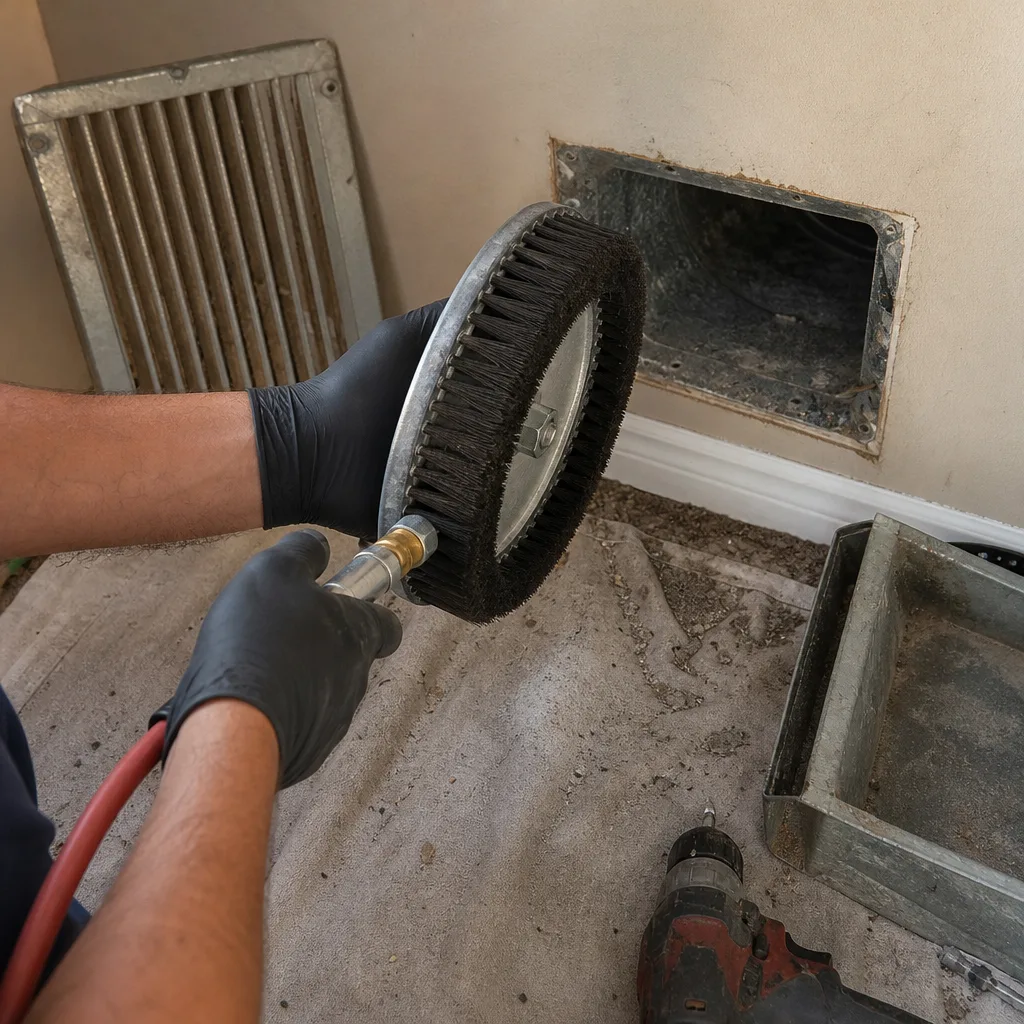
Last updated November 2, 2026
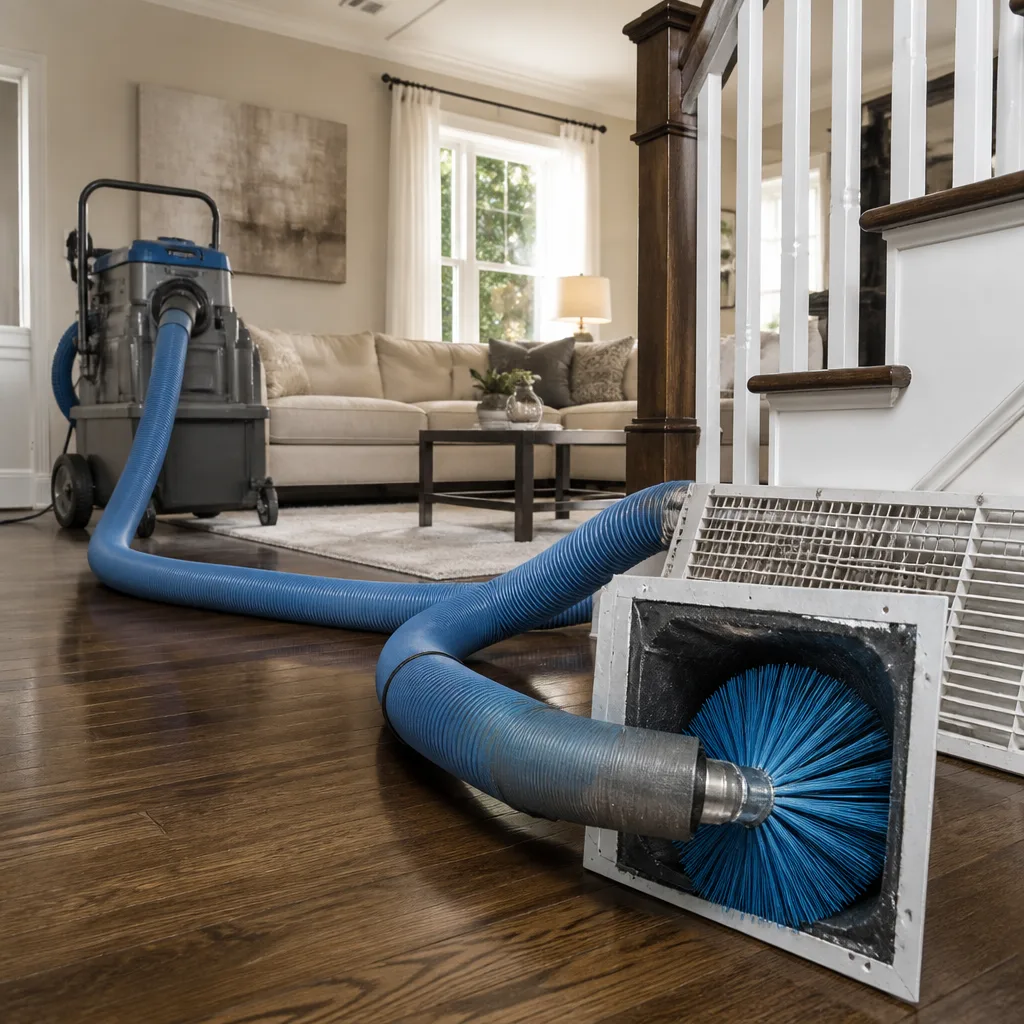 Whole-home duct cleaning
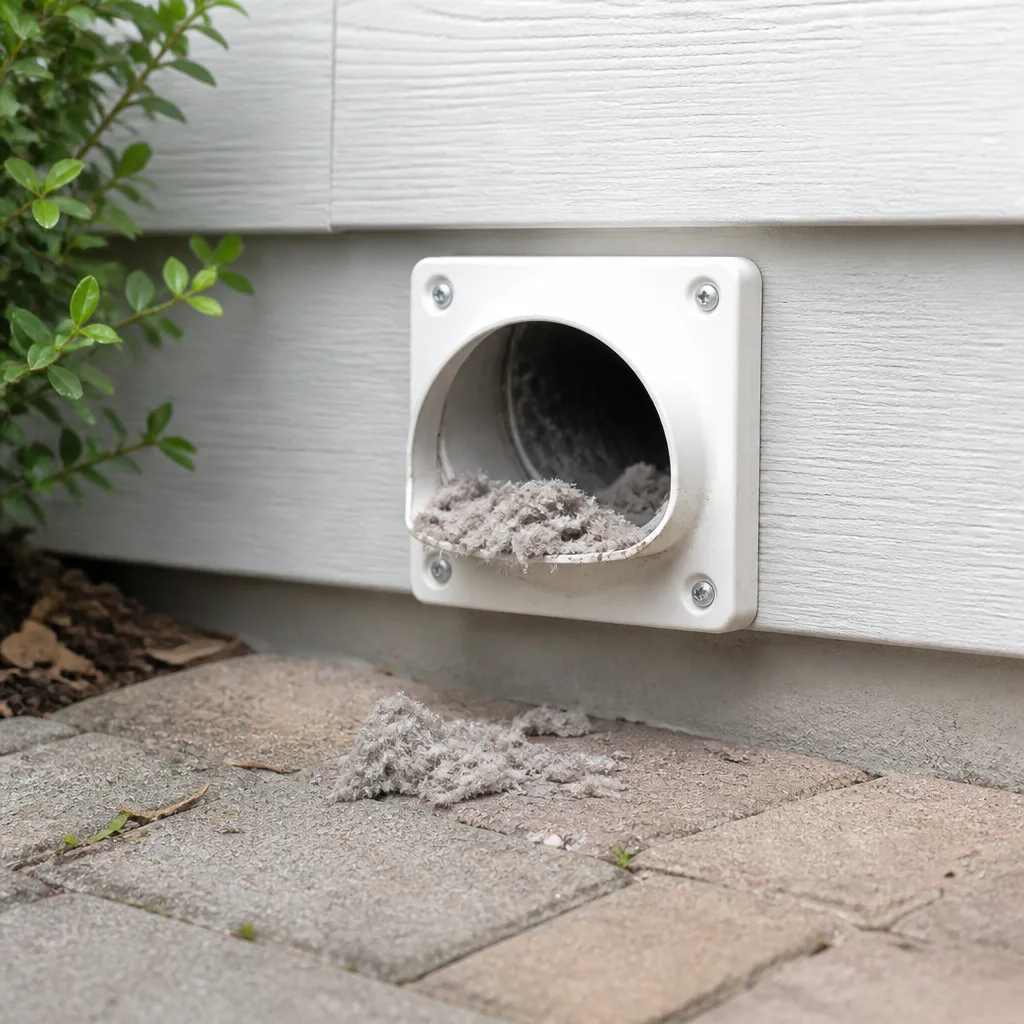 Dryer vent cleaning
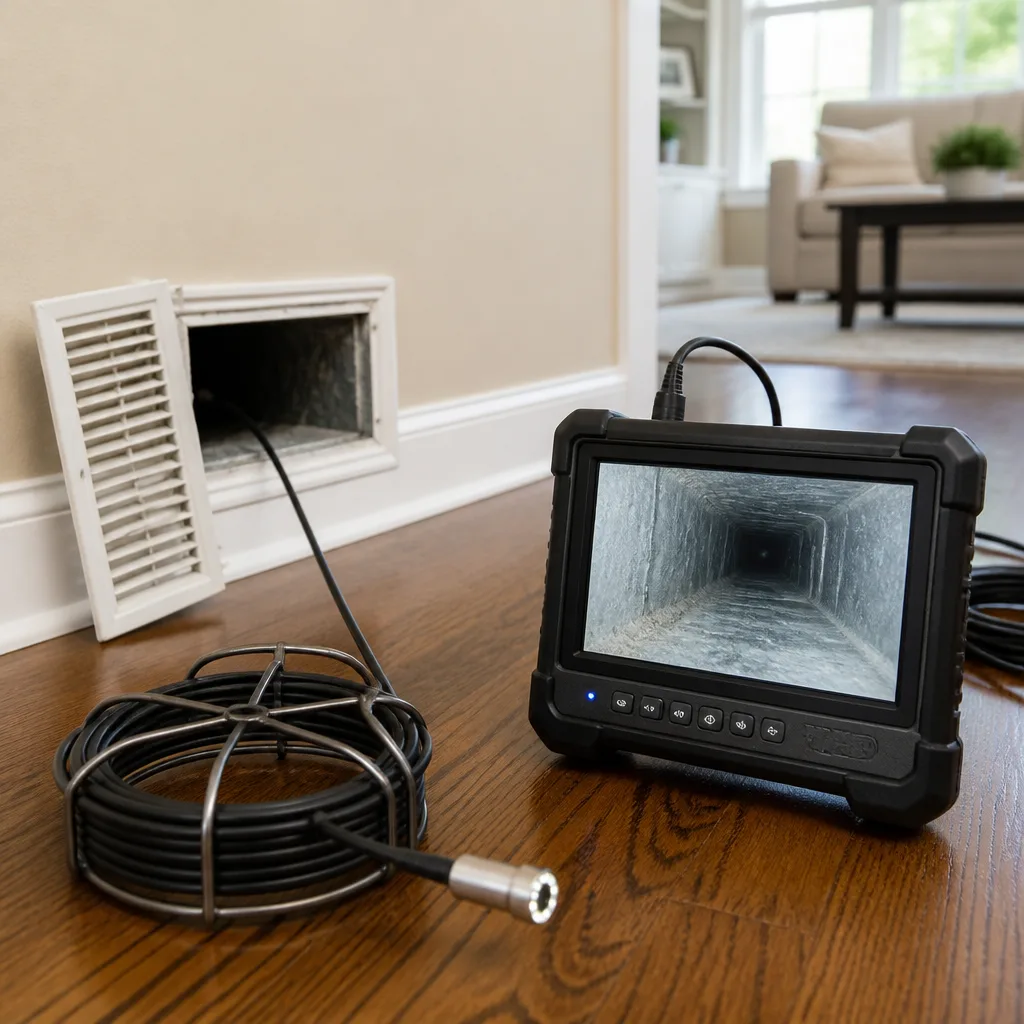 Camera inspection
 Sanitizing & deodorizing
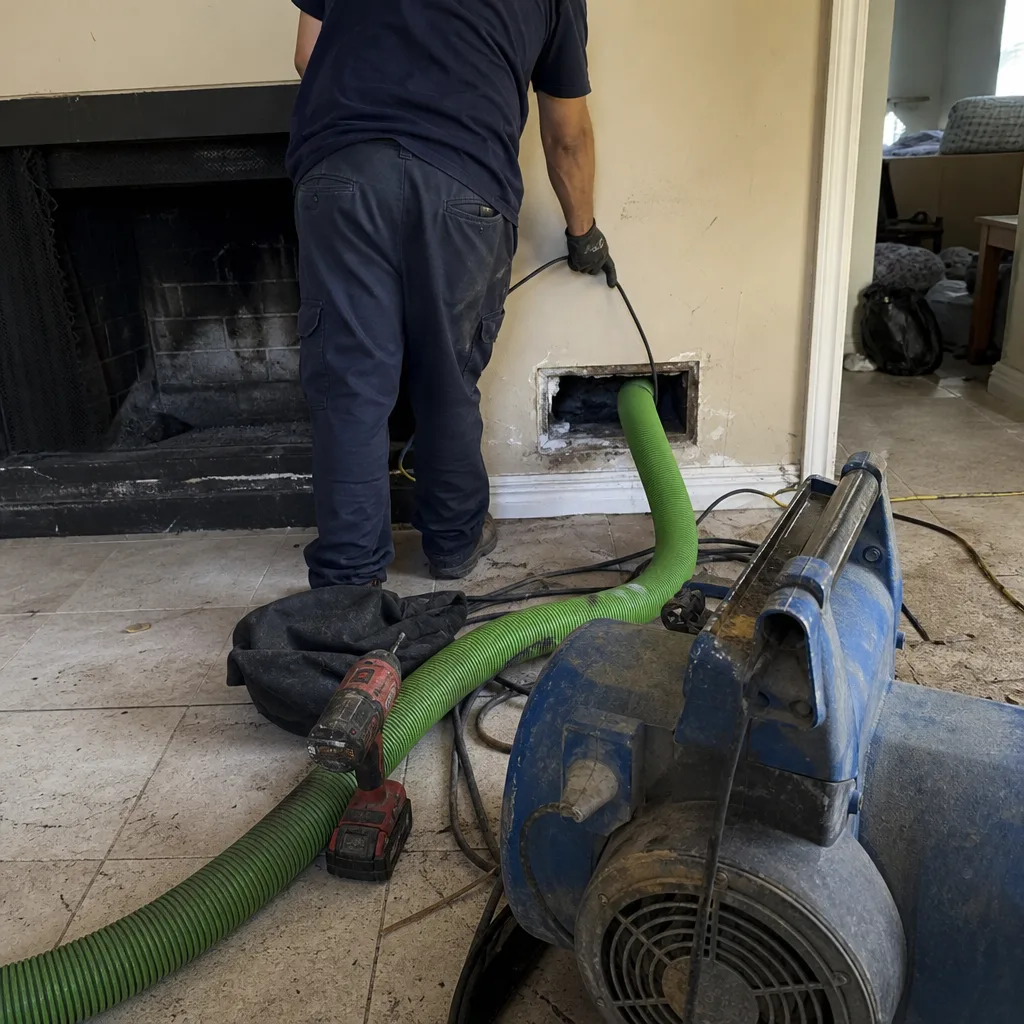
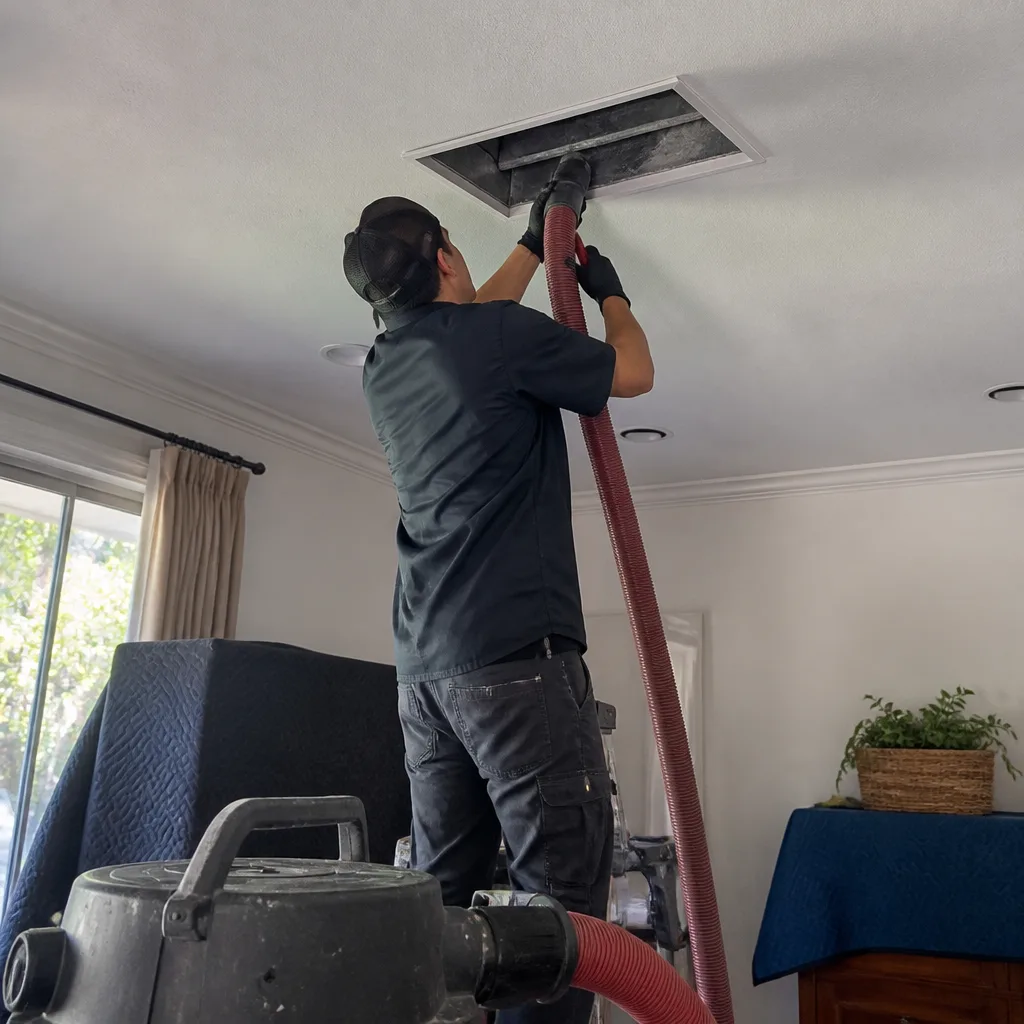
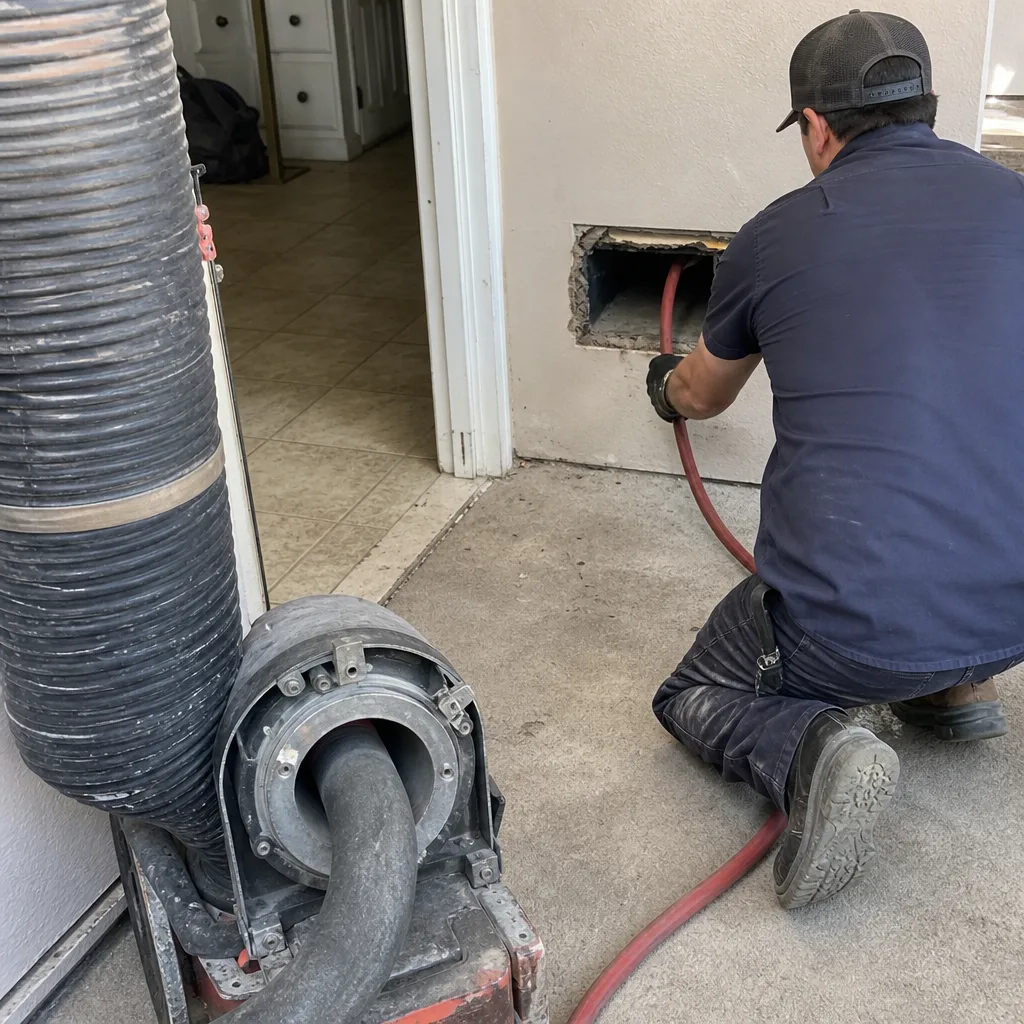
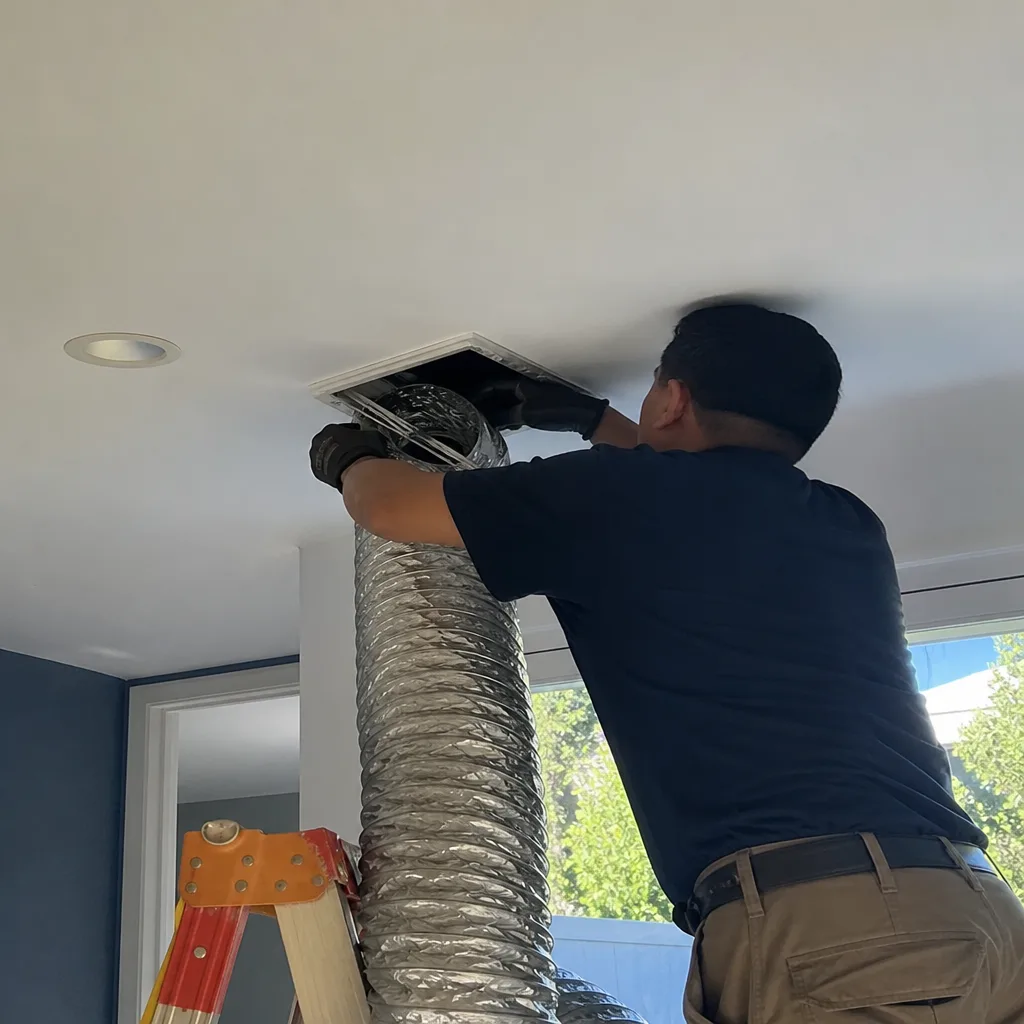
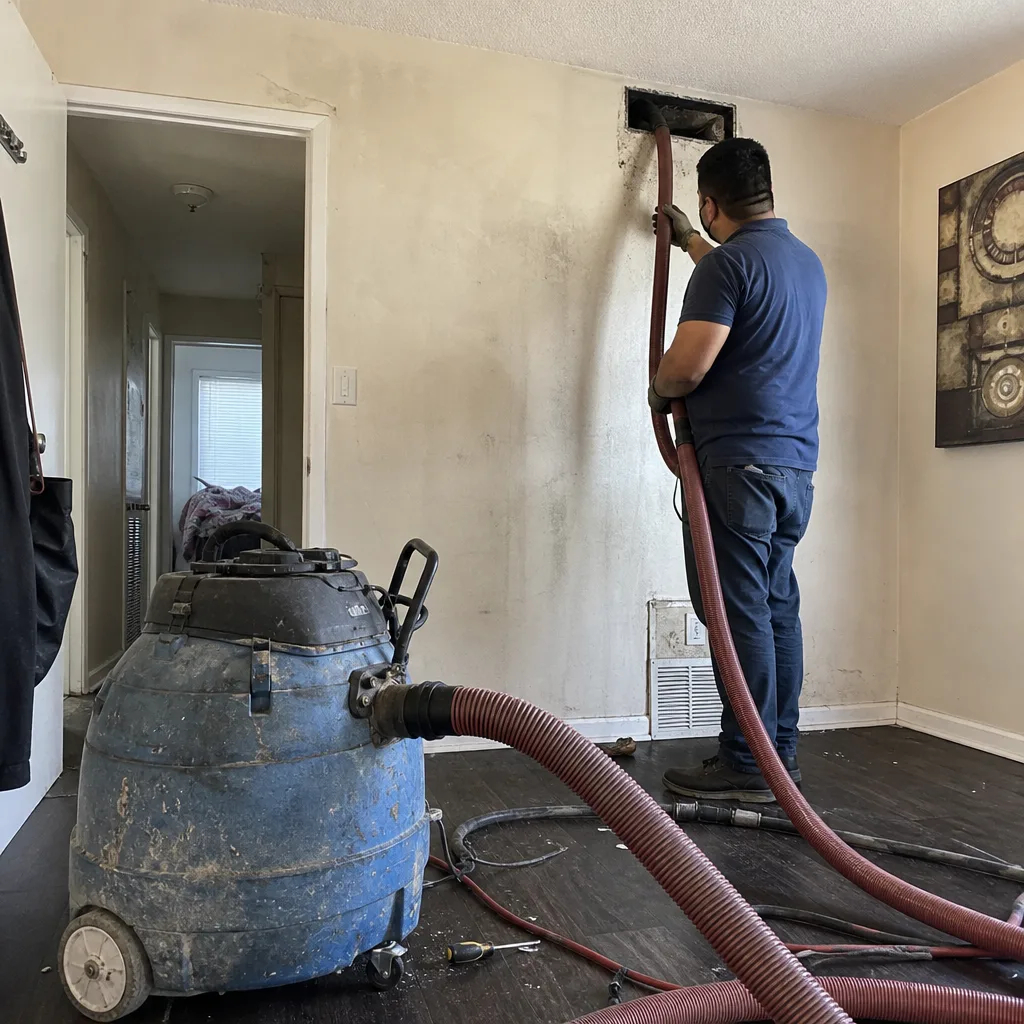
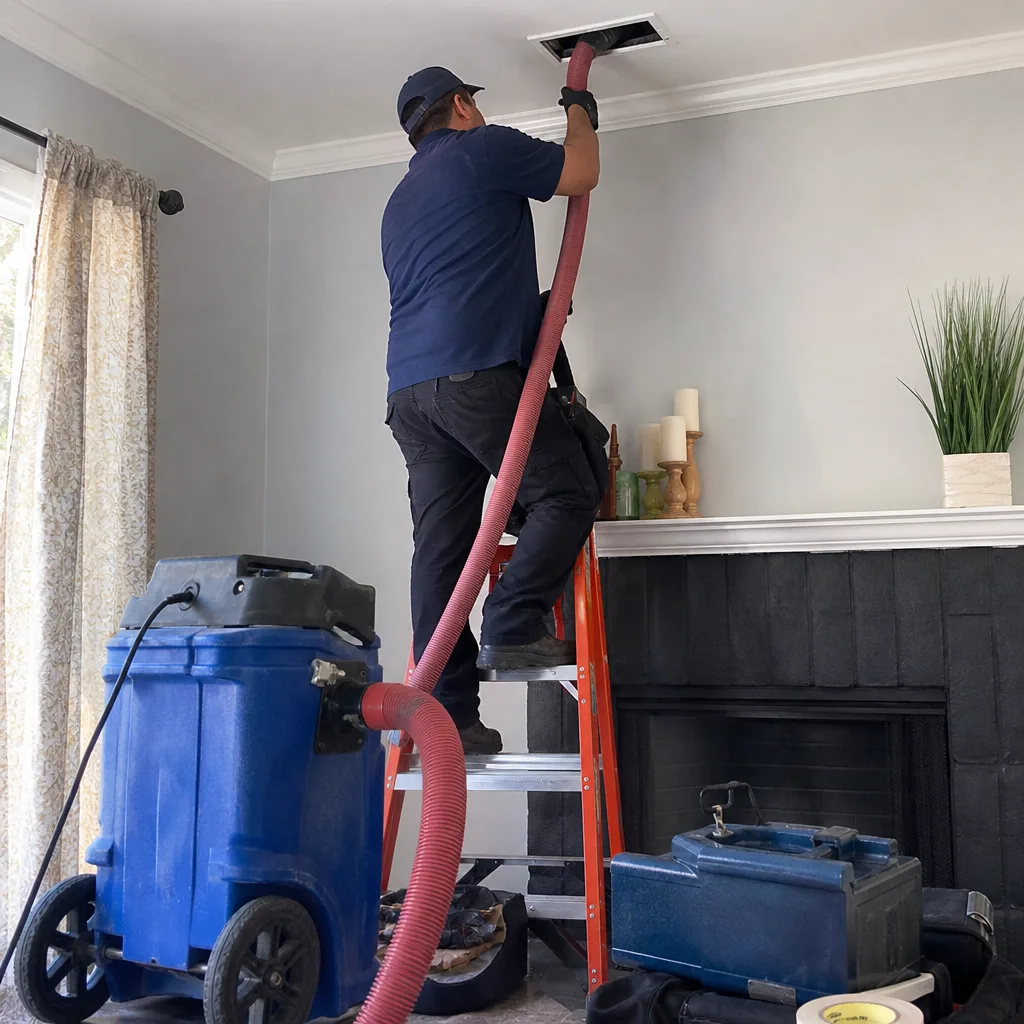
Whole-system duct and dryer vent check with before-and-after photos - you see exactly what came out of your vents
That "$99 whole-house special" is a bait ad - the real number appears once they are in your hallway, or the "clean" is a shop-vac at the register. We photograph the inside of your ducts before and after instead.
Air Duct Cleaning Warning Signs: A Northridge Homeowner’s Reference Guide
Most homeowners in Northridge wait for a smell. A musty whiff from a bedroom vent, maybe a dusty odor when the AC kicks on. By then, the problem has usually been building for months. The more useful warning signs are mechanical: a bedroom that never holds temperature, a hallway door that drifts closed on its own, a utility bill that jumped in a month when the weather didn’t change. These pressure and performance anomalies point to specific failure types inside your duct system. This guide maps each sign to what’s actually happening in your ductwork, so you can describe the problem accurately when you call for help instead of just saying something’s off.
Styles & brands we work with
- Whole-home duct cleaning
- Dryer vent cleaning
- Camera inspection
- Sanitizing & deodorizing
Quick Answer
The most reliable air duct cleaning warning signs in Northridge are not smells or visible dust. They are uneven room temperatures, airflow changes at individual registers, unexplained utility bill increases, and persistent dust accumulation on surfaces within 48 hours of cleaning. Each of these points to a specific duct condition: leakage, disconnection, blockage, or contamination. A pressure or airflow change means structural inspection, not just cleaning.
Table of Contents
- Smell vs. Mold: Reading What Your Vents Are Telling You
- Uneven Room Temperatures: The Duct Leakage Map
- Utility Bill Spikes Without a Weather Change
- When One Register Goes Weak: Blockage and Disconnection
- Rodent Activity in Northridge Attic Ducts
- Clean, Repair, or Replace: Matching the Response to the Sign
- Dust That Returns Within Days of Cleaning
- Common Mistakes to Avoid
- When to Call a Professional
- Frequently Asked Questions
- The Bottom Line
Smell vs. Mold: Reading What Your Vents Are Telling You
Not every vent odor means the same thing, and treating them as interchangeable leads to wrong fixes. In our experience working on Northridge homes, we separate vent smells into three categories: dirty-duct smell, mold-active smell, and dead-rodent smell. Each has a distinct character and requires a different response.
Dirty-Duct Smell
This is the smell of accumulated dust, pet dander, and skin cells that have baked onto the interior surfaces of your ductwork over years of heating and cooling cycles. It’s often described as “stale” or “like an old attic.” It tends to be consistent, present whenever the system runs, and doesn’t intensify with humidity. The fix is straightforward: professional air duct cleaning in Northridge using brush-fed agitation and HEPA-filtered extraction to remove the accumulated layer rather than just disturbing it.
Mold-Active Smell
Mold-active odor is earthier, more organic. It’s the smell of damp soil or rotting leaves. Crucially, it intensifies when humidity rises, when the AC runs for long stretches, or during Northridge’s late-summer monsoon humidity spikes. This smell means moisture is present somewhere in the system, typically in the evaporator coil area, a condensate pan that’s not draining, or a duct section with condensation forming on its exterior. Cleaning alone will not fix this. The moisture source must be identified and corrected, and the contaminated duct section may need replacement rather than cleaning. Mold-active smells warrant an inspection that looks for water, not just debris.
Dead-Rodent Smell
This one is unmistakable when you’ve encountered it before: a sharp, sickly-sweet decay odor that comes in waves and is often localized to one or two rooms. It’s not constant like dirty-duct smell. It means an animal died in your ductwork or in the attic space where ducts run. Northridge’s mature neighborhoods with large trees and older homes see this regularly, particularly in the spring and fall when rodents seek nesting spaces. The response includes removing the source, sanitizing the affected duct section, and inspecting for entry points. This falls into the repair-and-remediation scope more than routine cleaning.
If you can’t tell the difference, describe the conditions when the smell is strongest. That diagnostic detail helps more than guessing at the cause.
Uneven Room Temperatures: The Duct Leakage Map
A room that runs five degrees warmer than the rest of the house in summer, or colder in winter, is not a personality quirk of your HVAC system. It’s data. The location of the temperature difference tells you where the duct problem is.
Here’s how the diagnostic logic works:
- Room farthest from the air handler runs warm. This usually indicates leakage along the trunk line. Conditioned air is escaping into the attic or crawlspace before it ever reaches the far registers. The closer rooms get enough air; the distant rooms starve.
- Room directly above the garage or on the west-facing wall runs warm. This may be a legitimate insulation or solar-load issue, not a duct problem. But if the register in that room is also showing weak airflow, the duct serving it is likely disconnected or crushed.
- One upstairs room runs warm while others are fine. In Northridge’s two-story homes, this often points to a disconnected flex duct in the attic. The air is being delivered, just into the wrong space: the attic itself.
- All rooms run warm but the system runs constantly. This suggests major leakage at the plenum or a return-side problem pulling attic air into the system. The system is working, but much of its output is going where you don’t live.
Uneven temperatures are a pressure problem. When ducts leak, they change the pressure balance of the whole house. You may notice doors that drift closed on their own, curtains that move when the system runs, or a draft near windows that shouldn’t exist. That’s conditioned air escaping and unconditioned air being pulled in to replace it. The fix involves locating and sealing the leaks, then verifying the repair with pressure testing. A cleaning-only visit will not address this.
Utility Bill Spikes Without a Weather Change
A sudden utility bill increase is a more reliable duct-failure indicator than visible dust at registers. Dust can be explained by many things: pets, open windows, construction nearby, a dusty season. But a bill that jumps 20 to 30 percent in a month when the outdoor temperature didn’t change significantly points to a mechanical problem.
Here’s what a bill spike typically means in a Northridge home:
- Duct leakage has worsened. A seam that was leaking 5 percent of your conditioned air may have opened to 15 percent. The system runs longer to hit the thermostat setpoint, and you pay for electricity or gas that’s conditioning your attic.
- A duct has fully disconnected. When a flex duct separates from a boot or register, the air handler pushes conditioned air into the attic with zero delivery to the room. The thermostat sees no temperature change, the system keeps running, and the bill climbs.
- The return side is pulling attic air. A return duct leak means your system is trying to cool or heat 130-degree attic air in summer. That’s a massive efficiency loss that shows up immediately on the bill.
- The coil is restricted. A heavily dust-loaded evaporator coil reduces heat transfer. The system runs longer to achieve the same cooling. This is a cleaning issue, not a leak, but it produces the same bill symptom.
- Disconnection. The flex duct has separated from the register boot or from the trunk line fitting. This is the most common cause we see in Northridge attics, where summer heat degrades duct tape and plastic zip ties over time. The air is still being moved; it’s just being dumped into the attic.
- Crushing or kinking. Flex duct that was installed without proper support can sag, kink, or get crushed by stored items or attic traffic. The duct is still connected, but the pathway is restricted. A crushed duct delivers maybe 30 percent of its original airflow.
- Blockage. A damper that has shifted, a rodent nest inside the duct, or a collapsed internal liner can physically block airflow. This is more common in older homes with rigid metal ductwork that has internal insulation breaking down.
- Scratching or scurrying sounds from the ceiling or walls, especially at dawn and dusk when rodents are most active.
- Droppings or nesting material visible at register openings or in the attic near duct runs.
- Chewed duct sections. Rats chew through the outer jacket and inner liner of flex duct to create entry points or gather nesting material.
- Unexplained debris falling from registers. Nest material, insulation, or droppings appearing on floors below supply vents.
- A localized odor that comes and goes, as described in the smell section above.
- Return-side duct leakage. The return ducts pull air from your living space back to the air handler. If those ducts have leaks, they pull air from the attic or crawlspace instead, and that air is full of insulation fibers, dust, and whatever else is up there. This contaminated air is then pushed through your supply ducts and distributed throughout the house. The dust returns because you’re actively distributing attic air into every room.
- Dirty supply ducts. If the supply ducts have years of accumulated debris, every system cycle blows a small amount of that debris into your rooms. Cleaning addresses this directly.
- A leaking return plenum. The connection point where return ducts meet the air handler is a common leak location. If the plenum is not sealed, it pulls unconditioned, unfiltered air from the surrounding space.
- Waiting for a smell before investigating. By the time you smell mold, rodent activity, or severe dust accumulation, the problem has been developing for months. The mechanical signs, airflow changes and bill spikes, appear much earlier.
- Assuming all vent odors mean the same thing. Dirty-duct smell is stale and constant. Mold-active smell is earthy and humidity-responsive. Rodent odor is sharp and intermittent. Each requires a different response.
- Calling a cleaning company for a duct leak. If one room is consistently warmer than the rest of the house, cleaning will not fix it. You need leak location and repair. Ask before booking whether the company can repair ducts, not just clean them.
- Ignoring a utility bill spike because “rates went up.” Compare usage, not just cost. If your kWh or therms jumped in a month without a weather change, that’s a duct problem, not a rate problem.
- Replacing the HVAC system without inspecting the ducts. New equipment connected to leaking, disconnected, or rodent-damaged ducts will not perform. The ducts are part of the system. You can’t fix one side and ignore the other.
- Assuming a weak register is “just how it’s always been.” Register airflow should be roughly consistent across the house, with some expected variation for distance. One register that changed from strong to weak is a specific event: a disconnection, crush, or blockage.
- Cleaning ducts but skipping the dryer vent. Your dryer vent is a separate duct system with its own failure mode: lint accumulation. It’s not a maintenance footnote. Dryer vent cleaning in Northridge is a distinct service because dryer vent blockages are a leading cause of residential fires, and the cleaning methodology is different from HVAC duct cleaning.
The diagnostic step is simple: compare this month’s bill to the same month last year, accounting for rate changes. If the usage is up significantly and the weather wasn’t, your duct system is the likely culprit. The next call should be to a company that can inspect and repair air ducts in Northridge, not one that only offers cleaning. A cleaning visit on a disconnected duct is like washing a car with a flat tire.
When One Register Goes Weak: Blockage and Disconnection
Every home has variation in airflow from register to register. Rooms at the end of long duct runs naturally get less air than rooms near the air handler. But when one register changes from strong to weak over a period of weeks or months, that’s a specific event, not normal variation.
Three conditions cause a single register to lose airflow:
The test is simple: hold a tissue near the register while the system runs. Compare it to other registers in the house. If one register is dramatically weaker, you have a structural issue in that duct run. Cleaning will not restore airflow to a disconnected duct. The fix is repair: reconnecting, re-supporting, or replacing the damaged section.
This is where Air Duct Cleaning in Northridge takes a different approach. We don’t just clean and leave. If we find a disconnected or crushed duct during a cleaning visit, we have the repair capability to fix it on the spot. That’s the point of matching the equipment to the job: a Nikro HEPA extraction system handles the cleaning, and a full repair toolkit handles what the cleaning reveals.
Rodent Activity in Northridge Attic Ducts
Northridge has the kind of climate and housing stock that rodents appreciate. Mature trees, older homes with attic access points, and warm winters create ideal conditions for rats and mice to establish themselves in attics. And attic ductwork, particularly flex duct, is a favorite nesting material and pathway.
Rodent activity in ducts shows up as:
The remediation scope for rodent-damaged ducts is different from cleaning. If rodents have nested in or chewed through duct sections, those sections need replacement, not just cleaning. The fiberglass insulation inside flex duct that has been exposed to rodent activity is contaminated and cannot be adequately cleaned. The affected duct runs must be removed and replaced, and the entry points into the attic must be sealed to prevent recurrence.
This is a specific scenario where the Air Duct Repair in Northridge capability matters. A cleaning-only company will either ignore the chewed sections or clean them and leave the damage in place. We have the scope to remove damaged duct, install replacement sections, and seal the system properly. We also recommend addressing the rodent entry problem with a pest control professional, since duct replacement without sealing attic entry points just creates a fresh nesting opportunity.
Clean, Repair, or Replace: Matching the Response to the Sign
Not every warning sign means you need duct cleaning. In fact, treating every sign as a cleaning opportunity is how homeowners waste money. Here’s the mapping:
| Warning Sign | Likely Condition | Appropriate Response |
|---|---|---|
| Stale, dusty smell when system runs | Accumulated debris on duct surfaces | Professional cleaning with brush agitation and HEPA extraction |
| Musty, earthy smell that intensifies with humidity | Moisture in system, possible mold growth | Inspection to find moisture source, then cleaning or section replacement |
| One room consistently warmer/cooler than others | Duct leakage or disconnection | Leak inspection and repair, not just cleaning |
| Sudden utility bill spike without weather change | Worsened leakage, disconnection, or coil restriction | System inspection to identify cause, then repair or cleaning accordingly |
| One register went from strong to weak airflow | Disconnected, crushed, or blocked duct run | Repair or replacement of the affected section |
| Rodent sounds, droppings, or chewed ducts | Active or past rodent infestation in ductwork | Duct section replacement plus pest control remediation |
| Dust accumulating within 48 hours of cleaning surfaces | Return-side leakage pulling attic air into system | Return duct inspection and sealing |
The takeaway is simple: clean, repaired, and sealed should be the goal. Cleaning alone addresses surface debris. Repair addresses structural failures. Sealing prevents recurrence. A company that only offers cleaning cannot complete the last two steps, and leaving them undone means the cleaning won’t hold.
Dust That Returns Within Days of Cleaning
You dust the furniture, sweep the floors, and within two days there’s a visible film again. This is one of the most common complaints we hear from Northridge homeowners, and it’s also one of the most commonly misdiagnosed.
Persistent dust in a home with a running HVAC system usually means one of three things:
The diagnostic clue is the speed of dust return. If dust returns within 24 to 48 hours of a thorough cleaning, you have return-side leakage actively distributing attic or crawlspace air. No amount of surface cleaning will fix this. The return ducts must be located, inspected, and sealed. If dust takes a week or two to become noticeable, the supply ducts are likely the source, and air duct cleaning for your Northridge home will make a measurable difference.
This distinction matters because it determines which service you actually need. Return-side leakage is a repair issue. Supply-side dust is a cleaning issue. Misdiagnosing one as the other wastes money and leaves the problem in place.
Common Mistakes to Avoid
When to Call a Professional
Call when you notice any of these specific conditions: one room that won’t hold temperature, a register that changed airflow, a utility bill spike without a weather change, rodent sounds or droppings near vents, or dust that returns within days of cleaning. Each of these signals a duct condition that won’t resolve on its own and won’t respond to surface cleaning. A professional inspection with the right diagnostic equipment can locate the problem in one visit. Air Duct Cleaning Northridge offers free estimates in Northridge, call (833) 968-4871 to schedule an inspection. We’ll identify what’s happening, tell you whether cleaning, repair, or both is the right response, and use the appropriate equipment: Rotobrush for brush-fed cleaning, Nikro for HEPA extraction, Abatement Technologies for negative-air containment, and proper repair tools when structural fixes are needed.
Frequently Asked Questions
If the air in your home smells stale or dusty but airflow at every register is normal, you likely need cleaning. If one register is weak, one room won’t hold temperature, or your utility bill spiked without a weather change, you likely need repair. The distinction is structural: airflow changes and pressure imbalances point to leaks, disconnections, or blockages that cleaning will not fix. A professional inspection can determine which condition you have in one visit.
Mold in air ducts produces an earthy, organic smell similar to damp soil, rotting leaves, or a musty basement. The key distinguishing characteristic is that it intensifies with humidity or when the AC runs for extended periods. This is different from dirty-duct smell, which is stale and constant, and from rodent odor, which is sharp and intermittent. A mold-active smell means moisture is present in the system and the source must be identified before cleaning can be effective.
A single room that consistently runs warmer than the rest of the house usually indicates a duct leak or disconnection in the run serving that room. The conditioned air is escaping into the attic or crawlspace before reaching the register. This is a structural issue that requires leak location and repair, not cleaning. If the room also has weak airflow at the register, the duct likely disconnected entirely.
Yes, but not in the way most people assume. The bigger impact comes from duct leakage, not surface dust. A leaking duct system can lose 20 to 30 percent of conditioned air into the attic or crawlspace, forcing the system to run longer to reach the thermostat setpoint. A heavily dust-loaded evaporator coil also reduces heat transfer efficiency. Both conditions show up as a utility bill increase without a corresponding weather change.
Immediately. Rodents chewing ductwork create entry points for more rodents, contaminate duct insulation with droppings and urine, and can introduce airborne pathogens into your living space. Fiberglass-insulated flex duct that has been exposed to rodent activity cannot be adequately cleaned and must be replaced. Address the rodent entry points to the attic at the same time, or the new duct becomes the next nest.
Dust that returns within 24 to 48 hours of thorough cleaning usually means return-side duct leakage. Your return ducts are pulling unfiltered attic or crawlspace air into the system, and that air is then distributed through every supply register. This is a sealing problem, not a cleaning problem. The return ducts must be located, inspected, and sealed to stop the active distribution of attic debris into your living space. Call (833) 968-4871 for an inspection if you’re seeing this pattern in your Northridge home.
The Bottom Line
Your ducts are part of your home’s health system, and they communicate through pressure, airflow, and bills before they communicate through smells. Uneven temperatures, weak registers, and unexplained bill spikes are structural signals that point to specific failures: leaks, disconnections, blockages, and rodent damage. Smells tell you about contamination, but by the time you smell them, the problem is advanced. The right response matches the sign: cleaning for surface debris, repair for structural failure, replacement for rodent-damaged sections. In Northridge, where attic ductwork endures real summer heat and mature neighborhoods host active rodent populations, these problems compound over time. Get them diagnosed early, with the right equipment, by people who can fix what they find.
Written by the team at Air Duct Cleaning Northridge, serving Northridge since 2014.
See the difference
 Before
 After
 Before
 After
 Before
 After