
Last updated November 3, 2026
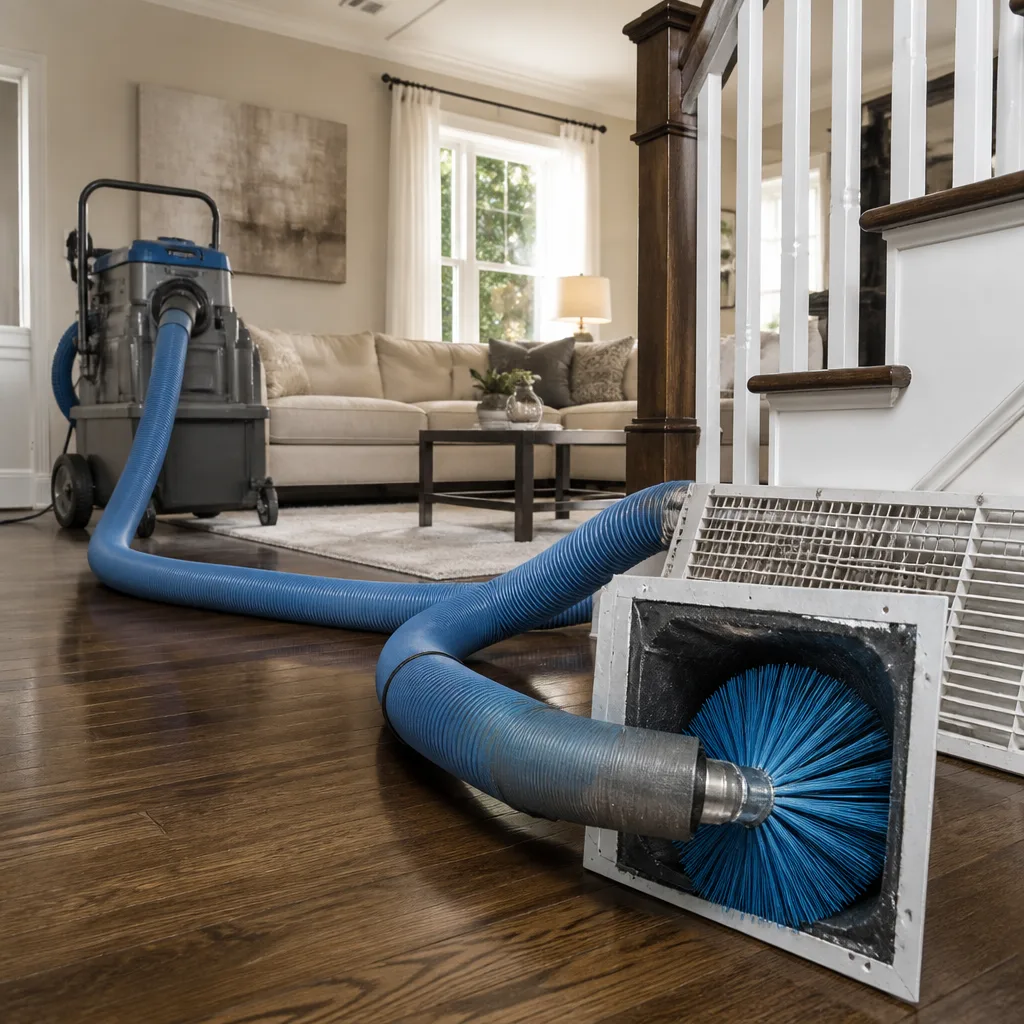 Whole-home duct cleaning
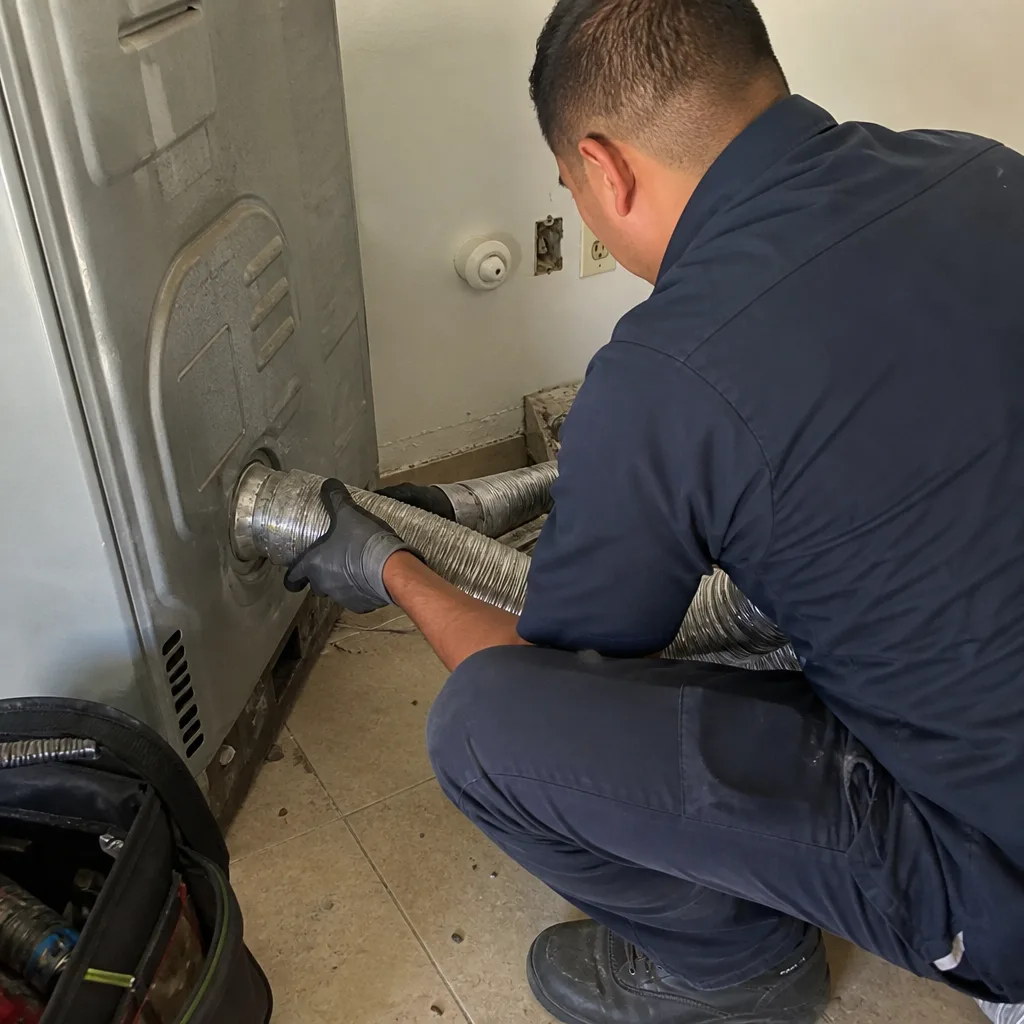
 Dryer vent cleaning
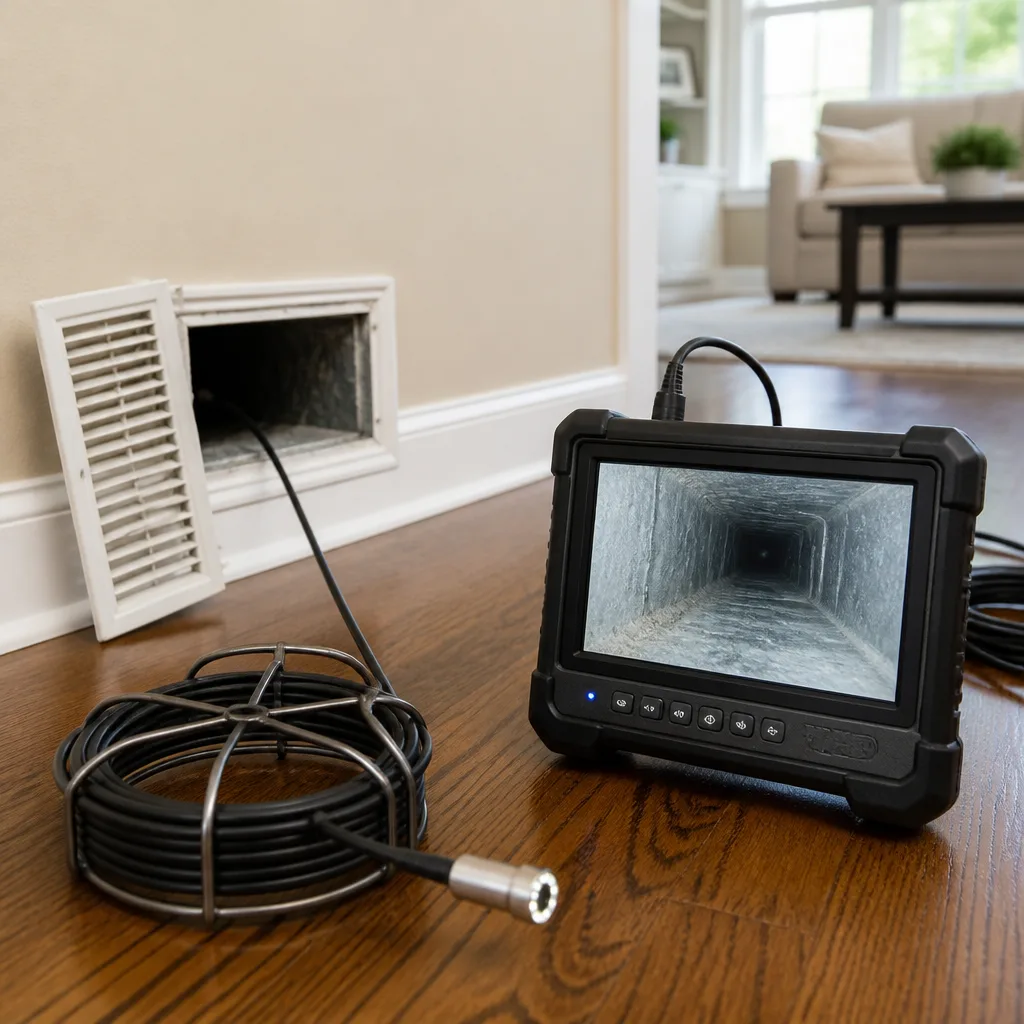 Camera inspection
 Sanitizing & deodorizing
Whole-system duct and dryer vent check with before-and-after photos - you see exactly what came out of your vents
That "$99 whole-house special" is a bait ad - the real number appears once they are in your hallway, or the "clean" is a shop-vac at the register. We photograph the inside of your ducts before and after instead.
The Complete Air Duct Cleaning Guide for Northridge Homeowners
Most Northridge homes were built before flex duct became the standard, which means the rigid sheet-metal systems behind your walls have accumulated 40-plus years of debris that a single shop-vac pass won’t touch. This guide explains what’s actually inside those ducts, how Northridge’s specific weather patterns make the problem worse than in other parts of Los Angeles, and what a professional-grade cleaning actually involves. You’ll learn what to ask for, what to reject, and when cleaning alone isn’t enough to solve the problem.
Quick Answer
Air duct cleaning in Northridge typically costs $350 to $850 for a full system and takes 3 to 6 hours when done properly with professional-grade equipment. The process involves diagnostic inspection, negative-pressure containment, mechanical agitation with brush-fed systems, HEPA-filtered collection, and post-service verification. Northridge homeowners should expect a company to use professional equipment like Rotobrush, Nikro, or Abatement Technologies systems, not a shop vac and a leaf blower.
Styles & brands we work with
- Whole-home duct cleaning
- Dryer vent cleaning
- Camera inspection
- Sanitizing & deodorizing
Table of Contents
- Why Northridge Ducts Get Dirtier Than Most
- What’s Actually Inside Your Ducts
- How Professional Duct Cleaning Actually Works
- Negative Pressure vs. Blower Methods: Why It Matters
- How to Read a Pre-Cleaning Inspection Report
- Post-Cleaning Verification: What to Ask For
- When Cleaning Isn’t Enough: Repair and Sealing
- Common Mistakes to Avoid
- When to Call a Professional
- Frequently Asked Questions
Why Northridge Ducts Get Dirtier Than Most
Northridge sits in a specific microclimate that most generic duct cleaning advice ignores. The Santa Ana winds that sweep through the San Fernando Valley each fall don’t just rattle fences and dry out landscaping; they push fine particulate through every gap in your home’s envelope. When those winds coincide with wildfire smoke from the surrounding foothills, the result is a dust composition that’s finer, stickier, and more chemically complex than ordinary household dust.
We see this pattern every year. Homes in the neighborhoods north of Devonshire Street and east of Reseda Boulevard tend to accumulate a reddish-brown particulate that matches the soil composition of the Santa Susana Pass area. Homes closer to the CSUN campus deal with a different mix: construction dust from ongoing development, brake dust from the 405 corridor, and pollen from the mature landscaping that lines the residential streets.
The 1970s and 1980s tract housing that dominates Northridge presents another variable. Many of these homes have rigid sheet-metal ductwork that was sized for the era’s less powerful HVAC systems. Over decades, the interior surfaces of these ducts develop a static charge that attracts and holds fine particulate. By the time a homeowner notices visible dust on vents or a persistent musty smell, the buildup inside the ducts is typically measured in pounds, not ounces.
Add in the Valley’s summer heat, which forces HVAC systems to run for months at a stretch, and you get a system that’s continuously redistributing whatever is inside the ductwork. The air you breathe in a Northridge home during August is passing through whatever has accumulated in those ducts since the last cleaning, if there ever was one.
What’s Actually Inside Your Ducts
Homeowners are often surprised by what a diagnostic camera reveals. The average Northridge duct system contains several distinct layers of contamination, and each requires a different removal method.
Here’s what we typically find during a pre-cleaning inspection:
- Construction debris: drywall dust, sawdust, and even framing nails left behind from the original build or from renovations. In homes built in the 1970s and 1980s, this layer can be four decades old.
- Fine particulate from wildfire smoke: this material is finer than ordinary dust and adheres to duct surfaces differently. It requires agitation to break loose, not just suction.
- Pet hair and dander: dense mats that wrap around register openings and stick to the duct walls, especially in homes with multiple cats or dogs.
- Biological growth: in ducts that pass through unconditioned attics, condensation creates the moisture that supports mold and mildew growth. Northridge’s summer humidity spikes make this more common than homeowners realize.
- Pest debris: rodent droppings, insect casings, and nesting material. Older homes with gaps in the duct connections are more susceptible.
- Skin cells, textile fibers, and ordinary household dust: the daily accumulation that every home produces but few systems filter effectively.
The important point is that these layers don’t respond to the same removal method. A brush alone won’t dislodge fine smoke particulate. Suction alone won’t pull up compacted construction debris. That’s why the equipment matters, and it’s the reason a company that matches the equipment to the job produces different results than one that applies the same method to every system.
How Professional Duct Cleaning Actually Works
A legitimate professional cleaning follows a specific sequence. Skipping steps is how low-bid operations cut corners, and it’s the main reason some homeowners end up paying for a cleaning that produces no measurable difference.
Here’s the step-by-step process we follow for Air Duct Cleaning in Northridge:
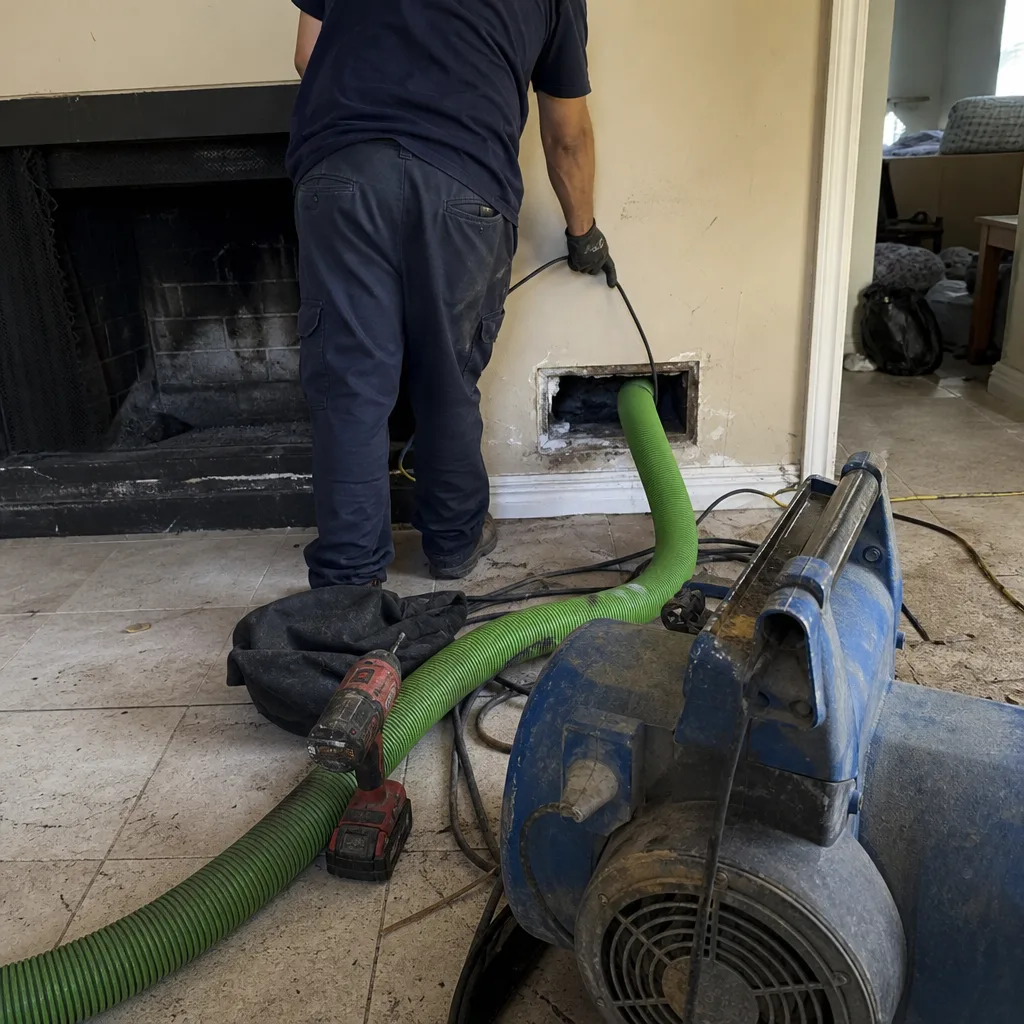
- System inspection: before any equipment is set up, the system gets a camera inspection. We’re looking for duct leakage, collapsed sections, disconnected runs, biological growth, and the type of contamination present. This determines which tools the job requires.
- Equipment placement and containment: the workspace is protected with floor covers and corner guards. Registers and returns are sealed to create a controlled airflow path.
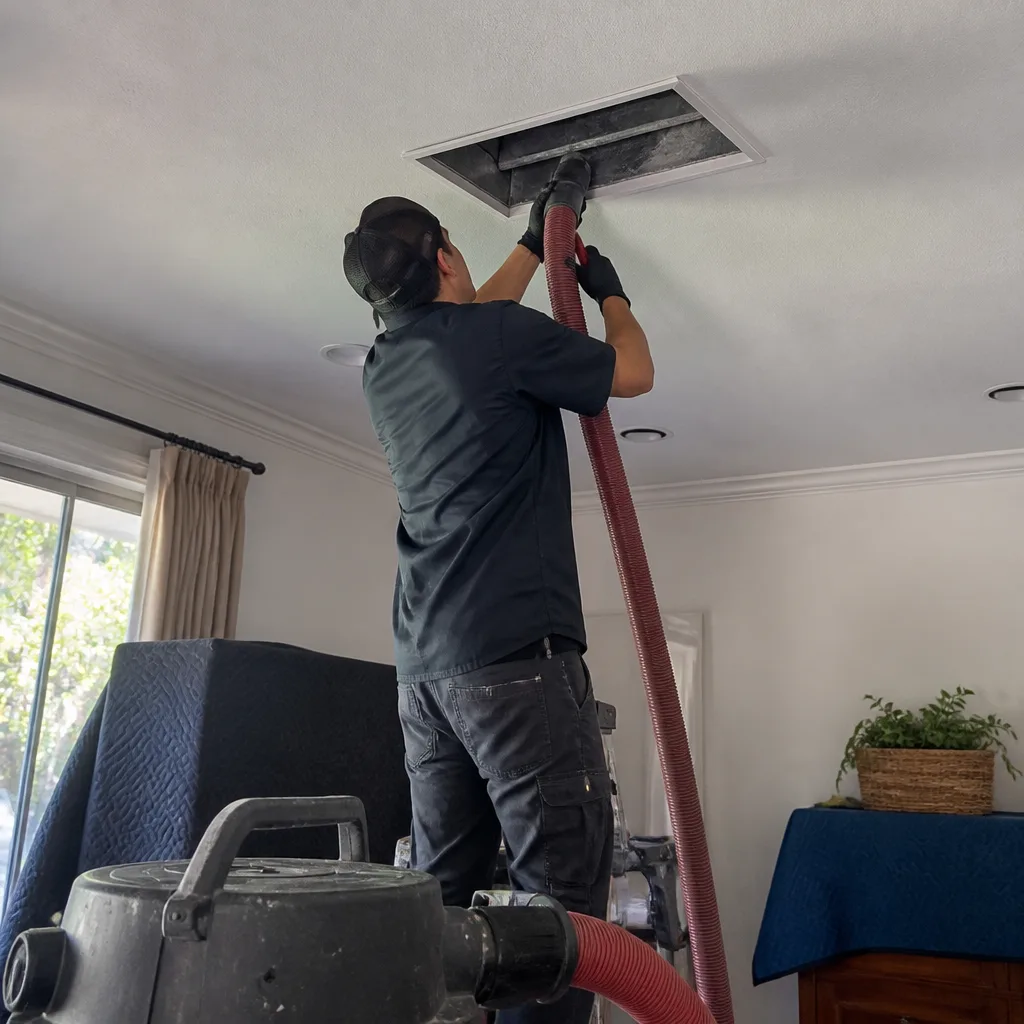
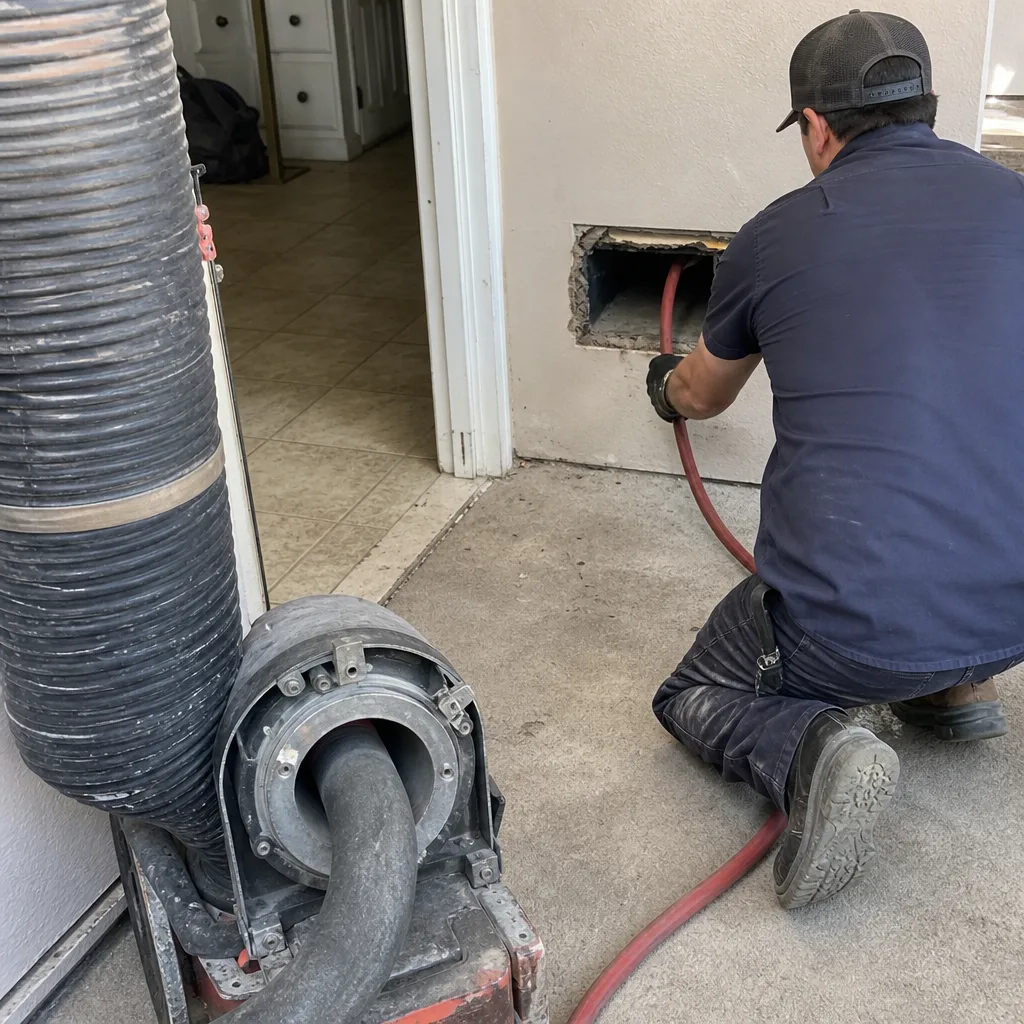
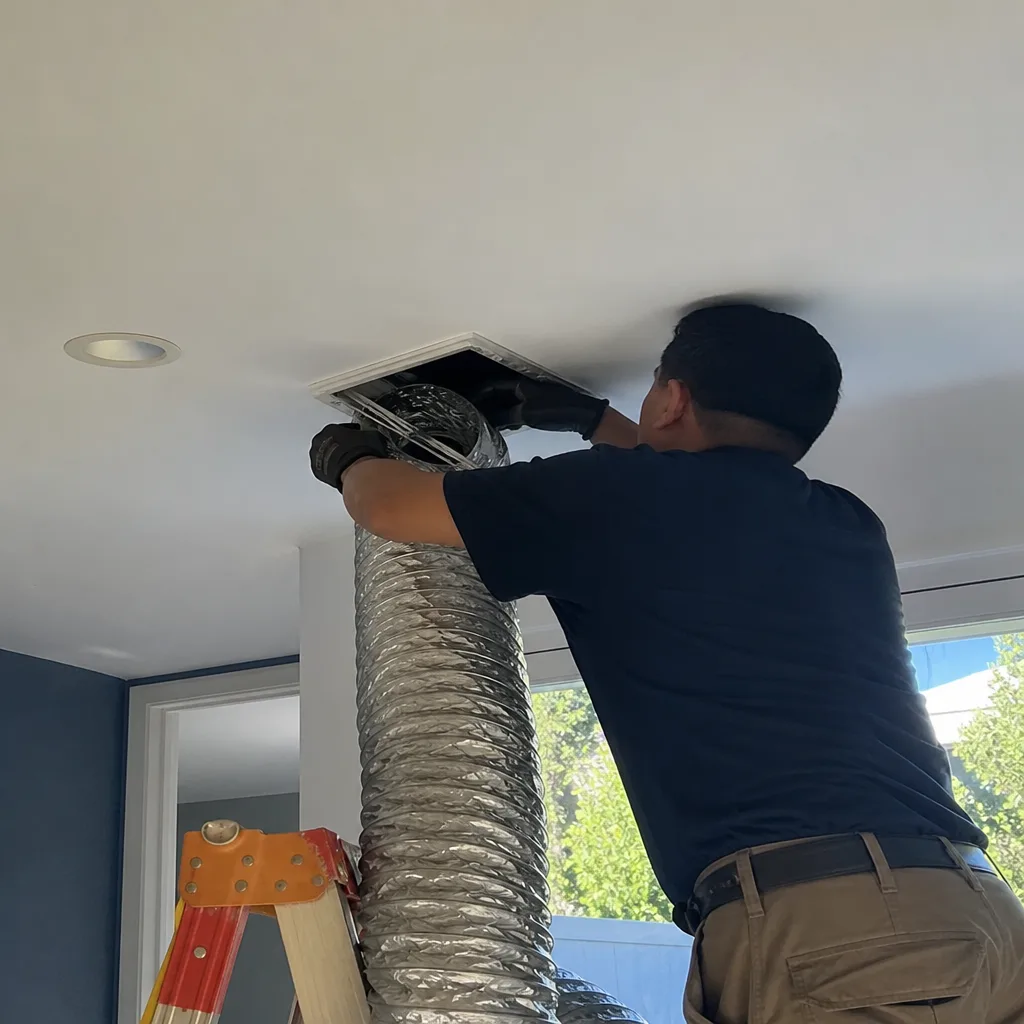
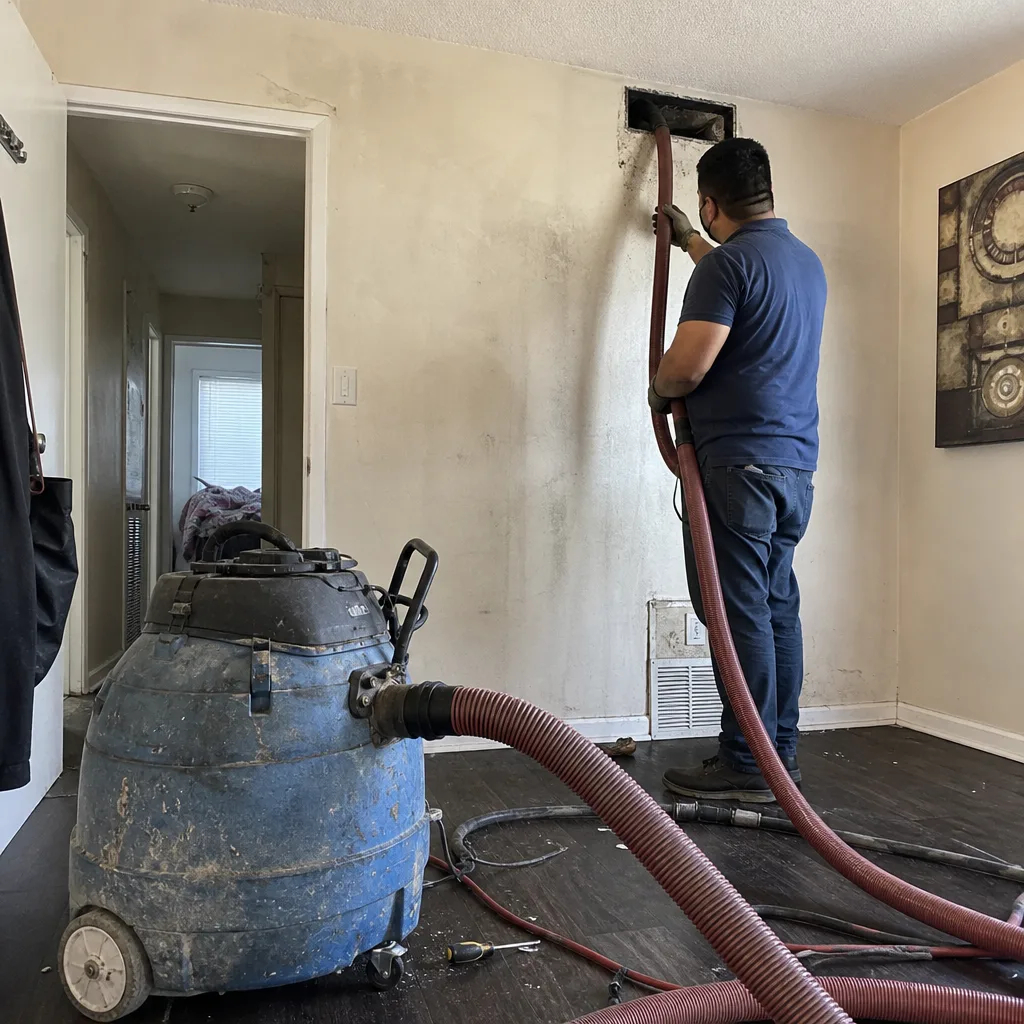
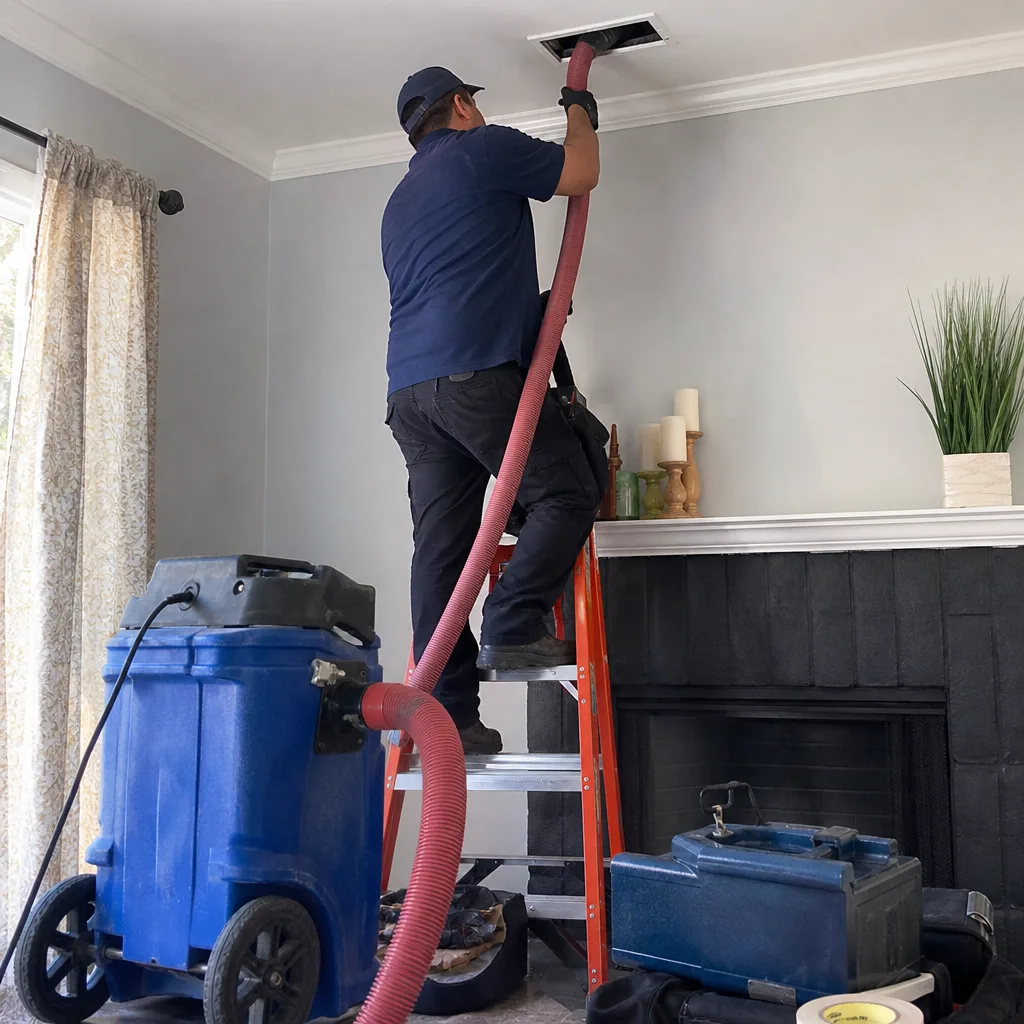
- Negative-pressure connection: a HEPA-filtered negative air unit is connected to the system, typically at the main trunk line. This creates continuous suction that pulls loosened debris out of the ductwork during the entire cleaning process.
- Mechanical agitation: a brush-fed system like the Rotobrush is run through each run of ductwork. The rotating brush dislodges compacted debris while the negative pressure pulls it out of the system in the same pass.
- Air washing of the main trunk lines: the main supply and return trunks get thorough cleaning with high-volume air and additional agitation tools. These large runs hold the most debris and require more aggressive treatment than individual branch lines.
- Register and grille cleaning: every register face is removed, cleaned, and reinstalled. The register boots are also cleaned, since this is where much of the visible buildup accumulates.
- Final inspection: after cleaning, the camera goes back in for verification. This is how we confirm the work was actually done, not just claimed.
This is the full process. A company that shows up with a truck-mounted vacuum and a rotating brush attachment can clean ducts. The difference is in the containment, the HEPA filtration, and the verification step that separates a professional service from a cosmetic pass.
Negative Pressure vs. Blower Methods: Why It Matters
There are two fundamentally different approaches to duct cleaning: negative-pressure containment systems and uncollected blower methods. The distinction matters enormously for older Northridge homes.
A negative-pressure system, like those from Nikro or Abatement Technologies, creates suction at the point where debris is dislodged. The entire duct system is placed under negative pressure while agitation occurs, which means debris is pulled directly into a HEPA-filtered collection unit rather than being pushed into the living space. For homes without sealed attics, which includes most Northridge homes built before the early 2000s, this containment is the difference between cleaning ducts and redistributing attic dust throughout the house.
Uncollected blower methods work differently. A blower pushes air through the ducts to dislodge debris, often through a register opening, while relying on a vacuum connection elsewhere in the system. In a fully sealed duct system, this can work. In an older home with leaky duct connections and an unsealed attic, the blower approach can force dust through every gap and into the insulation and attic space. The debris often finds its way back into the ducts within weeks.
This is the central reason we use Abatement Technologies negative-air methodology on applicable jobs. The equipment matches the job condition. An older home with a leaky system needs containment. A newer home with sealed ducts can tolerate a range of methods. The point is that the company should be making that determination during inspection, not applying one method to every home regardless of condition.
How to Read a Pre-Cleaning Inspection Report
A legitimate company will show you what they found before they start cleaning. The inspection report is your baseline. Here’s what you’re looking at when the technician walks you through it.
Duct leakage shows up as visible gaps at connections, often with dust streaking outward from the seam. In rigid sheet-metal systems, the joints between sections loosen over decades of thermal expansion and contraction. Air that escapes into the attic is air you paid to heat or cool that never reaches the living space. Leakage also creates a path for attic insulation and dust to enter the system.
Collapsed or kinked flex sections appear in homes where flex duct was added during a retrofit or partial system replacement. A collapsed section restricts airflow, which forces the HVAC system to work harder and can cause the evaporator coil to freeze on hot Northridge summer days. These sections can’t be fixed by cleaning; they need repair or replacement.
Biological growth appears as dark spotting or fuzzy patches on duct surfaces, most commonly in return ducts that carry warm humid air. The cause is usually condensation, and the fix requires addressing the moisture source before cleaning so the growth doesn’t return. This is also where Air Duct Repair in Northridge capability matters: if the insulation wrap around a duct has been compromised by moisture, the affected section needs to be replaced, not just wiped down.
The inspection report should show you specific locations: which registers, which runs, which parts of the trunk line. If a company can’t show you a camera image of the problem, they can’t verify they fixed it.
Post-Cleaning Verification: What to Ask For
The cleaning is only as good as the proof it happened. Here’s what to request once the work is done.
- Before-and-after camera images: the same camera that documented the problem should document the result. If the company can’t produce after images for every major run, ask why.
- Airflow measurement: a professional crew can measure static pressure and airflow at the registers before and after cleaning. In systems with significant buildup, you should see measurable improvement. This is a number, not an opinion.
- Visual confirmation of the containment unit: the HEPA collection unit should be visibly full of the debris that came out of your system. Ask to see it. You paid for that debris to be removed; you should be able to see what was removed.
- Register cleanliness check: every register face and boot should be visibly clean. Run a white cloth across the inside of the boot. If it comes away dirty, the cleaning wasn’t completed.
- System performance note: the technician should note any remaining issues discovered during the process: leakage that needs sealing, damaged sections that need repair, or filtration recommendations based on what was found.
These verification steps matter because the industry has a transparency problem. The difference between a thorough cleaning and a drive-by is often invisible from the register opening. Verification makes it visible.
When Cleaning Isn’t Enough: Repair and Sealing
Cleaning removes what’s in the ducts. It doesn’t fix how the debris got there or prevent it from returning. In Northridge’s older housing stock, cleaning often reveals problems that need addressing before the system can stay clean.
Duct leakage is the most common issue. If 20 percent of your conditioned air is escaping into the attic, the system is constantly drawing in replacement air through whatever gaps exist. That replacement air carries attic dust, insulation fibers, and whatever else is in that space. Cleaned ducts in a leaky system will be dirty again within months. The fix is sealing the connections, either with mastic or by replacing degraded sections.
Damaged flex sections are another frequent finding. Flex duct that’s been crushed by attic traffic, chewed by rodents, or degraded by heat needs replacement. These are repair tasks, not cleaning tasks, and they’re the difference between a company that diagnoses and fixes problems in one engagement and one that cleans around issues and leaves them for the next visit.
Filtration upgrades complete the picture. After a thorough cleaning, the right filtration is what keeps the system clean. We work with Honeywell and Aprilaire filtration systems because they’re designed for long-term air quality improvement, not just single-visit cleaning. The combination of clean ducts, sealed connections, and effective filtration is what actually changes the air quality in a Northridge home.
Your ducts are part of your home’s health system. The goal is clean, repaired, and sealed: a system that stays clean because the pathways for recontamination are closed off.
Common Mistakes to Avoid
- Hiring based on price alone: the $99 whole-house special is a bait-and-switch pattern. The price balloons once the technician is in the home, or the “cleaning” is a cursory pass that removes nothing. Professional-grade equipment, not improvised tools, determines what actually gets removed.
- Skipping the inspection: a company that starts cleaning without a camera inspection is guessing. They don’t know what’s in the ducts or what condition the ducts are in. The inspection is what tells you whether you need cleaning, repair, or both.
- Accepting a cleaning without verification: if there are no after images and no airflow numbers, you’re taking the technician’s word. The whole point of professional equipment is that the results are measurable and documentable.
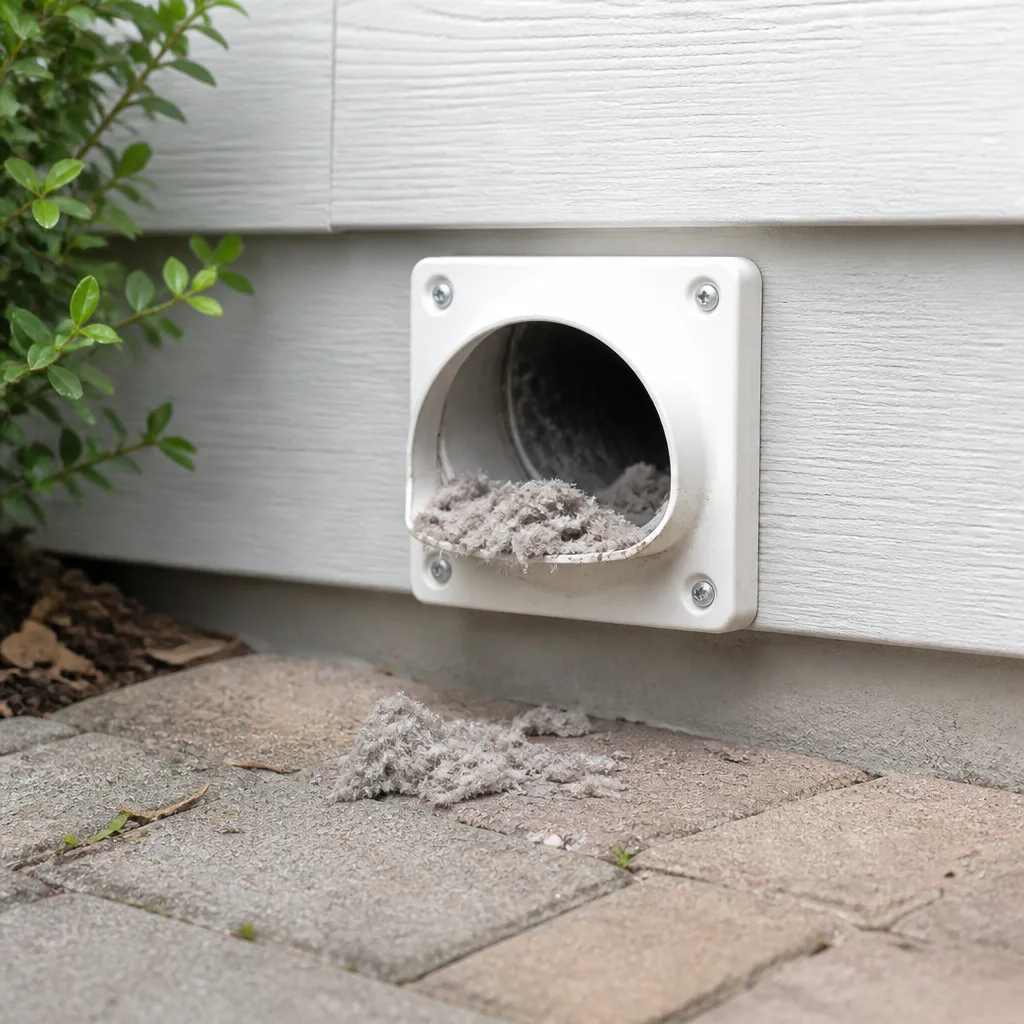
- Ignoring dryer vents: dryer vents are a fire risk, not a maintenance footnote. The lint that accumulates in the vent line is the leading cause of residential dryer fires, and it should be cleaned by a company that treats Dryer Vent Cleaning in Northridge as a distinct service with specific equipment, not an add-on upsell.
- Assuming newer homes have clean ducts: construction debris in duct systems is a persistent problem in Northridge’s newer developments too. Drywall dust, sawdust, and debris from the build get pulled into the returns during construction and stay there.
- Waiting until the problem is visible: by the time dust is accumulating on surfaces within days of cleaning, the duct system is heavily loaded. Regular inspection catches buildup before it reaches the point where it’s circulating back into the living space.
- Choosing a company without repair capability: if the company can only clean but not repair, any damage they find becomes a referral to someone else, a second appointment, and a second service call. Air Duct Cleaning Northridge home services are built around the full scope of duct health including repair.
When to Call a Professional
You should call for an inspection if you’ve lived in your Northridge home for more than three years and have never had the ducts evaluated. Visible dust on register faces, musty odors when the system runs, rooms that stay warm in summer no matter how long the AC runs, and a spike in allergy symptoms that corresponds with HVAC operation are all signals that the duct system needs professional attention. If you’ve had wildfires within 10 miles of the house during any Santa Ana season, the ducts have been exposed to smoke particulate regardless of whether the house smelled smoky at the time. Air Duct Cleaning Northridge offers free estimates in Northridge – call (833) 968-4871 to schedule an inspection.
Frequently Asked Questions
Air duct cleaning in Northridge typically costs $350 to $850 for a complete system cleaning, depending on the size of the home, the number of registers, and the condition of the system. Homes with significant buildup, multiple HVAC systems, or duct damage that requires repair will fall at the higher end or beyond. Any quote significantly below this range should be examined carefully, since low-bid pricing in this industry often involves per-vent bait pricing that escalates once work begins. Call (833) 968-4871 for an exact quote on your system – estimates are free.
Cheaper quotes usually mean cheaper equipment and skipped steps. A shop vac and a rotary brush attachment can’t generate the negative pressure needed to pull debris from a full duct system, and a company using that equipment isn’t providing containment, HEPA filtration, or verification. The equipment matters because the debris has to actually leave the system, not just get stirred around. A flat price per system agreed before work starts is the honest way to quote this service.
Ask for before-and-after camera images of the interior of the ducts, airflow measurements at the registers, and a look at the debris collected in the HEPA unit. A company using professional-grade equipment can provide all three. If the answer is “trust us,” that’s not verification. The evidence should be visible and measurable.
For most Northridge homes, every 3 to 5 years is appropriate, but that timeline shifts based on specific conditions. Homes with pets, homes that experienced wildfire smoke exposure, homes with recent renovation work, and homes where the system has not been sealed against attic contamination all need more frequent attention. The right approach is an inspection that determines current condition rather than a fixed schedule.
Yes, when the cleaning is done correctly and the system is sealed afterward. The ducts deliver every cubic foot of conditioned air you breathe indoors. If they’re loaded with decades of accumulated debris, that debris is continuously reintroduced into the living space. Cleaning removes the reservoir; sealing prevents recontamination; filtration keeps new particulate from entering the system. It’s a sequence, not a single act.
Santa Ana winds push fine particulate into Northridge homes through every gap in the building envelope, and the HVAC system is one of the most efficient pathways. A clean, sealed duct system with proper filtration keeps that particulate from recirculating through the home. It won’t stop the wind or the pollen, but it removes the system that amplifies and redistributes those allergens. Many of our Northridge customers schedule cleanings specifically before the fall wind season for this reason.
The Bottom Line
Air duct cleaning in Northridge is a different job than it is anywhere else. The Santa Ana winds, wildfire seasons, and aging tract-home ductwork create contamination patterns that generic cleaning methods don’t address. The right service starts with inspection, matches professional equipment to the specific condition of the system, removes debris under negative pressure with HEPA filtration, and ends with verification you can see and measure. And when the inspection finds problems that cleaning alone can’t solve – leaks, collapsed sections, degraded flex – the right company can repair and seal the system so it stays clean. That’s the full scope of duct health, and it’s the standard Northridge homeowners should insist on.
Written by the team at Air Duct Cleaning Northridge, serving Northridge since 2014. For more guides & resources, visit our blog.
See the difference
 Before
 After
 Before
 After
 Before
 After