
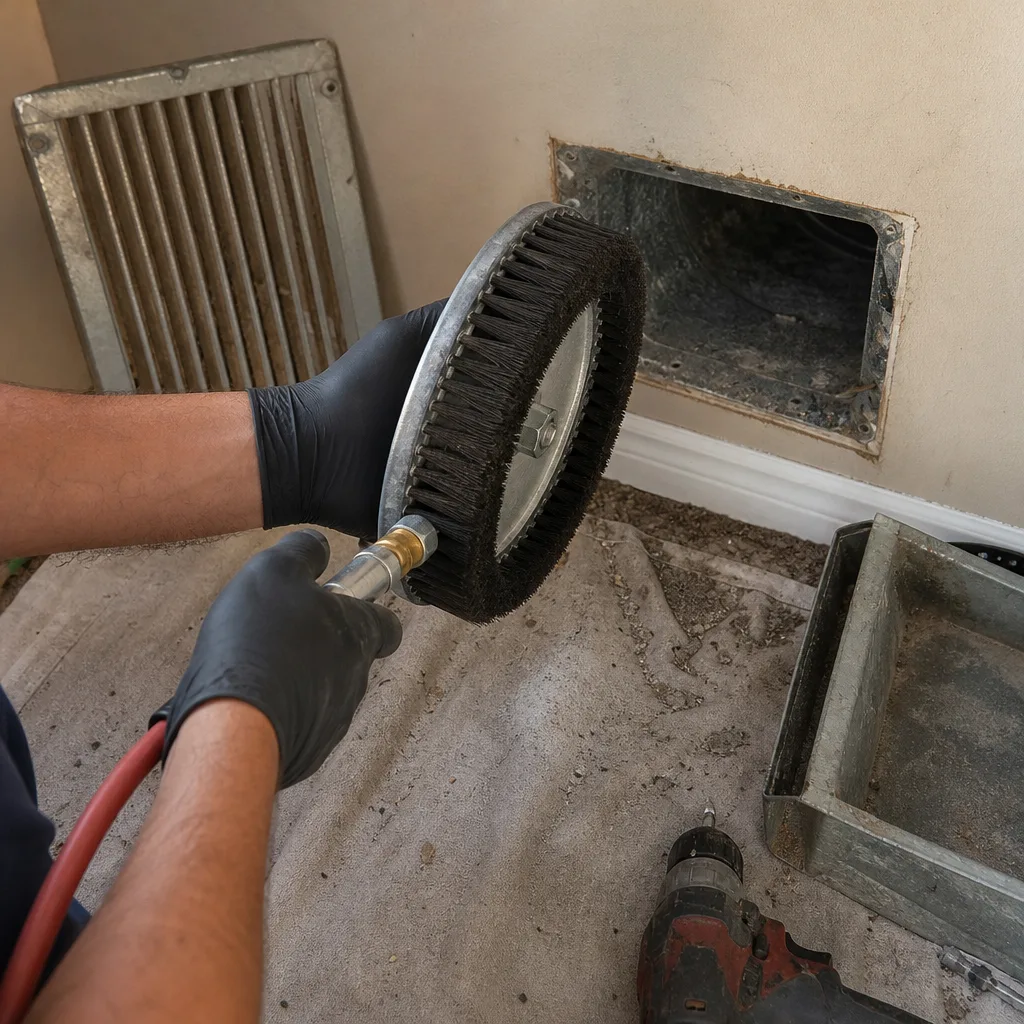
Last updated November 2, 2026
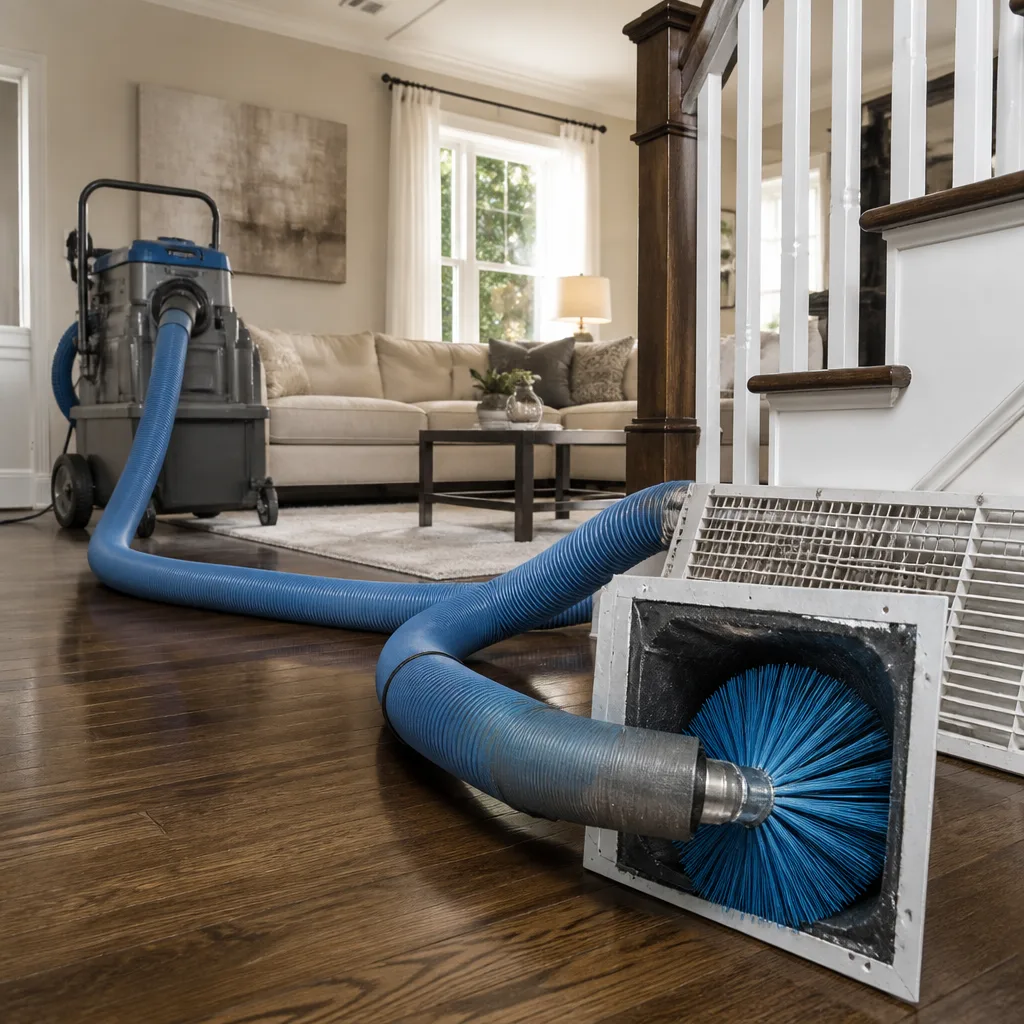 Whole-home duct cleaning
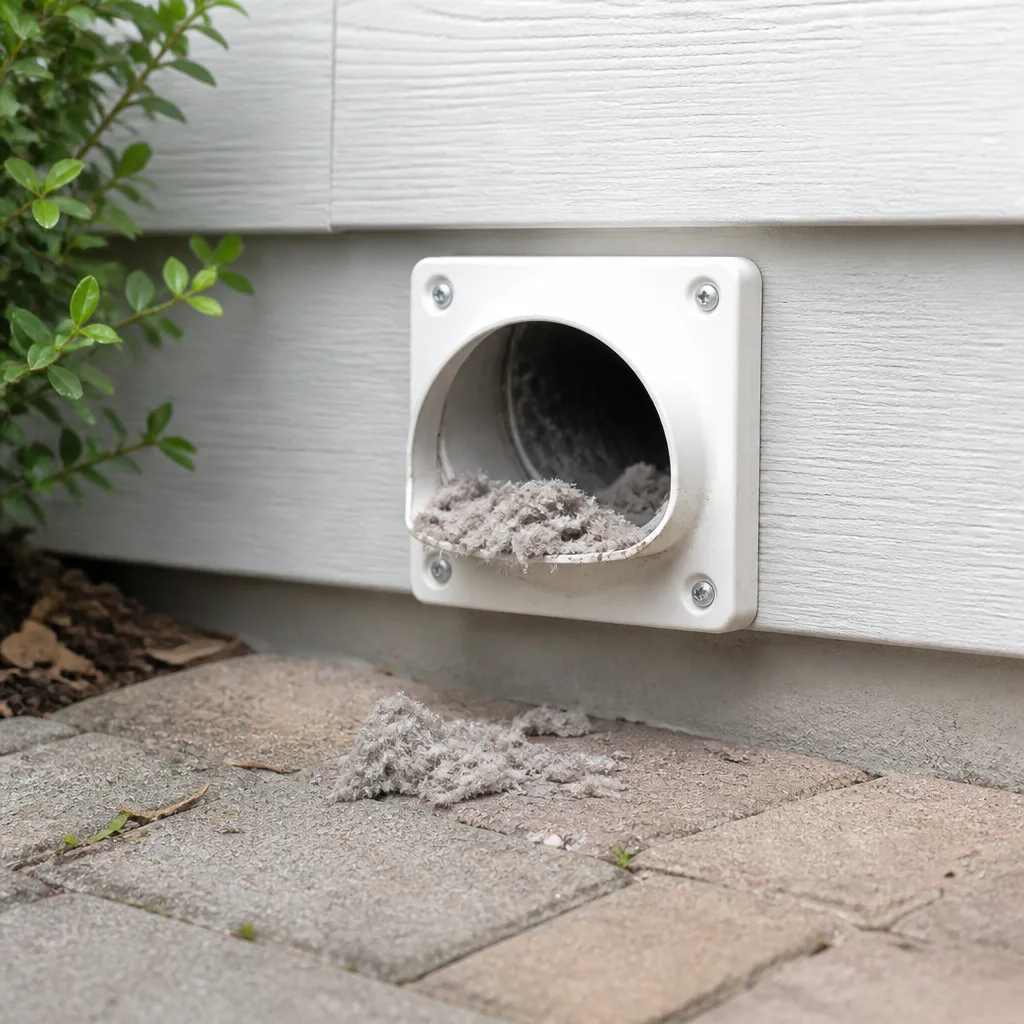 Dryer vent cleaning
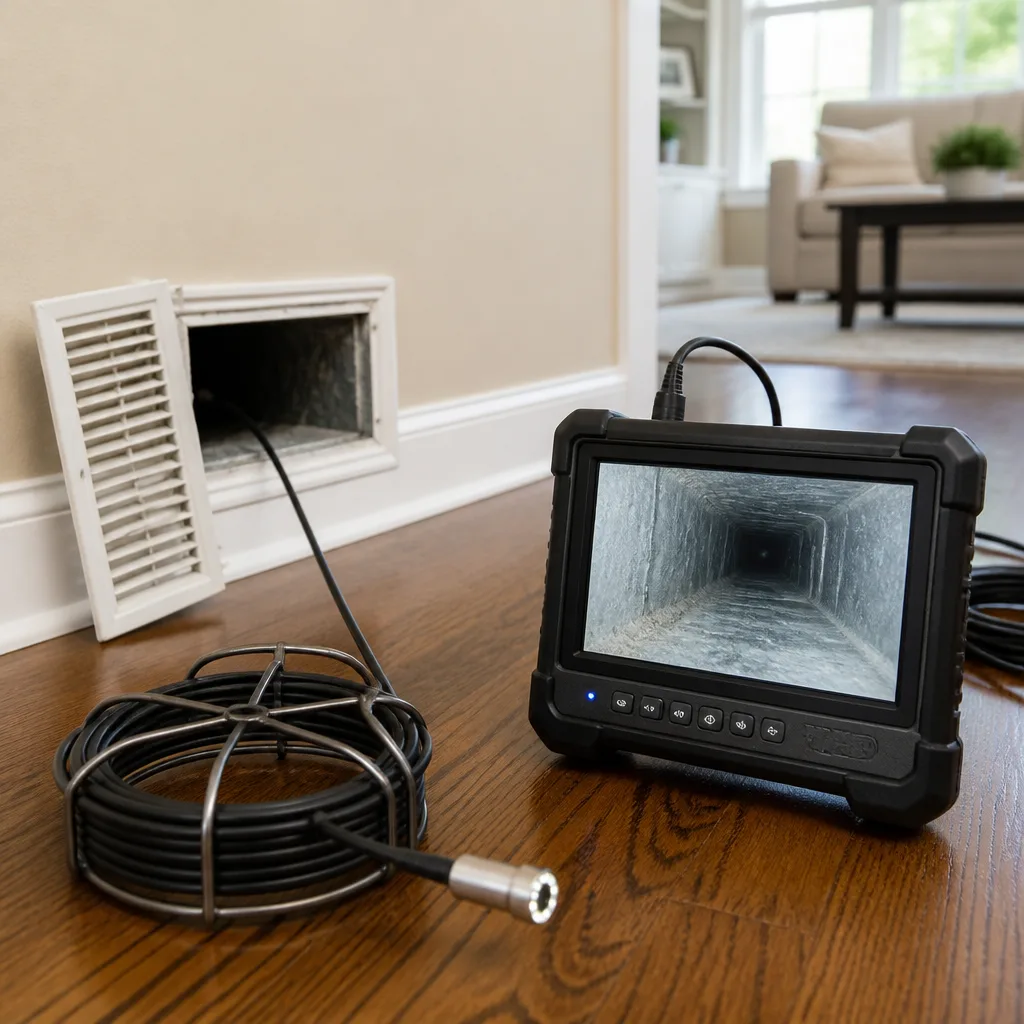 Camera inspection
 Sanitizing & deodorizing
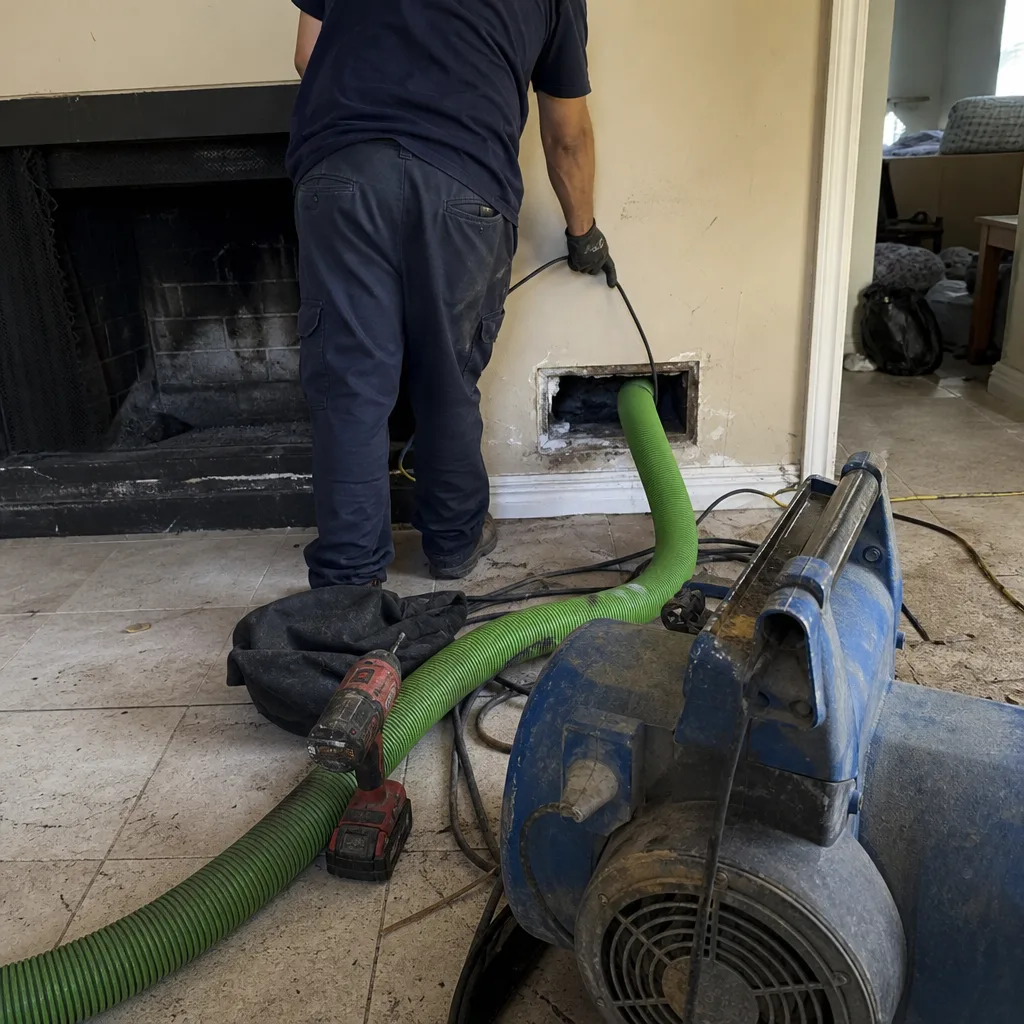
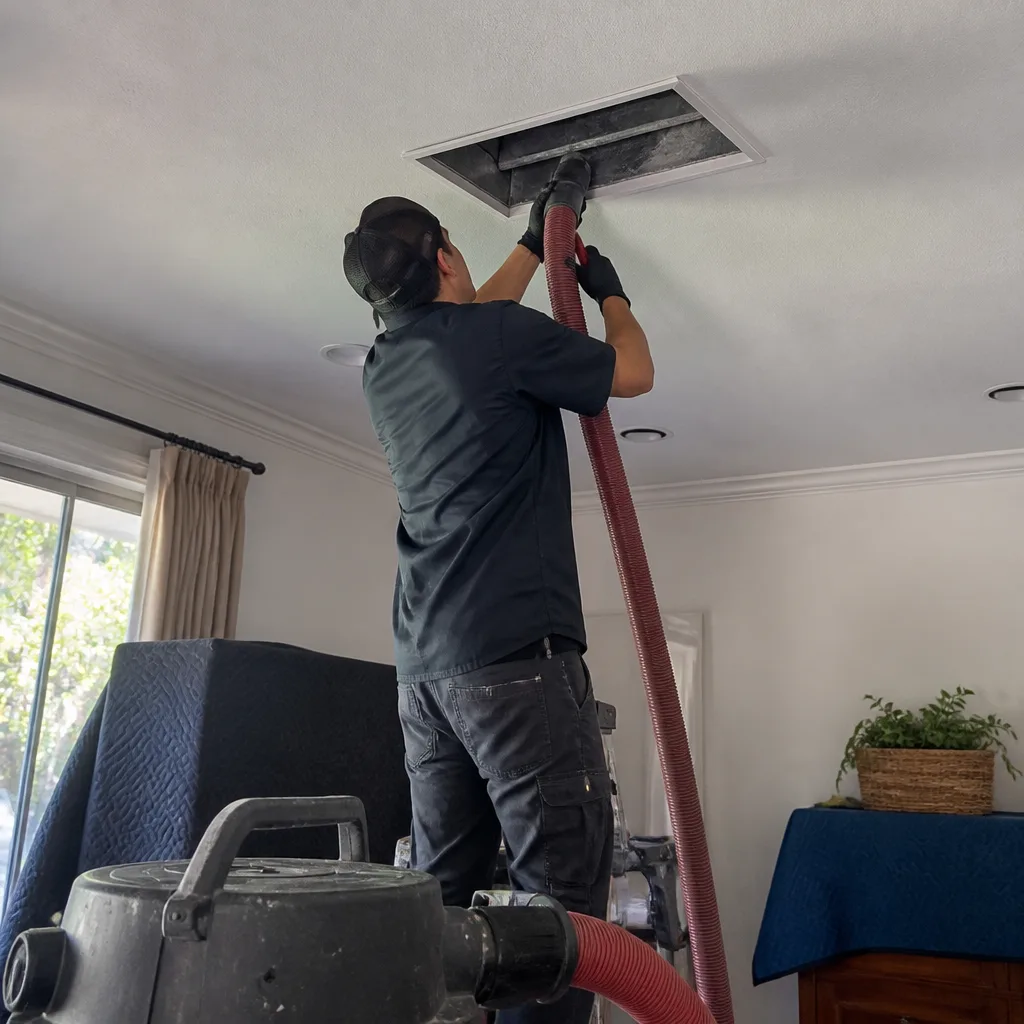
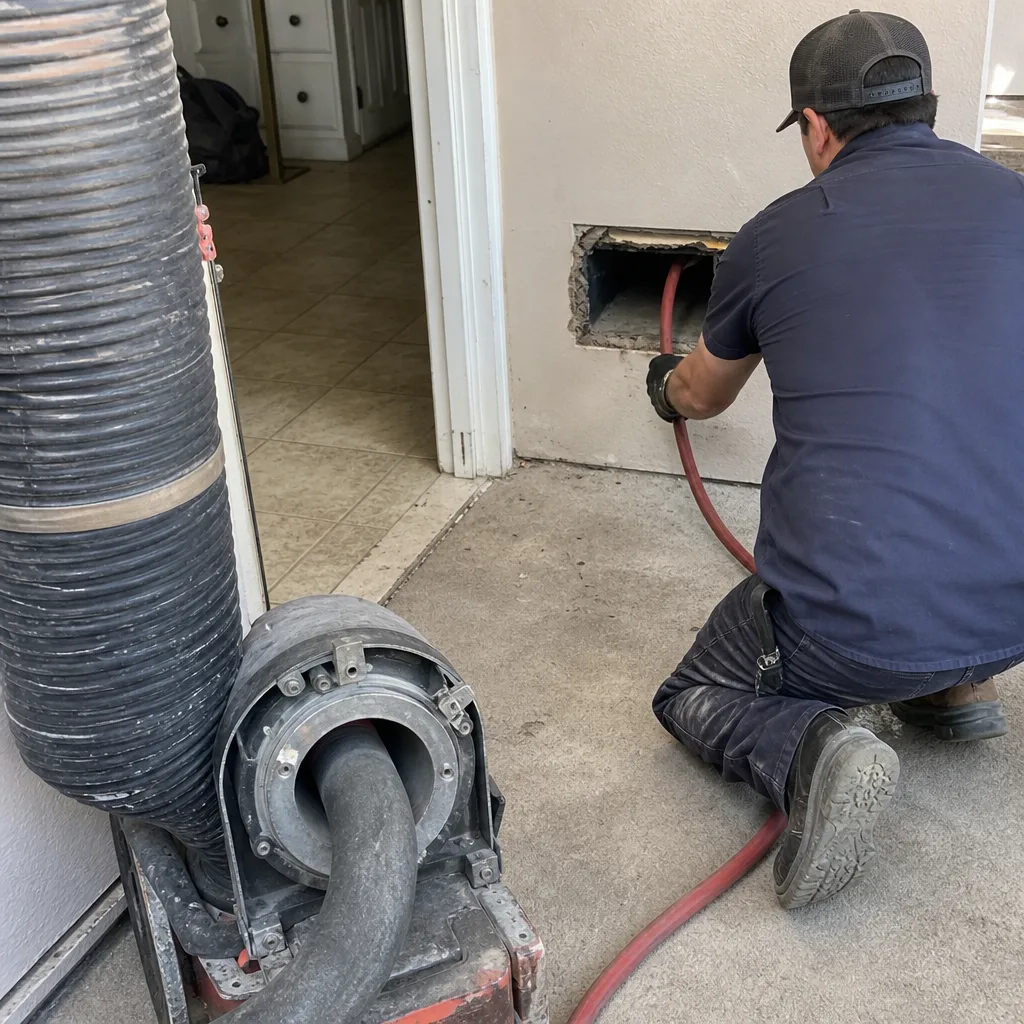
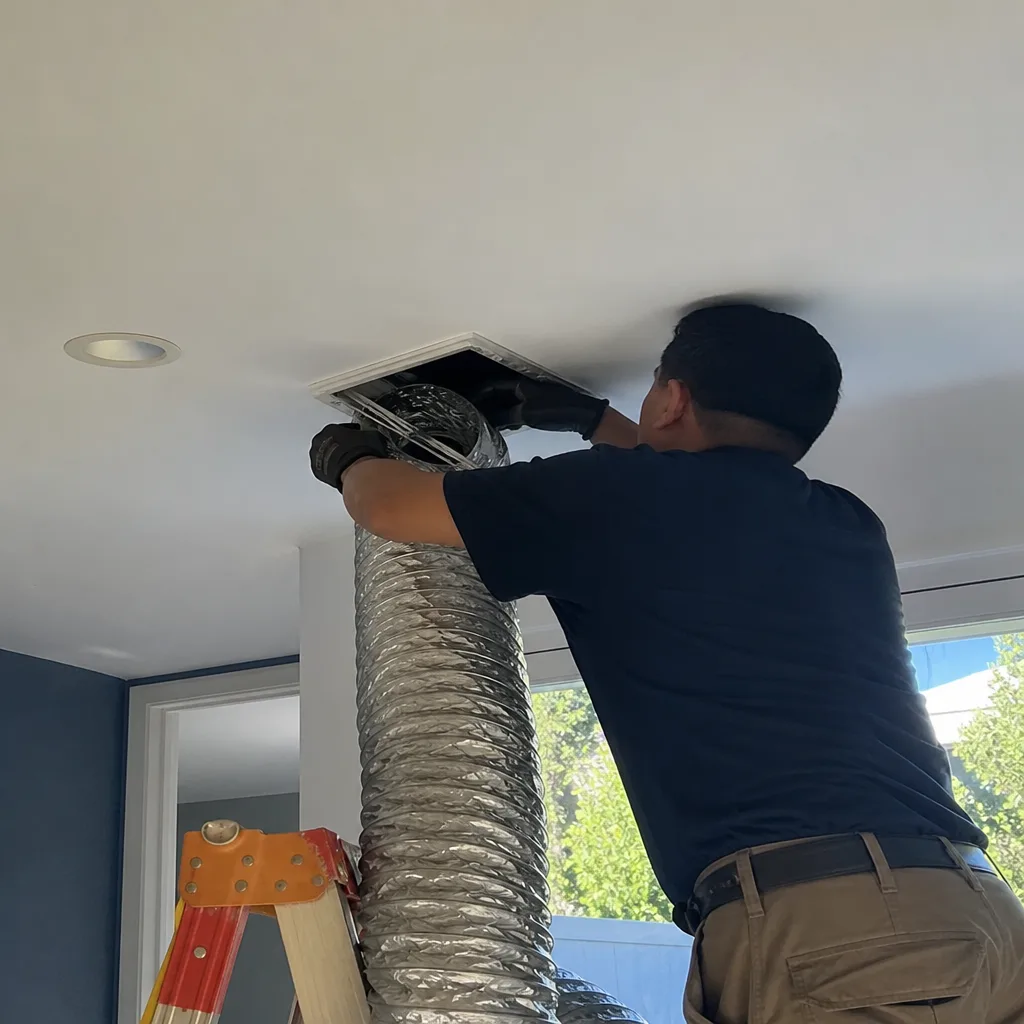
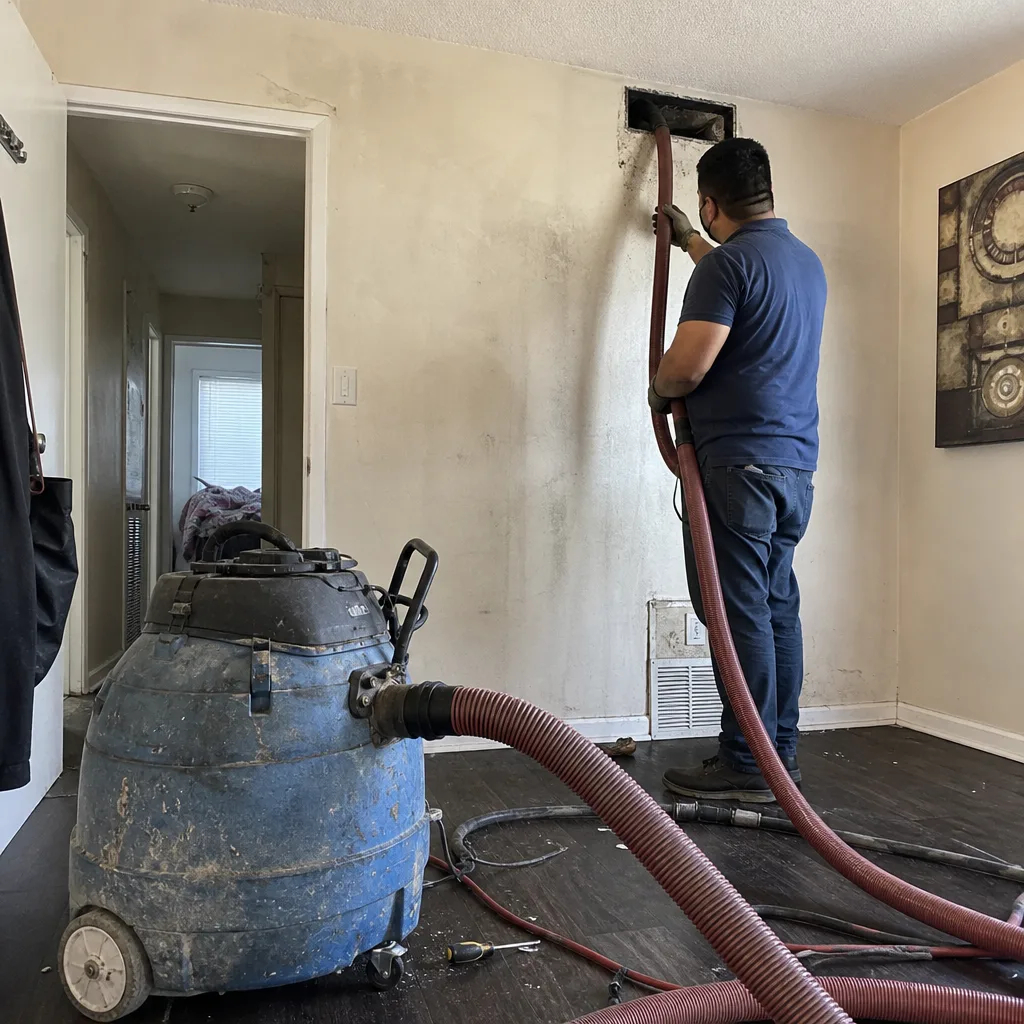
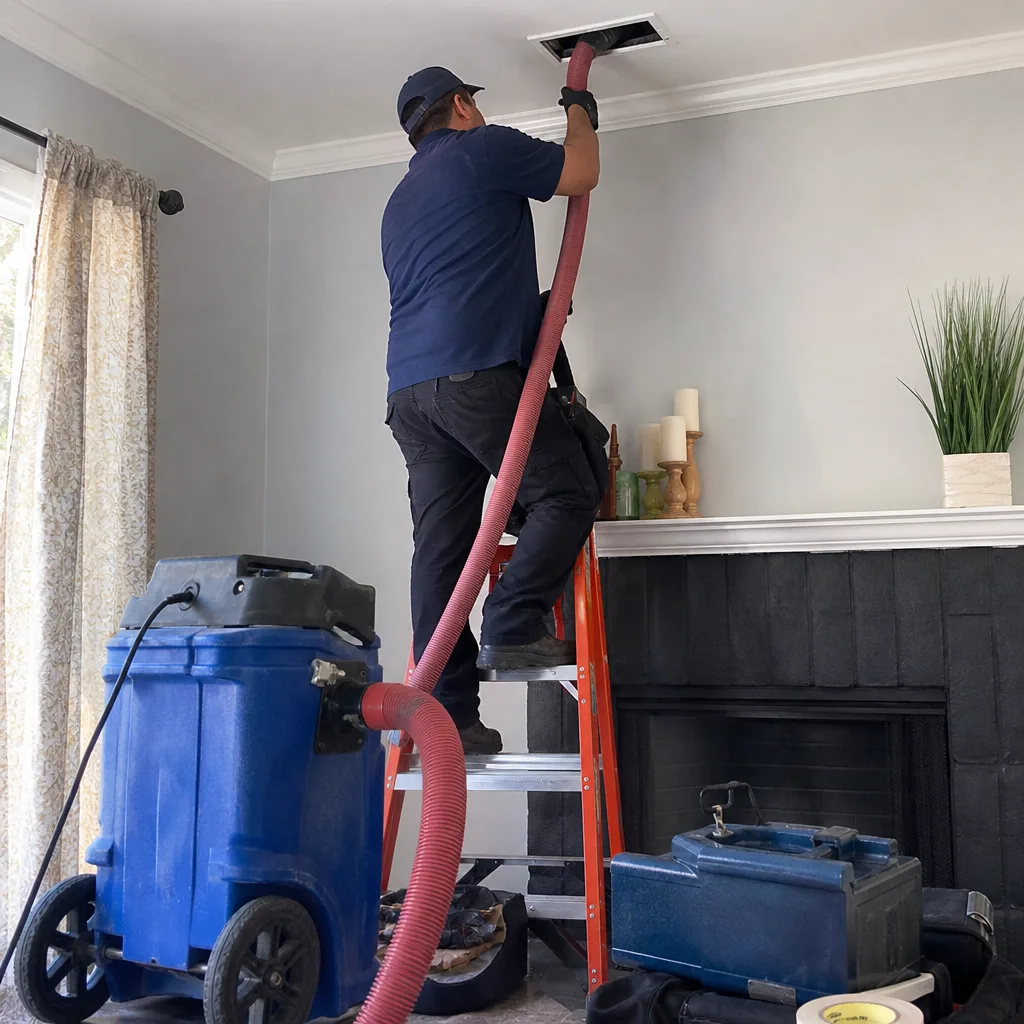
Whole-system duct and dryer vent check with before-and-after photos - you see exactly what came out of your vents
That "$99 whole-house special" is a bait ad - the real number appears once they are in your hallway, or the "clean" is a shop-vac at the register. We photograph the inside of your ducts before and after instead.
Air Duct Cleaning Permits, Codes & Inspections in CA: What You Need to Know
Duct repair and duct cleaning sound like the same job site, but under California’s Title 24 and local Northridge building codes, one is a maintenance task and the other is a mechanical alteration. The difference can appear on your disclosure paperwork years later, long after the technician’s van has left your driveway. This guide walks through exactly where that line sits, what triggers a permit in Los Angeles County, how inspectors view duct work during a home sale, and the paperwork that protects you if code compliance is ever questioned. We’ve written it from the perspective of a Northridge-based duct contractor who sees the confusion play out on a weekly basis.
Styles & brands we work with
- Whole-home duct cleaning
- Dryer vent cleaning
- Camera inspection
- Sanitizing & deodorizing
Quick Answer
Routine air duct cleaning does not require a permit anywhere in California, including Northridge and greater Los Angeles. However, duct repair, duct replacement, or significant duct modification crosses into mechanical alteration territory, which triggers California Mechanical Code permit requirements under Title 24. The practical line: if a contractor is cleaning the inside of existing ducts, no permit. If they’re cutting, replacing, re-routing, or substantially sealing duct sections, you need a mechanical permit from the Los Angeles Department of Building and Safety (LADBS).
Table of Contents
- Where the Line Sits: Cleaning vs. Repair Under CA Mechanical Code
- How Title 24 Treats Duct Sealing and Insulation in Los Angeles County
- When Asbestos Around Older Duct Systems Triggers a Separate Regulatory Process
- What an Inspector Looks For on Duct Work in a Real Estate Transaction
- How to Request a Scope-of-Work Letter That Protects You
- Northridge-Specific Conditions That Affect Duct Work and Permitting
- Common Mistakes to Avoid
- When to Call a Professional
- Frequently Asked Questions
- The Bottom Line
Where the Line Sits: Cleaning vs. Repair Under CA Mechanical Code
The California Mechanical Code (CMC), which forms part of Title 24, draws a distinction between work that maintains a system and work that alters it. Air duct cleaning falls squarely on the maintenance side. You’re removing accumulated dust, debris, and biological growth from the interior surfaces of existing ductwork. No duct is being cut, no section is being removed, no airflow path is being changed. The system remains exactly as it was, just cleaner. The CMC does not classify this as construction or alteration, which means no permit is required in Northridge, Los Angeles, or anywhere else in California.
Duct repair is different. When a contractor cuts out a crushed duct section, replaces a damaged plenum, reconnects a disconnected branch line, or patches a hole with metal and mechanical fasteners, that’s an alteration. The CMC’s administrative section is clear: mechanical work that modifies a system’s physical configuration requires a permit from the local enforcing agency. In Northridge, that agency is LADBS, operating under the authority of Los Angeles County’s mechanical inspection program.
Here’s the practical breakdown we use when a homeowner in Northridge asks us whether their job needs paper:
- No permit needed: Brush-and-vacuum cleaning of existing ducts, HEPA extraction cleaning, sanitizing interior duct surfaces, replacing a standard filter at the return grille.
- Permit may be needed: Replacing a duct section longer than a few feet, installing a new supply run, reconfiguring a return plenum, sealing duct joints with mastic (if done as part of a larger repair scope), installing a new zone damper, replacing a duct insulation wrap on exterior duct runs.
- Grey zone, ask LADBS: Sealing small leaks with mastic or tape as a standalone service. Technically this can be considered maintenance, but if the sealing changes the duct’s air flow characteristics or if the duct was previously degraded to the point of functional failure, an inspector might classify it as repair.
The honest answer from a contractor who does both Air Duct Cleaning in Northridge and Air Duct Repair in Northridge: when our technicians diagnose a duct that needs more than cleaning, we flag it immediately. We don’t just start cutting. We explain the code implication, outline the permit path if one is needed, and let the homeowner make an informed call. That’s the way it should work, and it’s the way you should expect any contractor to behave.
How Title 24 Treats Duct Sealing and Insulation in Los Angeles County
Title 24 is California’s broad energy code, and its treatment of duct systems goes well beyond simple mechanical permits. The energy code cares about one thing above all: how much conditioned air leaks out of your ducts before it reaches a room. In Los Angeles County, including Northridge, that concern translates into specific requirements whenever duct work is installed, replaced, or significantly sealed.
Under Title 24, Part 6 (the California Energy Code), any new duct installation or substantial duct replacement in a residential setting must meet maximum leakage standards. In practice, this means the contractor should perform a duct leakage test using calibrated equipment and document the result. For a typical single-family home in Northridge, the allowable leakage is tight: no more than 6% of system airflow for new systems, with additional credit given for systems sealed and verified below that threshold.
Here’s what catches homeowners off guard: if you hire someone to “seal” your ducts as a repair, and the sealing is significant enough to be classified as an alteration, Title 24 compliance becomes part of the permit. The sealing job isn’t just about stopping the leak. It’s about verifying the result meets California’s energy efficiency minimums. A contractor who slaps mastic on joints without testing might leave you with work that passes a visual inspection but fails energy code if anyone digs deeper.
We’ve seen this unfold in Northridge homes built in the 1960s and 1970s, where the original duct work is often galvanized steel wrapped in fiberglass, with joints that have separated over decades. The repair scope is large enough to require a permit. The homeowner assumed their handyman could just wrap everything in foil tape. Three years later, a home sale stalls because the energy compliance paperwork doesn’t exist.
The correct path for a Title 24-compliant duct sealing or replacement job in Los Angeles County:
- Contractor assesses the duct system and identifies the repair or replacement scope.
- If the scope exceeds maintenance, contractor pulls a mechanical permit through LADBS.
- Work is performed according to CMC and Title 24 requirements, including proper sealing materials and insulation levels.
- Contractor performs (or arranges) a duct leakage test and records results.
- Permit is closed and inspection documentation is kept with the home’s records for future sale disclosure.
Our equipment approach at Air Duct Cleaning Northridge home reflects this distinction. We use professional cleaning systems with HEPA filtration to remove what’s inside ducts without modifying them. When a duct needs actual sealing or replacement, we treat it as a different job with different rules, and we document accordingly.
When Asbestos Around Older Duct Systems Triggers a Separate Regulatory Process
Northridge has thousands of homes built before 1980, and a meaningful share of them have duct systems that involve asbestos-containing materials (ACMs). The most common location is duct insulation: an older style of wrap made with asbestos fibers, often found on furnace plenums, duct boots, and connection points where ducts meet registers. In some cases, asbestos-containing tape was used to seal joints, and older register boxes may have asbestos paper liners.
Here’s the trigger point: as long as the asbestos material is intact and undisturbed, it generally sits outside the scope of any cleaning job. Air Duct Cleaning in Northridge on a system with intact asbestos wrap does not require a special regulatory process because the cleaning happens inside the ducts, not on their exterior surfaces. The cleaning does not disturb the wrap.
But if a repair requires cutting into, removing, or otherwise disturbing material that contains asbestos, the job enters a different legal universe. California’s Cal/OSHA asbestos standard, enforced in conjunction with the South Coast Air Quality Management District (SCAQMD), requires specific work practices, notification requirements, and in many cases, a licensed asbestos abatement contractor. The work cannot proceed under a simple mechanical permit. It requires a separate abatement process.
For homeowners in Northridge and surrounding San Fernando Valley neighborhoods, the practical signs that asbestos may be involved include:
- The home was built before 1980 and still has original duct work.
- Duct insulation looks fibrous, grayish-white, and is wrapped around plenums or duct joints.
- The insulation appears to be a fabric-like wrap, not modern fiberglass batts with a foil or paper facing.
- Previous home inspection reports mention “possible ACM” or “suspect material” on duct systems.
If any of these apply and the job requires more than interior cleaning, the correct sequence is: stop work, have the material tested by a certified lab, and if positive, engage an asbestos abatement contractor before any mechanical repair proceeds. We flag this on a regular basis in Northridge when older homes come up for duct repair. The repair is often straightforward. The regulatory path around the asbestos is the part that deserves caution.
What an Inspector Looks For on Duct Work in a Real Estate Transaction
When you sell a home in Northridge, the buyer’s home inspector will look at the duct system, and they’ll be looking for signs that work was done poorly, disguised, or without permits. The inspection isn’t a code enforcement action, but it functions as a surface-level audit of your duct system’s history. Problems the inspector flags become negotiation points, and unpermitted work can become a disclosure obligation.
Here’s what a competent California home inspector focuses on when they examine duct work:
- Material condition: Crushed, disconnected, or sagging duct runs. These suggest a repair was attempted or needed.
- Sealing quality: Duct tape is not a compliant sealing material under current energy code. Inspectors know this. If they see silver duct tape on joints, they note it as a potential code issue.
- Hanging and support: Unsupported duct runs, particularly in attics, are a red flag for unpermitted work.
- Return air path integrity: Missing return registers, or returns that appear to have been moved or blocked, can indicate reconfiguration without permits.
- Insulation consistency: One section of duct with new insulation and another with degraded insulation can suggest a partial repair that wasn’t completed or documented.
Undocumented repairs surface because the inspector compares what they see against what building records show. In Northridge, a buyer’s inspector may pull LADBS permit history for the property. If the duct system has clearly been modified since the last recorded mechanical permit, the buyer may ask the seller to explain. If the seller can’t, the buyer may ask for a price reduction, a repair credit, or worse, walk away.
We’ve had homeowners in Northridge call us after an inspection flagged duct issues, asking us to document what was done. The documentation matters. A dated invoice describing the cleaning, with before-and-after photos, is helpful. A scope-of-work letter from the contractor explaining exactly what was cleaned, what was not modified, and that no permit was required for the cleaning, is much more helpful. If repair was done under permit, the closed permit number is the gold standard documentation.
How to Request a Scope-of-Work Letter That Protects You
A scope-of-work letter is a simple document that states, in plain language, exactly what a contractor did to your duct system, what they did not do, and their professional assessment of whether the work fell under maintenance or alteration. It is not a substitute for a permit when a permit is required. But it is a powerful piece of documentation when the work was legitimately maintenance, and you need to prove that to a buyer, an insurer, or a future inspector.
Here’s how to request one the right way, before the work starts:
- Ask before scheduling. Tell the contractor you’ll need a scope-of-work letter at the job’s conclusion. If they’re surprised by the request, that’s a conversation worth having early.
- Define the scope in writing. Specify that the work is limited to cleaning (or whatever service you’ve agreed on), that no cutting, replacement, or re-routing of duct work is included. Add a line stating that the contractor will flag any condition they believe requires repair and that repair, if needed, will be reviewed separately.
- Request the letter on company letterhead. A typed, signed document with the contractor’s name, license number, and date carries weight. A handwritten note does not.
- Ask for photos. Request before-and-after images of accessible duct interiors, especially if the home is older and has had prior work. Photos are the single best evidence that work was done as described.
- Request the “not altered” statement. The letter should say, explicitly, that the work performed did not constitute alteration or modification of the duct system under the California Mechanical Code, and therefore no permit was required. If the contractor isn’t willing to write that, ask them to explain why. That answer matters.
We issue scope-of-work documentation for Air Duct Cleaning in Northridge jobs whenever a client asks, and we include them proactively when we know the home is on the market or about to be. It’s inexpensive protection for a disclosure problem that costs far more than the letter ever will.
Northridge-Specific Conditions That Affect Duct Work and Permitting
Northridge sits in the San Fernando Valley, and its specific climate and housing stock create duct conditions that differ from coastal Los Angeles or the desert communities. The Valley gets hot. Summer temperatures routinely run 15 to 20 degrees hotter than the coast, which pushes HVAC systems hard for six months straight. Ducts in unconditioned attics in Northridge can reach 140 degrees or more on a July afternoon. That heat accelerates the degradation of older duct insulation and the failure of joint sealing materials.
The housing stock compounds the problem. Much of Northridge was built in the post-war boom, between the 1950s and 1970s, with single-story ranch homes and split-levels built over crawl spaces or with attic-mounted horizontal systems. That era’s duct work was typically galvanized steel with fiberglass wrap, installed with methods that accepted higher leakage rates than today’s code permits. A homeowner with a 1965 home on a tree-lined street near Cal State Northridge may have ducts that were never sealed to modern standards, and may never know it until a repair triggers the code review.
Northridge has also had significant rebuild activity following the 1994 Northridge earthquake. Some homes have newer duct systems, installed under permits issued during reconstruction. Others have partially retrofitted systems, with new duct sections spliced into older runs. In our experience, the partial retrofit is where documentation issues cluster most. A previous owner had a contractor replace the most accessible duct runs, skipped the permit because the job was “small,” and now the system is a patchwork of permitted and unpermitted work. When the current homeowner wants to sell, the inspection conversation gets complicated.
For Dryer Vent Cleaning in Northridge, the permit question is straightforward: cleaning a dryer vent is maintenance, no permit required. Re-routing a dryer vent, replacing its termination, or extending a vent run is an alteration that may require a permit depending on scope. Dryer vents are a fire risk, not a maintenance footnote, and the line between cleaning and repair matters for compliance just as it does with HVAC ducts.
Common Mistakes to Avoid
- Assuming any duct work requires no permit because it’s “just ducts.” Cleaning doesn’t, but cutting into a duct to replace a damaged section does. If the contractor has to modify the system’s physical structure, the default assumption should be that a permit conversation is coming.
- Accepting a cleaning quote that includes “free repair” of damaged ducts. If the repair is more than a trivial patch, it may be unpermitted work. A contractor offering free duct replacement without mentioning permits is not doing you a favor; they’re skipping a legal step.
- Ignoring the asbestos question on a pre-1980 Northridge home. If a repair will disturb exterior duct insulation, stop and test. Disturbing ACM without proper controls creates a regulatory and safety problem far larger than the repair itself.
- Accepting silver duct tape as a legitimate sealing material. Under current California codes, standard duct tape does not qualify as a compliant duct sealing product. If your contractor reaches for the gray tape, ask about mastic and approved tapes.
- Failing to document a cleaning before listing your home for sale. A one-page scope-of-work letter from your duct cleaning contractor can preempt an inspector’s questions. Cleaning documentation alone won’t cover an unpermitted repair, but it eliminates ambiguity about what was cleaned versus what was altered.
- Relying on verbal explainations. If a contractor tells you the work doesn’t require a permit, get that in writing. Verbal reassurances disappear. A written statement survives the transaction, and if it’s wrong, you have recourse.
- Confusing energy code compliance with building code compliance. They overlap, but they aren’t the same thing. Title 24 energy requirements apply to duct installation and significant sealing regardless of whether the job meets general CMC standards. A contractor should address both.
When to Call a Professional
Call a professional duct contractor when you see the conditions that signal a system problem, not just a cleaning need: visible dust blowing from registers, rooms that never reach the thermostat temperature, musty or stale odors that return after cleaning, or a dryer vent that hasn’t been cleaned in years. These are signs the duct system is failing in its job, and diagnosing why takes equipment and experience, not guesswork. If you’re planning a home sale in Northridge, call before you list; a documented duct inspection and cleaning eliminates one category of buyer objection before it starts. We offer free estimates in Northridge for Air Duct Cleaning in Northridge, Dryer Vent Cleaning in Northridge, and Air Duct Repair in Northridge. Call (833) 968-4871 to schedule.
Frequently Asked Questions
No. Routine air duct cleaning, including brush-cleaning and HEPA extraction, is classified as maintenance under the California Mechanical Code and requires no permit anywhere in the state, including Northridge. The cleaning occurs inside existing ducts without modifying the system’s physical configuration.
Duct replacement, re-routing, significant duct section repair, and any work that changes airflow paths typically trigger a mechanical permit through LADBS. The key test is whether the work modifies the duct system’s physical structure or configuration. Call (833) 968-4871 if you’re unsure whether your planned work crosses the line.
A home inspector compares visible conditions against LADBS permit records. Signs like new duct sections with no corresponding permit, improper sealing materials like silver duct tape, or inconsistent insulation can flag unpermitted work. Sellers may be asked to explain and disclose during the transaction.
Asbestos-containing materials appear in a meaningful portion of Northridge homes built before 1980, most commonly as exterior duct wrap on older systems. Testing is the only way to confirm asbestos. If repair will disturb suspect material, testing and possibly abatement must precede the mechanical work.
For new installations and substantial replacements, yes. Title 24 Part 6 requires a maximum duct leakage standard, and a contractor should perform and document a leakage test for qualifying work. Minor sealing jobs may not trigger the requirement, but significant sealing or replacement does.
Keep the invoice, a scope-of-work letter stating whether the work was maintenance or alteration, before-and-after photos, and any closed permit documentation if repair was permitted. This file answers future buyer or inspector questions with evidence rather than memory. Call (833) 968-4871 for a free estimate and we’ll include documentation with your service.
The Bottom Line
Air duct cleaning in California remains a no-permit maintenance task, and that’s true in Northridge and across Los Angeles County. Repair, replacement, and significant modification are different: they trigger mechanical permits under the CMC, energy compliance under Title 24, and potentially asbestos regulations on older homes. The homeowner’s job is to know the line and to choose a contractor who knows it too. Documentation is your insurance: scope-of-work letters, photos, and closed permits turn a future complication into an answered question. If you need ducts cleaned, repaired, or simply assessed in a Northridge home, call (833) 968-4871. We’ll tell you what you’re looking at, what’s required, and what it costs before any work begins.
Written by the team at Air Duct Cleaning Northridge, serving Northridge since 2014.
See the difference
 Before
 After
 Before
 After
 Before
 After