
Last updated November 2, 2026
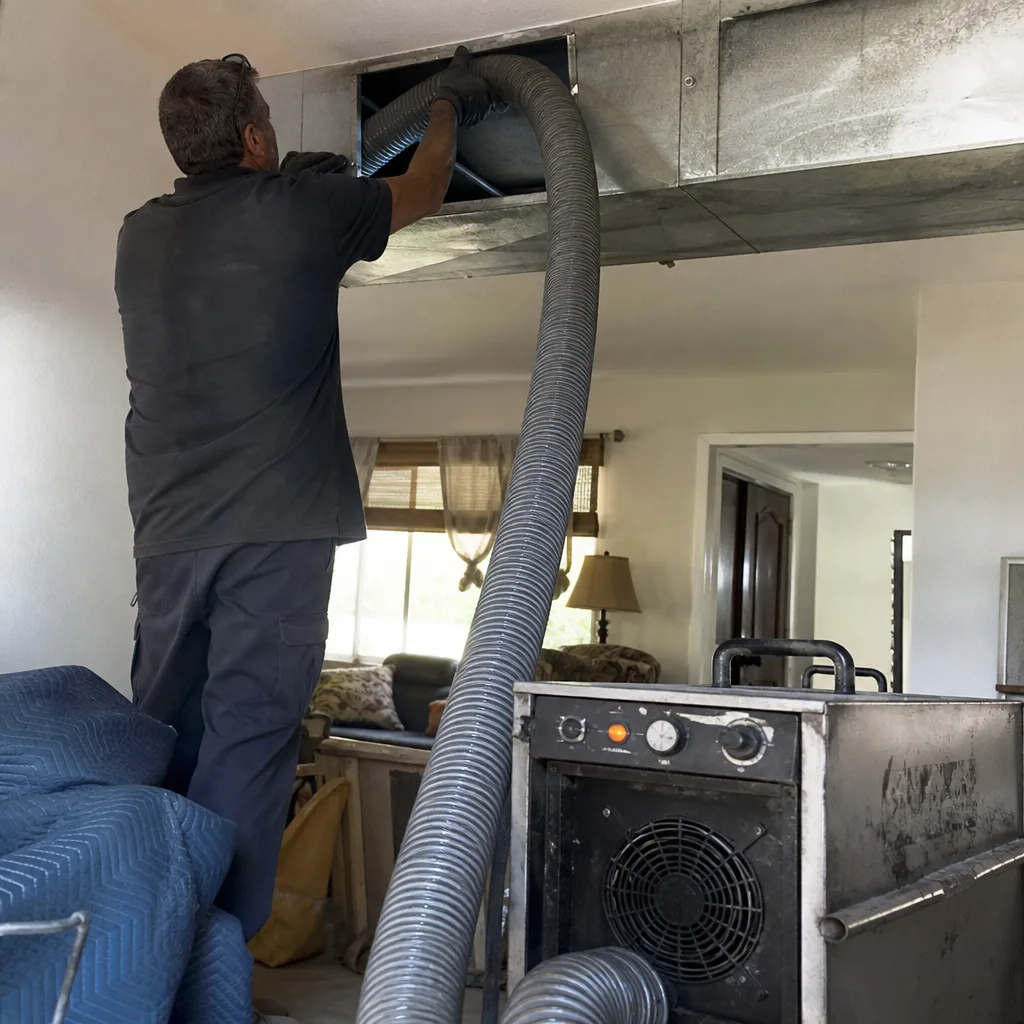
 Whole-home duct cleaning
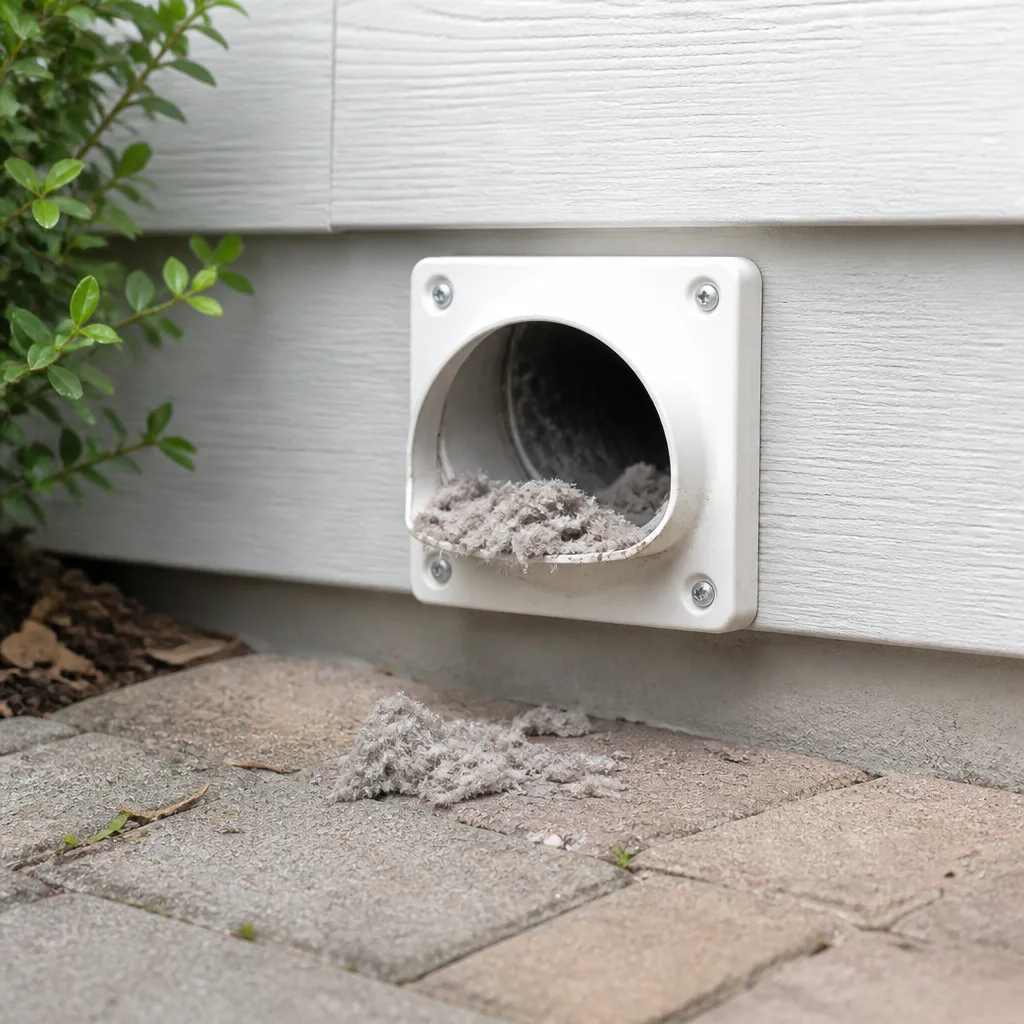 Dryer vent cleaning
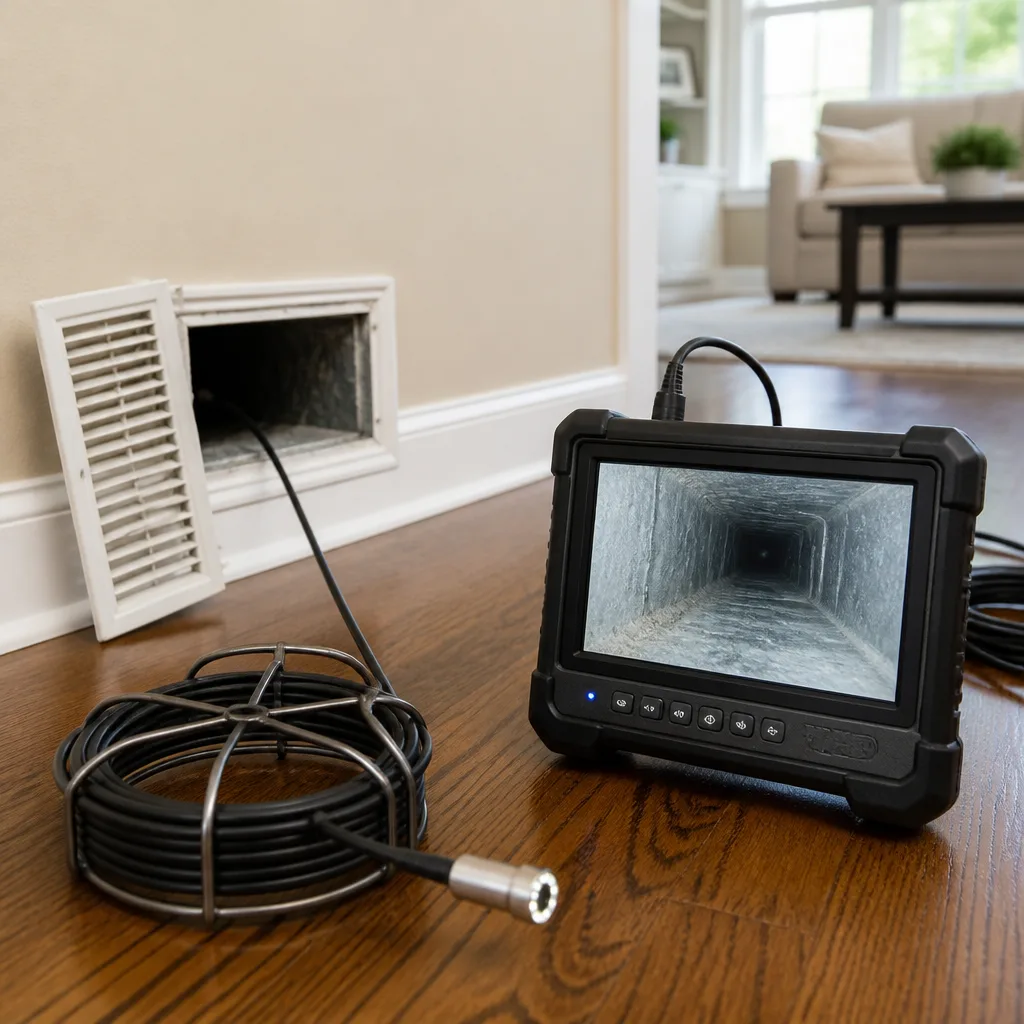 Camera inspection
 Sanitizing & deodorizing
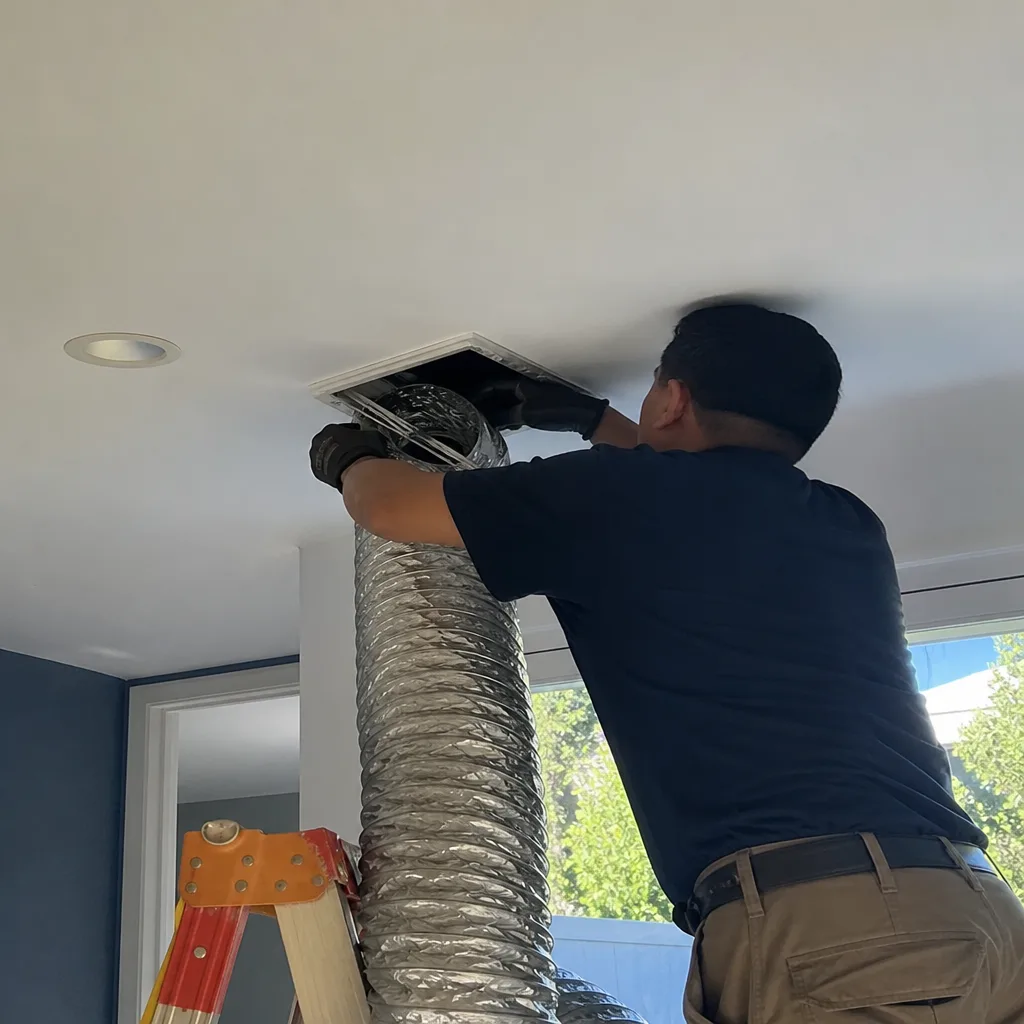
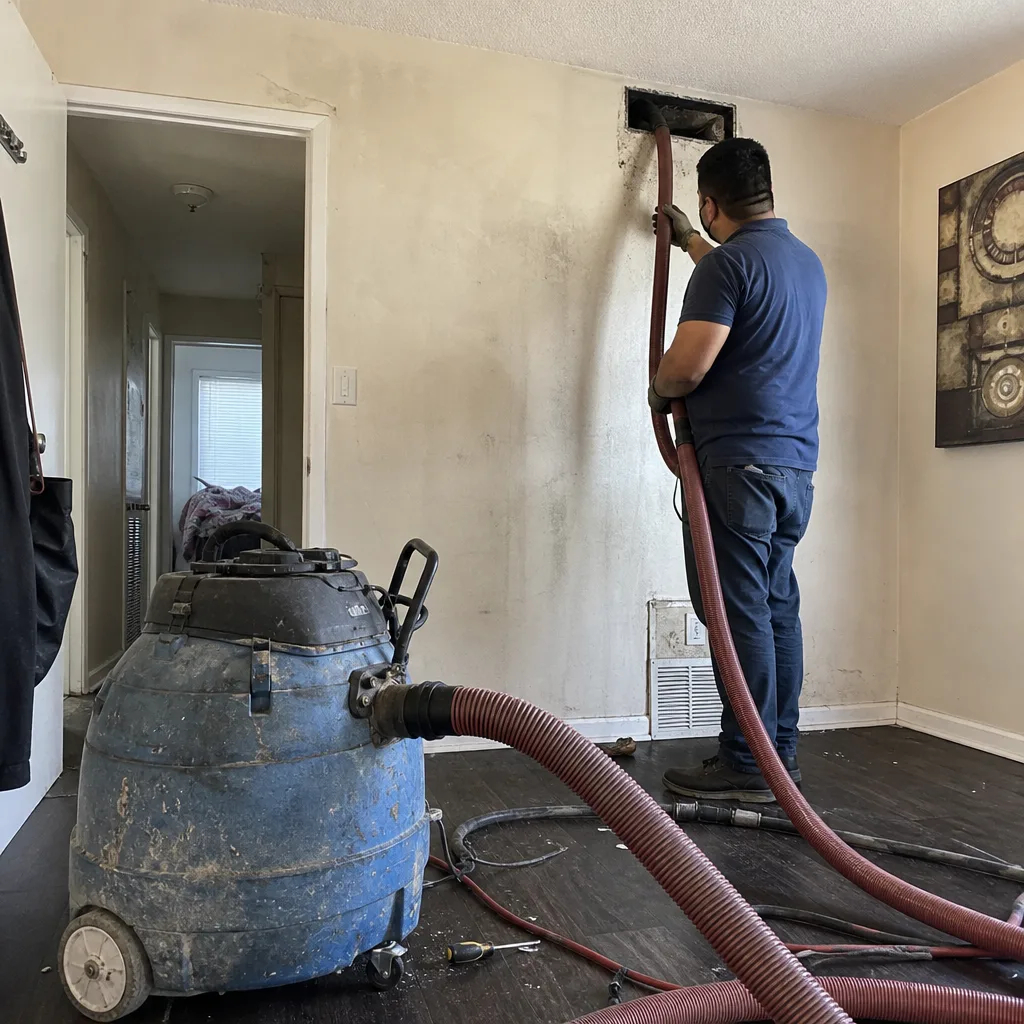
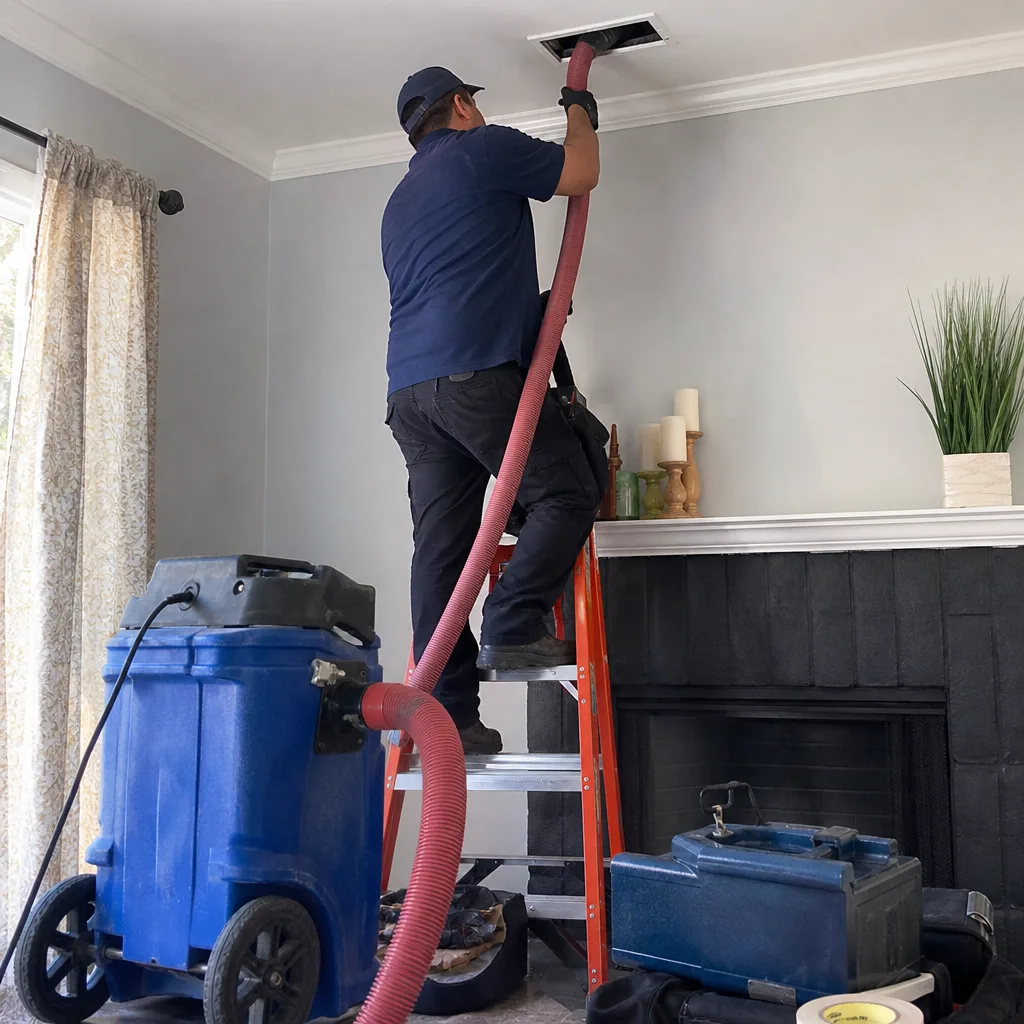
Whole-system duct and dryer vent check with before-and-after photos - you see exactly what came out of your vents
That "$99 whole-house special" is a bait ad - the real number appears once they are in your hallway, or the "clean" is a shop-vac at the register. We photograph the inside of your ducts before and after instead.
DIY vs Professional Air Duct Cleaning: The Northridge Homeowner’s Decision Guide
A $40 dryer vent brush and a shop vac can keep a clean system cleaner. That’s the honest truth about DIY duct work. But if your Northridge attic ducts are carrying rodent debris, smoke particulate embedded in the fiberglass liner, or active microbial growth, those same tools will aerosolize the contamination and push it into every room you’re trying to protect. This guide – along with our How to Hire an Air Duct Cleaning Contractor in Northridge: A Step-by-Step Guide – walks you through exactly where the line sits between what a homeowner can safely handle and what requires professional equipment, and why that line matters more in Northridge than in almost any other part of Los Angeles.
Quick Answer
DIY air duct cleaning is appropriate for maintaining an already-clean system: changing filters, vacuuming register faces, and wiping grilles. Professional air duct cleaning is required when ducts contain accumulated debris, contamination, or damage: rodent waste, construction dust, mold, or deteriorated duct liner. The difference is maintenance versus remediation, and confusing the two turns a cosmetic task into a health and HVAC-efficiency problem.
Styles & brands we work with
- Whole-home duct cleaning
- Dryer vent cleaning
- Camera inspection
- Sanitizing & deodorizing
Table of Contents
- What DIY Duct Cleaning Can Actually Accomplish
- What DIY Tools Cannot Do: The Remediation Line
- The 4 Contamination Types That Make DIY Dangerous
- Suction Reality: Shop Vacs vs. Professional Negative Air Systems
- What Rotobrush and Similar Systems Do Mechanically
- Why Northridge Specifically Makes This Decision Harder
- The One Legitimate DIY Task: Register and Filter Maintenance
- How to Assess Your Own Duct System Before Deciding
What DIY Duct Cleaning Can Actually Accomplish
Let’s be precise about what a homeowner with a shop vac, a basic brush kit, and good intentions can achieve. You can remove loose dust from the first 12 to 18 inches of ductwork reachable from each register. You can wipe down register covers, which collect a visible film of dust and pet hair. You can replace your HVAC filter, which is the single highest-impact maintenance task for indoor air quality. And you can vacuum out the return-air cavity if you remove the grille.
These tasks matter. A clean filter protects the blower motor and reduces the volume of particulate entering the duct system in the first place. Clean register faces stop the visible dust buildup that makes a home feel dirty. In a newer Northridge home with sealed ducts, no pets, no recent remodeling, and a disciplined filter routine, DIY maintenance may be all you need for several years.
But here’s the limitation that every DIY guide glosses over: the inside of a residential duct run is typically 20 to 50 feet long, with bends, transitions, and interior surfaces you cannot see or reach. Your shop vac hose can snake 3 to 4 feet into a register before friction and duct geometry stop it. The remaining 80 to 90 percent of the duct interior stays untouched. If that untouched portion is clean, you’ve done no harm. If it’s contaminated, you’ve accomplished nothing except a false sense of security.
Northridge homes built before the early 2000s often have metal ducts with interior fiberglass liner or flex duct that has sagged and accumulated debris in low points. These are exactly the systems where the reachable 3 feet looks fine and the unreachable 40 feet hides the problem. Air Duct Cleaning in Northridge is a service designed for that unreachable portion.
What DIY Tools Cannot Do: The Remediation Line
Remediation means removing contamination that poses a health or system-performance risk. It is fundamentally different from maintenance because it requires containment, agitation, and extraction working together. You cannot remediate with a shop vac for reasons that have nothing to do with effort and everything to do with physics.
A shop vac pulls air through a hose and traps larger particles in its filter, but it does not create a sealed negative-pressure environment. Whatever the hose disturbs can escape around the register opening, into wall cavities, and through gaps in the duct joints. The very act of agitating contaminated dust without containment spreads it. A homeowner who aggressively brushes a duct with rodent droppings or mold spores is performing uncontrolled distribution of those particles into the living space.
Professional systems approach this differently. Abatement Technologies negative-air methodology places the duct system under continuous negative pressure during cleaning, which means airborne particles are pulled toward the collection point rather than pushed into rooms. This is the same containment principle used in asbestos and lead remediation. It is not a fancier version of what you can rent at Home Depot. It is a fundamentally different process with a different safety function.
We see this distinction play out in Northridge homes regularly. A homeowner brushes a return duct, notices a musty smell afterward, and realizes the problem got worse. What actually happened was predictable: the brushing aerosolized dormant contamination that had been sitting undisturbed inside the duct. Containment would have prevented it. The tool choice created the exposure.
The 4 Contamination Types That Make DIY Dangerous
Not all duct contamination is equal. Some types respond fine to basic mechanical cleaning. Others become actively more hazardous when disturbed by the wrong method. Here are the four categories we evaluate in Northridge homes, and what each means for the DIY question.
1. Rodent and Pest Debris
Attic ducts in Northridge are vulnerable to rodents, especially in older neighborhoods near the CSUN campus where mature trees and older rooflines create entry points. Rodents nest in insulation, chew through flex duct, and leave droppings and urine inside the duct system. Dried rodent waste becomes airborne when disturbed and carries hantavirus and other pathogens. A shop vac with a standard filter is not rated to capture these particles. Worse, the vacuum’s exhaust can eject them back into the room. Any duct system with visible rodent activity is a professional remediation situation, full stop.
2. Construction Dust and Remodel Debris
Northridge has seen steady remodeling activity in the residential pockets south of Nordhoff and west of Reseda. Drywall dust, paint overspray, flooring adhesive particles, and even small debris get into ducts during renovation whether or not the contractor taped registers. Fine construction dust is composed of silica and other particles sized 10 microns or smaller, and much of it passes through consumer vacuum filters. It requires HEPA-rated extraction. Nikro HEPA-rated extraction units, the kind we run on every applicable job, capture 99.97 percent of particles at 0.3 microns. A shop vac filter, even an upgraded one, does not come close.
3. Smoke Particulate
Northridge sits in a wildfire-risk zone. The 2018 Woolsey Fire did not reach Northridge directly, but wind-driven smoke from regional fires has repeatedly pushed particulate into Valley homes through exterior vents and HVAC intakes. Smoke particulate is oily, ultra-fine, and binds to duct liner. Brushing it releases it; vacuuming it with consumer equipment recirculates it. It typically requires agitation plus HEPA extraction to remove from porous duct surfaces. If you smell smoke when the HVAC runs and you haven’t had a fire inside the home, the ducts have collected regional smoke and professional cleaning is the solution.
4. Mold and Microbial Growth
Mold in ducts is the most misunderstood contamination type. Mold requires moisture and an organic food source, and it can establish in flex duct or fiberglass liner if condensation has occurred. The critical fact: brushing mold releases spores. If the spores were dormant, you’ve just activated and distributed them. Professional handling includes containment during removal and often Air Duct Repair in Northridge to replace contaminated liner or flex sections that cannot be adequately cleaned. Mold in porous duct material is not a cleaning problem; it’s a replacement problem.
Suction Reality: Shop Vacs vs. Professional Negative Air Systems
Let’s talk numbers, because this is where the DIY-versus-professional debate usually ends up in vague claims about “power.” The relevant metric for duct cleaning is not horsepower; it’s airflow in cubic feet per minute and static pressure in inches of water column.
A typical 5-horsepower shop vac generates about 150 to 220 CFM of airflow in open-flow conditions. But that number collapses when the hose is extended, when it’s pushing through a filter that’s gathering dust, and when it’s pulling through the resistance of a duct run with bends and transitions. In real-world duct conditions, a shop vac at the end of a 15-foot hose might be pulling 60 to 90 CFM, and its static pressure is nowhere near enough to convey heavy particulate out of a 30-foot duct run.
A professional negative-air machine like the Abatement Technologies units used in professional duct work pulls 1,500 to 5,000 CFM depending on the model and configuration. Crucially, it creates a continuous negative pressure field across the entire duct system, not just at one register. The pressure differential is what moves debris from deep in the runs toward the collection point. This is the difference between removing dust from the first few feet and clearing the entire system.
Also worth understanding: HEPA filtration is not a bolt-on feature. A true HEPA extraction system filters the exhausted air before it returns to the space or exits the system. Your shop vac’s exhaust is unfiltered at the particle sizes that matter most for respiratory health. When we run Nikro HEPA extraction on Northridge jobs, the air leaving the machine is cleaner than the air in the room. That is not a claim a consumer shop vac can make.
What Rotobrush and Similar Systems Do Mechanically
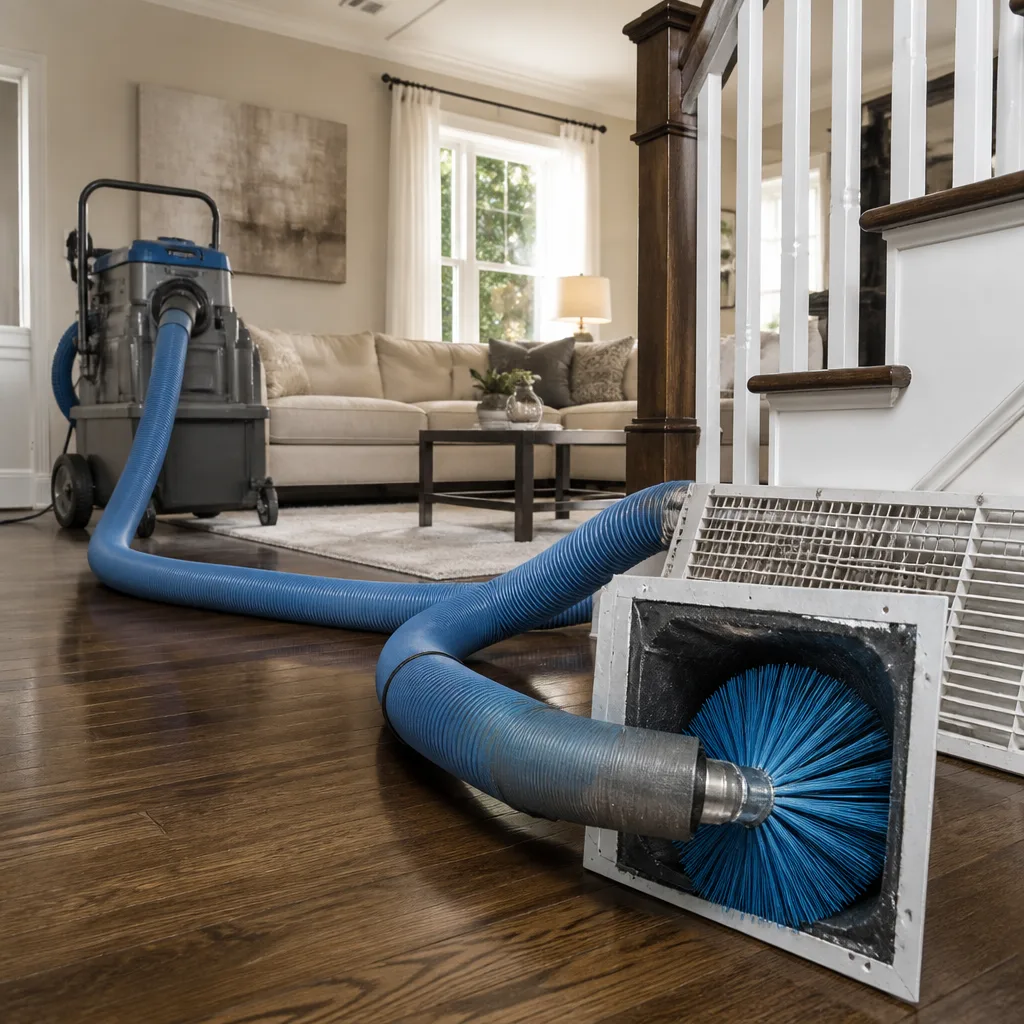
Rotobrush is a brand name for a powered brush-and-vacuum system that combines mechanical agitation with simultaneous vacuum extraction in a single tool head. It operates like a professional-grade version of the “brush on a drill” concept, but with three critical differences that define why it works.
First, the brush head is driven by a flexible shaft that can navigate bends and long runs, reaching the full length of a duct, not the first few feet. Second, the vacuum extraction happens at the point of contact: the brush dislodges debris and the vacuum removes it in the same pass, rather than loosening dust and hoping a separate vacuum gets it later. Third, the system is designed to work with the negative-air containment setup, so loosened particles are pulled toward extraction rather than pushed into the living space.
The mechanical action matters because the debris that matters most in Northridge ducts is not loose dust. It’s debris that has adhered to the interior surface: smoke particulate bonded to liner, pet dander mixed with humidity into a paste, construction dust compacted into low spots. A brush on a drill may scratch at this material. A Rotobrush head agitates it with enough torque and consistency to break the bond, while the vacuum removes it before it becomes airborne.
Consumer tools simply don’t generate this combination of reach, agitation torque, and point-of-contact extraction. That’s not a marketing claim; it’s a mechanical description. The right equipment for the job condition is the whole philosophy. We match the equipment to the job, which means some portions of a system need aggressive agitation and others need gentle negative-air extraction to avoid damaging older liners.
Why Northridge Specifically Makes This Decision Harder
Northridge has a combination of climate and housing-stock factors that make duct contamination more likely and DIY attempts less effective than in many other regions. If you’re reading this from a newer coastal home with a tight envelope, your risk profile is different. In Northridge, the cards are stacked differently.
The San Fernando Valley’s summer heat pushes HVAC systems hard. Northridge regularly sees 100-degree stretches in July and August, which means the AC runs continuously for weeks. More run time means more air volume through the ducts, more particulate deposition on interior surfaces, and more condensation cycles in the early morning when humid air hits cold duct surfaces. The result is a system that accumulates debris and moisture faster than a lightly used system.
Add in the Valley’s air quality, which consistently ranks among the worst in the Los Angeles basin. Northridge sits in a geographic bowl where particulate from traffic on the 405 and 118 corridors, regional wildfire smoke, and agricultural dust from the northwest Valley settle across the area. Homes with older or poorly sealed ducts are pulling that particulate into the duct system every time the HVAC cycles. Your ducts are part of your home’s health system, and in Northridge, that system is under continuous load.
The housing stock compounds it. Much of Northridge was built in the 1950s through 1970s, with original or decades-old ductwork. That means flex duct that has deteriorated, metal duct with failing tape at the joints, and insulation that has broken down. The older the system, the more likely contamination is embedded rather than superficial, and embedded contamination is squarely in the professional column.
The One Legitimate DIY Task: Register and Filter Maintenance
If this guide has made DIY sound useless, let’s correct that. There is one category of duct work that every Northridge homeowner should handle themselves, and doing it well extends the time between professional cleanings and improves day-to-day air quality. That category is register maintenance and filter discipline.
Here is the complete DIY maintenance routine, with no equipment beyond a vacuum, a damp cloth, and the right filter:
- Replace or clean your HVAC filter on schedule. For 1-inch filters, that’s every 30 to 90 days depending on household factors. For 4-inch media filters, every 6 to 12 months. If you have a Honeywell or Aprilaire media cabinet, use the correct replacement media for that cabinet, not a generic that may not seal properly.
- Vacuum every register face and return grille each time you change filters. Remove the grille, vacuum both sides, and wipe with a damp cloth. This removes the visible dust that would otherwise cycle back into the home or fall back into the duct.
- Vacuum the accessible return-air cavity behind the grille. Use the brush attachment, gently, and only on surfaces you can see. Do not reach deeper; the point is surface maintenance, not deep cleaning.
- Check for visible dust accumulation around register openings. If dust streaks are appearing on walls or ceilings near registers, that’s a sign the duct interior is shedding particulate, and it’s time to consider professional cleaning rather than more aggressive DIY.
- Keep the area around returns clear of furniture and debris. Restricted airflow forces the system to pull harder, which draws more particulate into the ducts.
If you do this consistently, you’ll reduce the volume of new particulate entering the duct system and catch early signs of contamination before they become remediation-level problems. What you will not do is remove contamination already present. Think of it like dental work: brushing and flossing prevent problems, but once a cavity exists, no amount of home care removes it. For more guides & resources on maintaining healthy indoor air, explore our blog.
How to Assess Your Own Duct System Before Deciding
Before you decide between DIY and professional, assess the actual condition of your system. This takes 30 minutes and requires nothing but a flashlight, your eyes, and honest observation. Here is the sequence we walk through with Northridge homeowners who call us uncertain about whether they need service.
- Remove a register cover in a bedroom and shine a flashlight down the duct. What do you see? Light dust film is normal. Visible debris, dark staining, or what looks like dirt caked onto surfaces is not. Flex duct that is sagging or collapsed is a repair issue regardless of cleanliness.
- Check the return grille, usually in a hallway or wall. Remove it and look. Return ducts carry unfiltered air from the home into the HVAC unit, so they accumulate everything the home generates: pet hair, dust, cooking grease, and in some cases, signs of pests.
- Smell the air when the system first starts. Musty or smoky odors that appear only when the HVAC runs point to duct contamination, not a room-level issue. This is a strong signal that professional attention is warranted.
- Look at the filter you just removed. If it’s coated with heavy dust and the home has been occupied normally, the system is cycling a lot of particulate. If the filter appears dry and clean after 90 days, the entire duct system may be in decent shape insofar as deposition goes.
- Note any history: remodeling, water damage, rodent activity, or a previous owner who smoked indoors. Any one of these flags pushes the system toward professional evaluation.
If your assessment finds light dust and you have no contamination history, and the system is less than 10 to 15 years old, DIY maintenance is a reasonable choice. If you find visible debris, staining, odors, or have a contamination history, professional cleaning with proper containment is the responsible call. The assessment is free; guessing wrong about contaminated ducts is not.
Common Mistakes to Avoid
- Using a leaf blower or air compressor to “blow out” ducts. This method, popular in low-bid operations and some DIY circles, releases enormous volumes of particulate into the living space. It is uncontrolled and creates worse indoor air quality than doing nothing. In a Northridge home with Valley dust already present, this is actively counterproductive.
- Running a shop vac without a HEPA-rated exhaust filter. The exhaust side of the vacuum recirculates whatever the filter misses, which at fine particle sizes is most of what you’re trying to remove. You’re redistributing contamination rather than extracting it.
- Sealing registers and returns with tape before cleaning, then removing the tape afterward. This does nothing to contain airborne particulate during the work, because residential duct systems are not airtight. The only effective containment is negative pressure, which requires professional equipment.
- Using chemical sprays, foggers, or “duct bombs” sold online. These products introduce chemicals into the airstream that you then breathe. They do not remove particulate; they add another substance to the system. There is no EPA-registered chemical product that cleans ducts by fogging.
- Attempting to clean flex duct by pushing a brush through it. Flex duct is a plastic inner liner over wire coil. Aggressive brushing tears the liner, and flex duct with a torn liner should be replaced, which costs more than the cleaning would have.
- Ignoring the dryer vent. Dryer Vent Cleaning in Northridge is a distinct service for a reason: lint accumulation is a leading cause of residential fires. This is not a maintenance footnote; it’s an annual necessity for any home with a dryer, and it requires tools designed to reach the full vent run to the exterior termination.
- Assuming one cleaning fixes everything. If the professional inspection finds damaged, disconnected, or collapsed duct sections, cleaning alone won’t solve the problem. That’s why we recommend evaluating repair needs during the same visit. Clean, repaired, and sealed is the actual goal.
See the difference
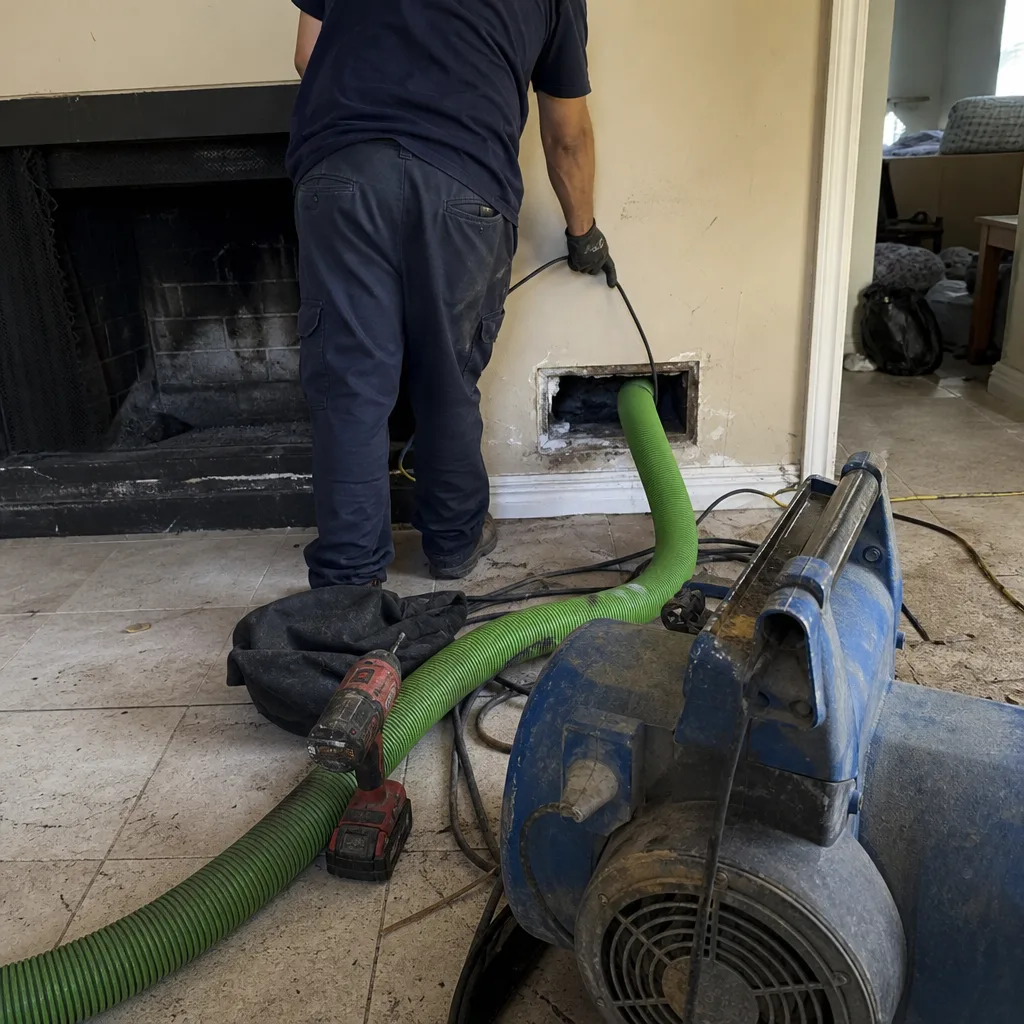 Before
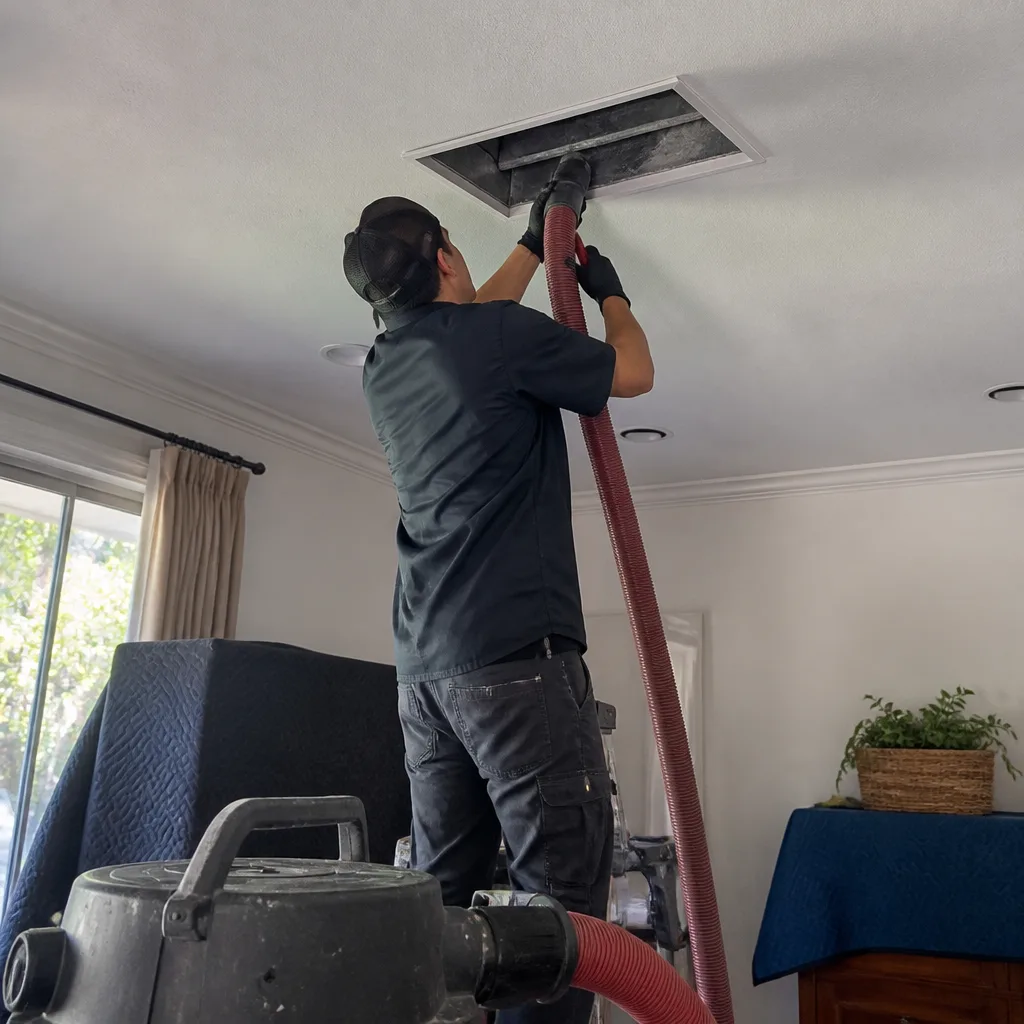 After
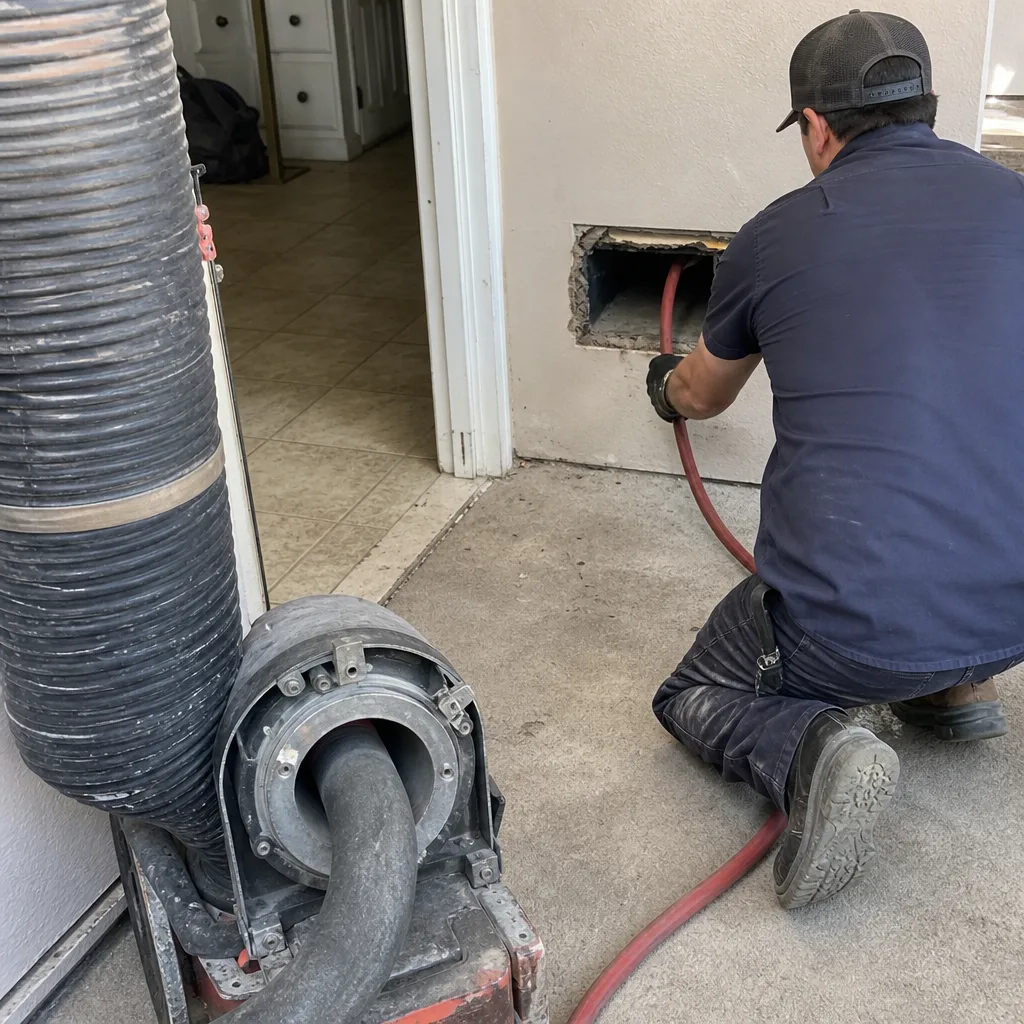 Before
 After
 Before
 After
When to Call a Professional
Call a professional when your assessment turns up visible debris beyond light dust, when you detect odors from the vents, when you know the home has a contamination history (remodeling, rodents, smoke, water intrusion), or when the system is old enough that the duct liner may be deteriorating. Call a professional when anyone in the home has respiratory conditions that make duct contamination a health risk rather than an inconvenience. And call a professional when you want verification: before-and-after photos of your actual ducts, not someone’s stock footage.
Air Duct Cleaning Northridge offers free estimates in Northridge. Call (833) 968-4871 and we’ll assess your system and tell you honestly whether cleaning is warranted or whether maintenance is sufficient. No pressure, just a straight answer about what’s actually in your ducts.
Frequently Asked Questions
Professional air duct cleaning in Northridge typically runs between $400 and $900 for a full system, depending on the home’s size, the number of ducts, the contamination level, and whether repairs are needed. This is a whole-system price, not a per-vent teaser that balloons once work begins. Call (833) 968-4871 for an exact quote based on your home.
DIY duct cleaning is a good idea for maintaining an already-clean system: vacuuming register faces, wiping grilles, and replacing filters. It is not appropriate for removing accumulated or contaminated debris, because consumer tools cannot contain or extract particulate from deep inside duct runs.
Look for visible debris when you remove register covers, dust streaks around registers, odors that appear only when the HVAC runs, or a known contamination event like remodeling or rodent activity. Any of these signals justifies a professional assessment. If none are present and you’ve maintained filters, cleaning may not be needed.
Cheaper quotes usually come from operations using consumer-grade or improvised equipment, skipping containment, or pricing per-vent with a low teaser rate that expands once work begins. Professional cleaning requires HEPA-rated extraction, negative-air containment, and trained operators, all of which cost more than a shop vac and a brush.
Ask for before-and-after photos of your own duct interior, not stock images. A professional operation should provide photographic documentation of the cleaned surfaces. If a company cannot show you what changed inside your ducts, you have no way to verify the work.
Most Northridge homes benefit from professional cleaning every 3 to 5 years, more often if there are pets, smokers, recent remodeling, or wildfire smoke exposure. Homes with good filter discipline and no contamination sources may go longer. The right interval depends on what’s actually accumulating in your system, not a calendar.
The Bottom Line
The DIY-versus-professional question has a clean answer: DIY maintains, professionals remediate. If your Northridge ducts are already clean, a shop vac and consistent filter changes will keep them that way. If they are contaminated, those same tools will spread the contamination further. The equipment difference is real and measurable: negative-air containment and HEPA extraction do what no consumer vacuum can, and the cost of guessing wrong is an indoor air quality problem that gets worse, not better. Assess your system honestly, do the maintenance you can safely do, and call (833) 968-4871 when the problem is beyond the reach of your tools.
Written by the team at Air Duct Cleaning Northridge, serving Northridge since 2014.