
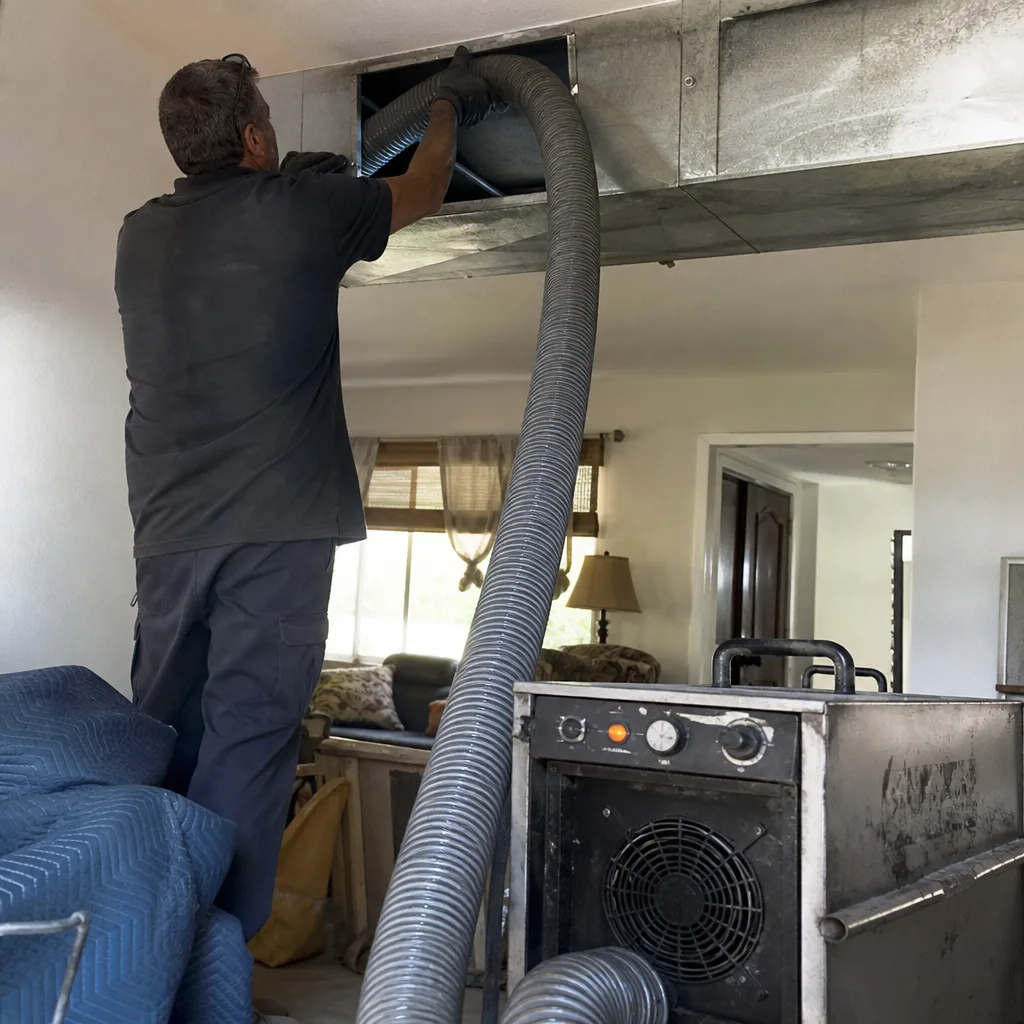
Last updated November 2, 2026
 Whole-home duct cleaning
 Dryer vent cleaning
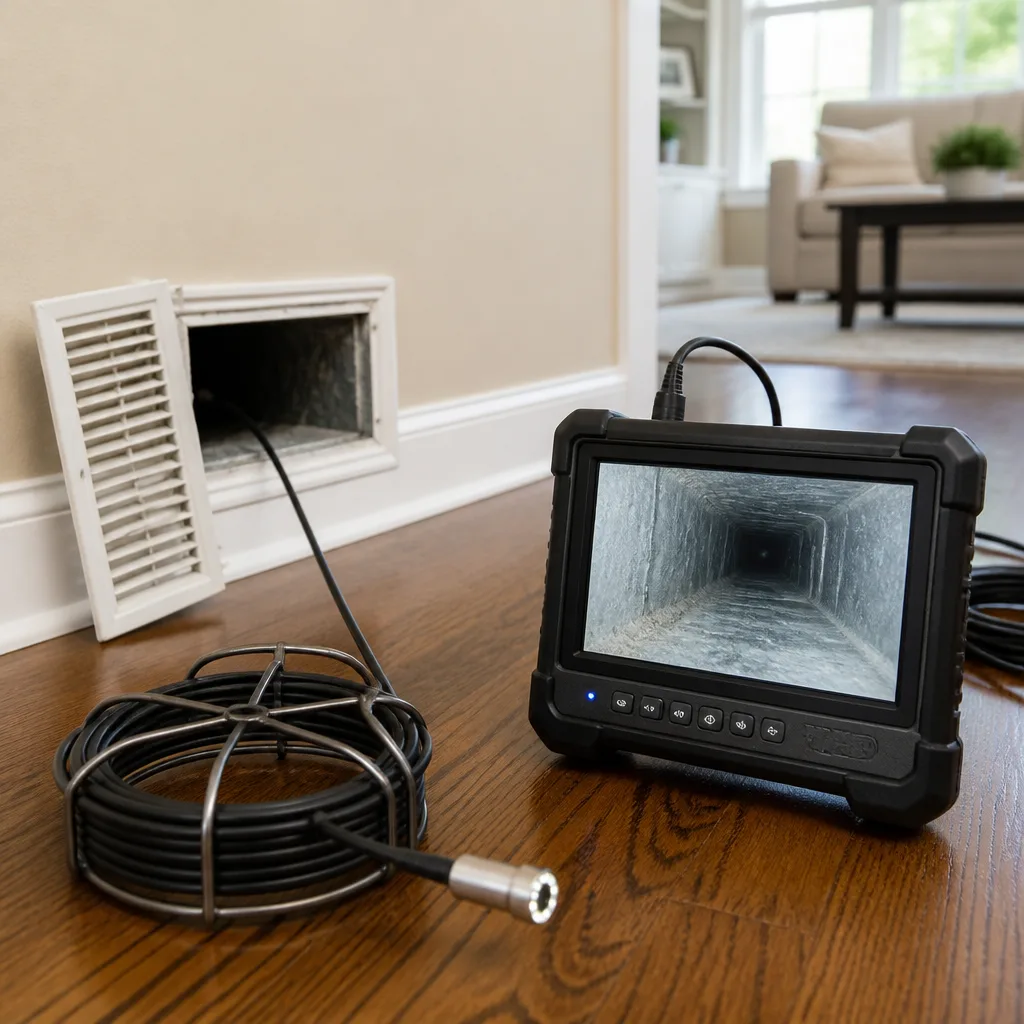 Camera inspection
 Sanitizing & deodorizing
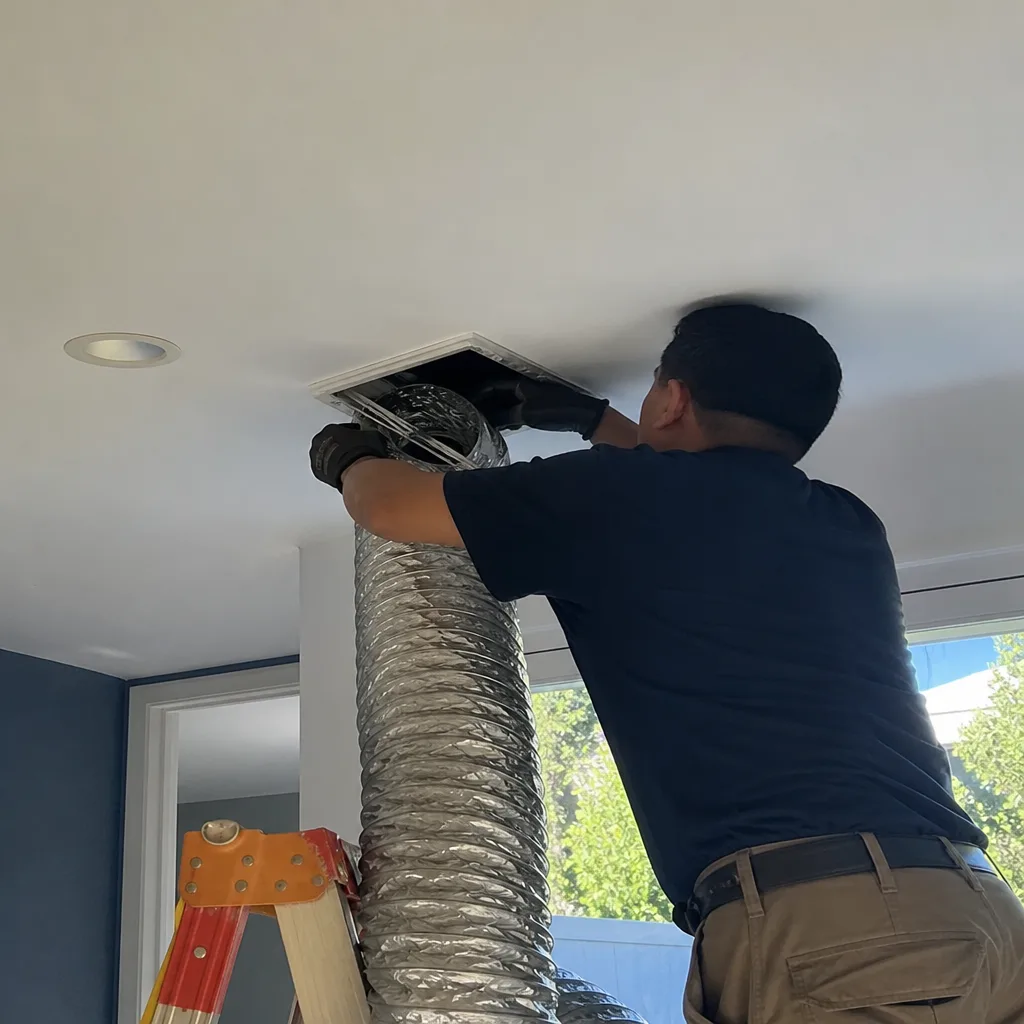
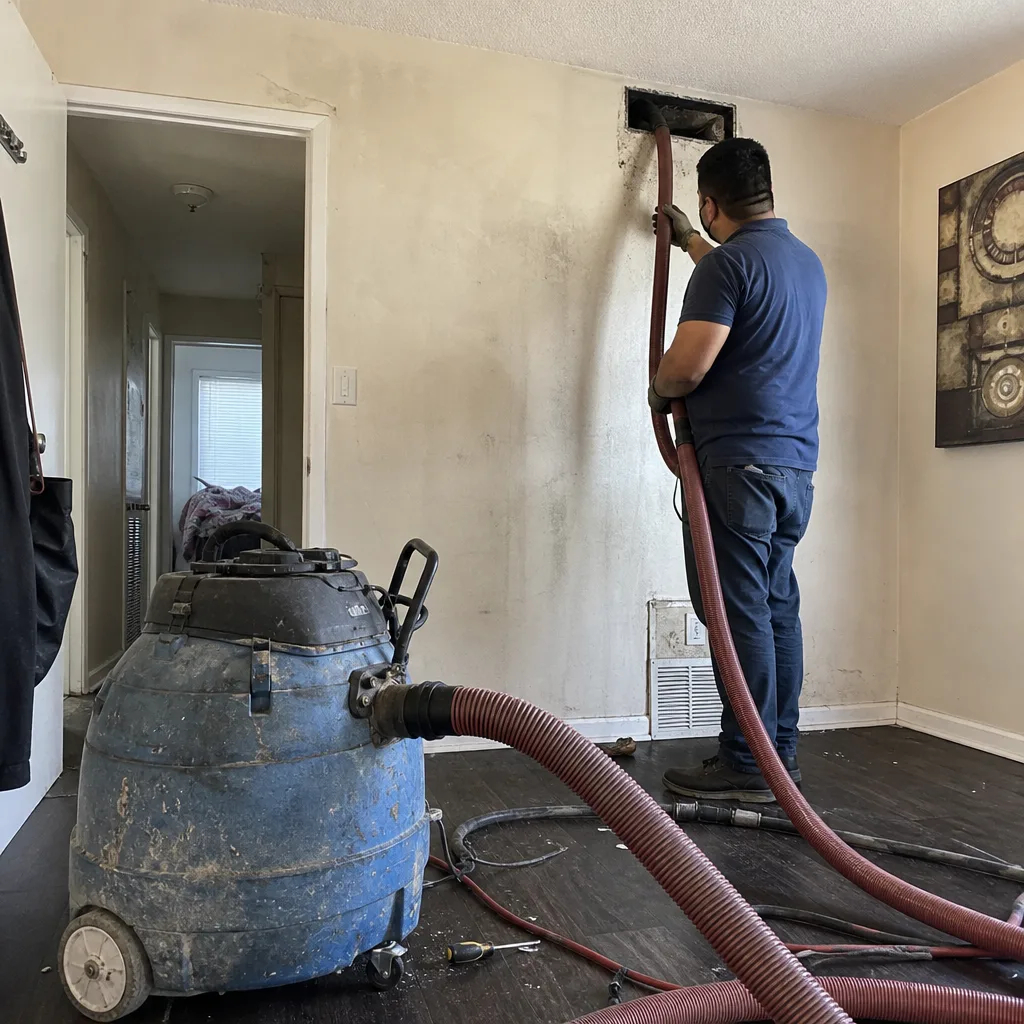
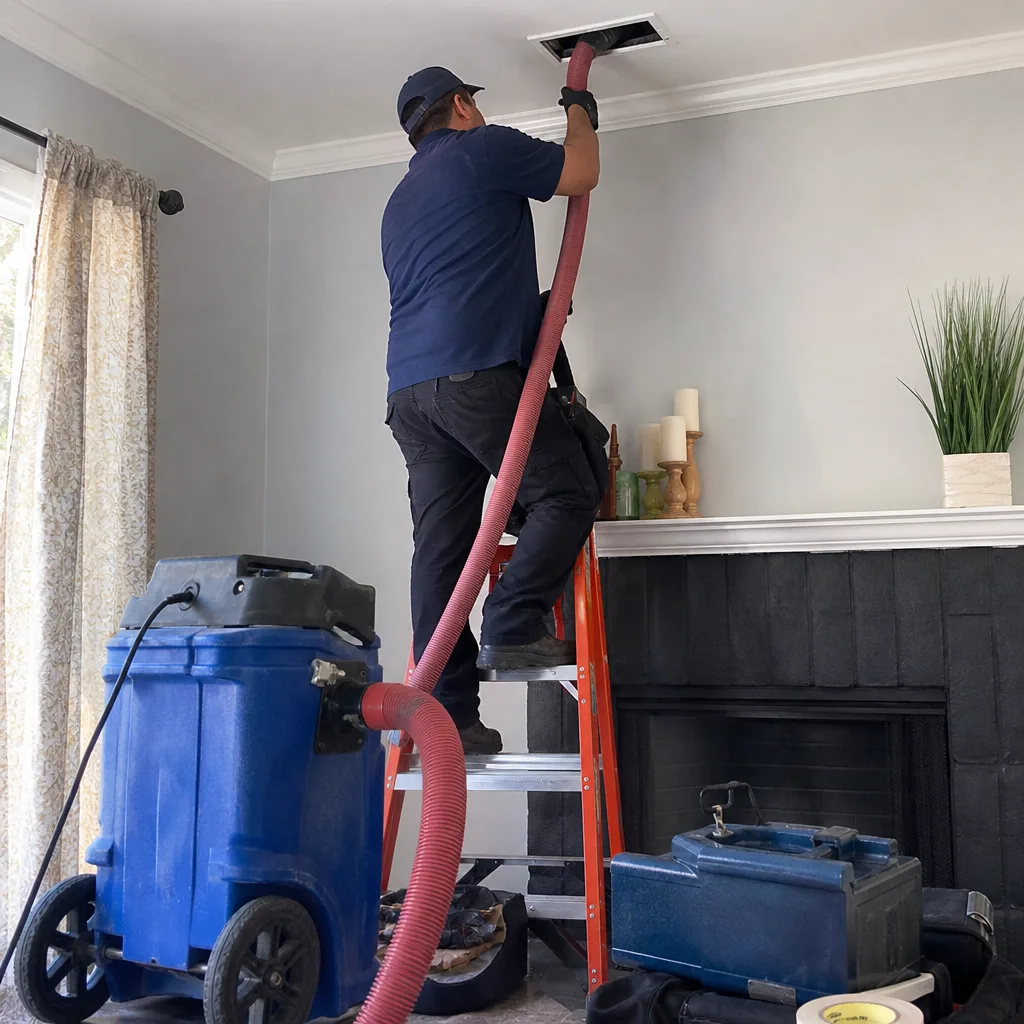
Whole-system duct and dryer vent check with before-and-after photos - you see exactly what came out of your vents
That "$99 whole-house special" is a bait ad - the real number appears once they are in your hallway, or the "clean" is a shop-vac at the register. We photograph the inside of your ducts before and after instead.
Air Duct Cleaning Maintenance Checklist for Northridge Homeowners
Most duct cleaning checklists you’ll find online are written for a generic American house in a generic American climate. They tell you to change your filter every 90 days and schedule a cleaning every three to five years, as if your HVAC system lives in a weather-controlled bubble. But a Northridge home spent August and September pulling air through wildfire smoke particulate at 2.5 microns, and in January it’s cycling Valley dust kicked up by Santa Ana winds. The ducts in a house on White Oak Avenue have a different maintenance reality than one in a mild coastal zip code. This guide is a checklist built around actual Northridge risk events, not a calendar. You’ll learn which triggers override a routine schedule, what you can inspect yourself at each register, and which tasks genuinely require professional equipment.
Styles & brands we work with
- Whole-home duct cleaning
- Dryer vent cleaning
- Camera inspection
- Sanitizing & deodorizing
Quick Answer
An air duct maintenance checklist for a Northridge homeowner should be event-driven, not calendar-driven. After smoke events, renovation work, rodent activity, or a jump in allergy symptoms, you should inspect registers, replace the filter with a MERV 11 – 13 model during fire season, and schedule a professional cleaning if dust returns within 48 hours of cleaning surfaces. Routine filter checks happen every 30 to 60 days in Northridge, not the 90 days generic guides recommend.
Table of Contents
- Event-Based Triggers That Override Any Calendar
- The 10-Minute Register Inspection You Can Do Today
- Filter MERV Ratings for Northridge Dust and Wildfire Particulate
- How to Log Your Duct System History for Faster Diagnosis
- What You Can DIY vs. What Needs Professional Equipment
- Northridge Seasonal Considerations: Smoke, Santa Anas, and Summer Heat
- The Dryer Vent Addition to Your Checklist
- Common Mistakes to Avoid
- When to Call a Professional
- Frequently Asked Questions
- The Bottom Line
Event-Based Triggers That Override Any Calendar
Calendar-based duct maintenance assumes your home’s air quality risks are consistent year over year. Northridge homeowners know that’s not how it works. A house in the Chatsworth hills corridor experiences a different particulate load in October than it did in May. If you’ve been following a generic “every 3 – 5 years” rule for duct cleaning, you’re managing an average, not your address.
Here are the events that should trigger an immediate inspection and likely a professional cleaning, no matter when your last service happened:
- Wildfire smoke events. When smoke from the hills settles into the Valley, your HVAC system becomes a particulate pump. Smoke particles at 2.5 microns pass through standard fiberglass filters and coat the interior of your ductwork. After any smoke event where you could smell it indoors, you need a cleaning. We’ve opened ducts in Northridge homes after fire season and found a gray film on every surface.
- Renovation or construction work. Drywall dust, sawdust, and flooring debris get pulled into return ducts during any remodel. This dust is fine enough to bypass most filters and will recirculate for months. The trigger isn’t the renovation itself; it’s the first time you run your system after the work is done.
- Rodent or pest activity. Rats and mice in the attic or crawlspace leave droppings and nesting material in duct runs. This is a health issue, not just a cleanliness issue. If you’ve had pest control out, or found evidence of activity, your ducts need professional attention before you resume normal HVAC use.
- Water intrusion or visible mold. Northridge’s dry climate helps here, but a roof leak, plumbing failure, or condensate drain issue can introduce moisture into ductwork. Mold in ducts requires professional removal, not just cleaning.
- Unexplained respiratory symptoms. If household members are waking up congested or allergy symptoms spike when the system runs, your ducts are likely circulating whatever they’re reacting to. This is a diagnostic signal, not a coincidence.
The point of an event-based checklist is simple: events create debris. Debris doesn’t honor a schedule. Air duct cleaning in Northridge should be scheduled when conditions demand it, not when a calendar says it’s been long enough.
The 10-Minute Register Inspection You Can Do Today
Before calling anyone, there’s a straightforward visual inspection you can do at each register in a Northridge home. It takes about ten minutes and gives you concrete observations to share with a technician. Here’s the step-by-step:
- Turn the system off. You want still air so dust isn’t blowing in your face while you inspect.
- Remove the register cover. Most Northridge homes have standard stamped steel or aluminum registers. A screwdriver handles the screws; some pop off by hand.
- Wipe the inside of the register boot with a white paper towel. This is the metal housing behind the cover where the duct connects. If the towel comes back gray or black with matted debris, you’re seeing accumulated particulate.
- Look into the duct run with a flashlight. You should see smooth metal or flex duct interior. What you’re checking for: visible dust clumps, debris, rodent droppings, or a film coating the walls.
- Check for disconnected or sagging ducts. In attics and crawlspaces, especially after Northridge’s summer heat cycles, duct connections can separate. A visible gap means your system is pulling attic air and debris, not conditioned air. That’s an air duct repair in Northridge issue, not just a cleaning one.
- Repeat at each register. Note which rooms look worst. North-facing bedrooms and rooms near the return often accumulate more.
Write down what you see at each register. “Bedroom 2: gray film, visible dust clumps” is far more useful to a technician than “the house seems dusty.” This observation log becomes part of your duct system history, which we’ll cover shortly.
Filter MERV Ratings for Northridge Dust and Wildfire Particulate
The generic advice to “use a good filter” isn’t specific enough for a Northridge home. Different particulate threats require different filtration. Understanding MERV ratings helps you choose the right filter for the season.
A refresher on what MERV means: Minimum Efficiency Reporting Value, running from 1 to 16. Higher numbers catch smaller particles. Here’s the practical breakdown for Northridge conditions:
- MERV 8 (basic): Catches dust, pollen, and carpet fibers down to about 3 microns. Fine for routine use when air quality is normal, but not sufficient during fire season or after a dust-heavy Santa Ana week.
- MERV 11 (mid-range): Captures particles down to about 1 micron, including some smoke particulate. A good year-round choice for most Northridge homes. Brands like Honeywell make reliable MERV 11 options that fit standard returns.
- MERV 13 (fire season and allergy flare-ups): Captures particles down to 0.3 microns, which includes most wildfire smoke. We recommend switching to MERV 13 during active fire season and for a month after any smoke event. Aprilaire makes MERV 13 filters that perform well under Valley conditions.
- Above MERV 13: These are typically found in whole-home filtration systems rather than standard 1-inch filter slots. If you’re running a dedicated air quality system, you’re already past this concern.
An important note: higher MERV ratings create more air resistance. Your system may have trouble pulling through a MERV 13 filter if it’s already struggling with dirty coils or an undersized return. If a high-MERV filter causes whistling or reduced airflow, your duct system may need attention before the filter can do its job.
The filter is only half the equation. A MERV 13 filter catches fine particulate at the point of filtration, but anything that got past a lower-rated filter during that August smoke week is now coating your duct walls. That’s where professional cleaning comes in.
How to Log Your Duct System History for Faster Diagnosis
Most Northridge homeowners have no record of their duct system’s service history. When a technician arrives, they’re starting from zero: unknown filter history, unknown last cleaning date, unknown repair record. This makes diagnosis slower and less precise.
A duct system log doesn’t need to be elaborate. A simple note on your phone or a page in a home maintenance binder works. Here’s what to record:
- Filter changes. Date, brand, and MERV rating. Note anything unusual, like a filter that came out heavily loaded after only three weeks.
- Duct cleaning dates. Which company did the work, how long it took, and what they found. Ask for before-and-after photos and keep them with the log.
- Repairs. Any duct sealing, reconnection, or insulation work. Air duct repair in Northridge work should be documented with what was fixed and where.
- Environmental events. Note wildfire smoke weeks, major Santa Ana dust events, renovation projects, pest control treatments, and any water intrusion. These are the events that change what’s inside your ducts.
- Observations from your register inspections. The notes you took during your 10-minute inspection go in the log. Over time, this creates a trend line showing whether dust accumulation is worsening.
When our team walks into a Northridge home with a maintained log, diagnosis takes minutes instead of an inspection survey. We know when the last cleaning happened, what the homeowner has observed since, and whether the current dust load is normal for the timeframe or indicates a problem like a disconnected return pulling attic air.
What You Can DIY vs. What Needs Professional Equipment
Some duct maintenance tasks are honest homeowner work. Others require professional tools and training. Misclassifying either direction wastes money or leaves problems unresolved. Here’s the line:
DIY-Appropriate Tasks
- Filter replacement. Monthly checks during summer and fire season, replacement every 30 to 60 days in Northridge, and always after smoke events.
- Register cleaning. Vacuuming register covers and wiping the boot interior you can reach from the room. This removes surface dust but doesn’t touch the duct run itself.
- Visual inspection. The 10-minute register check described above. You’re not cleaning; you’re assessing.
- Return vent clearing. Ensuring furniture, rugs, or storage aren’t blocking return grilles. Blocked returns starve the system and increase dust pickup from unintended sources.
Professional Equipment Tasks
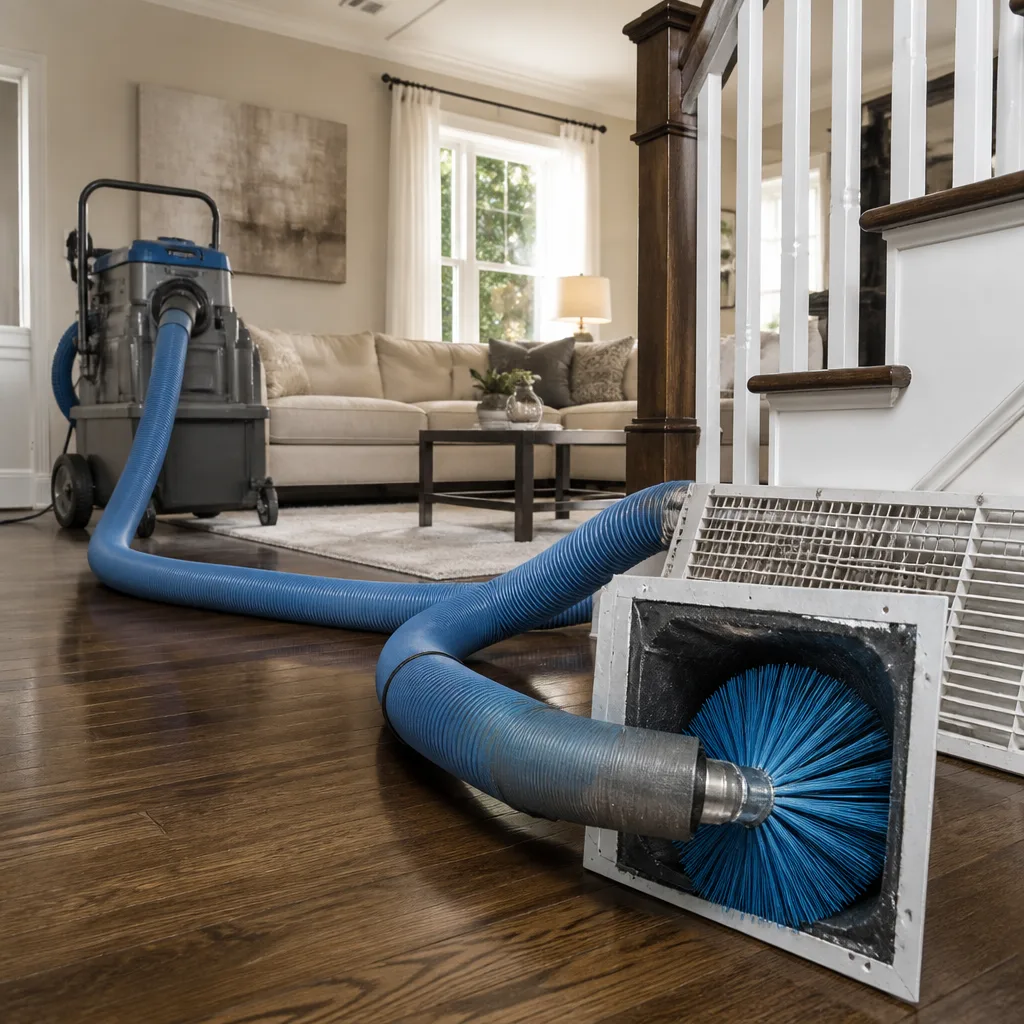
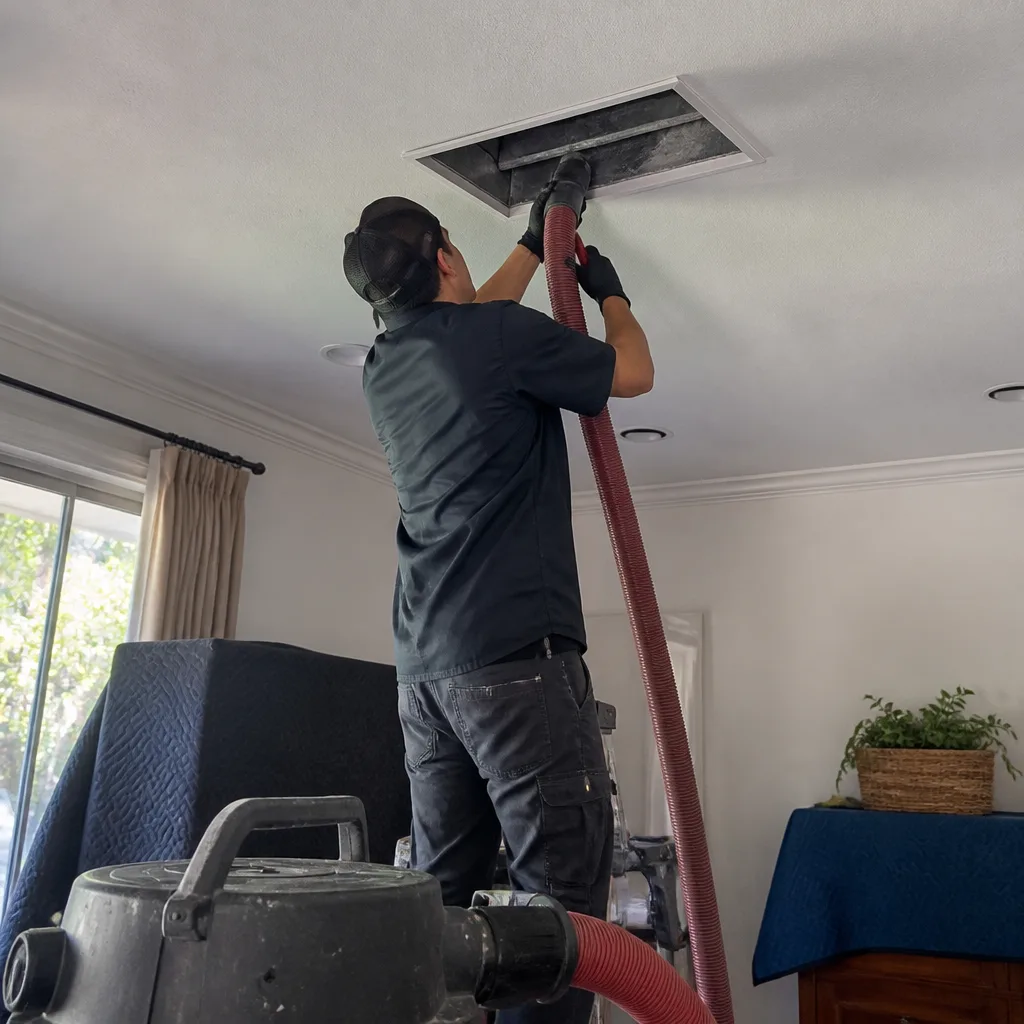
- Duct interior cleaning. Reaching more than 18 inches into a duct run requires brush-fed systems like Rotobrush equipment, not a household vacuum. Consumer tools can’t reach the debris and often make it worse by loosening what’s adhered to duct walls.
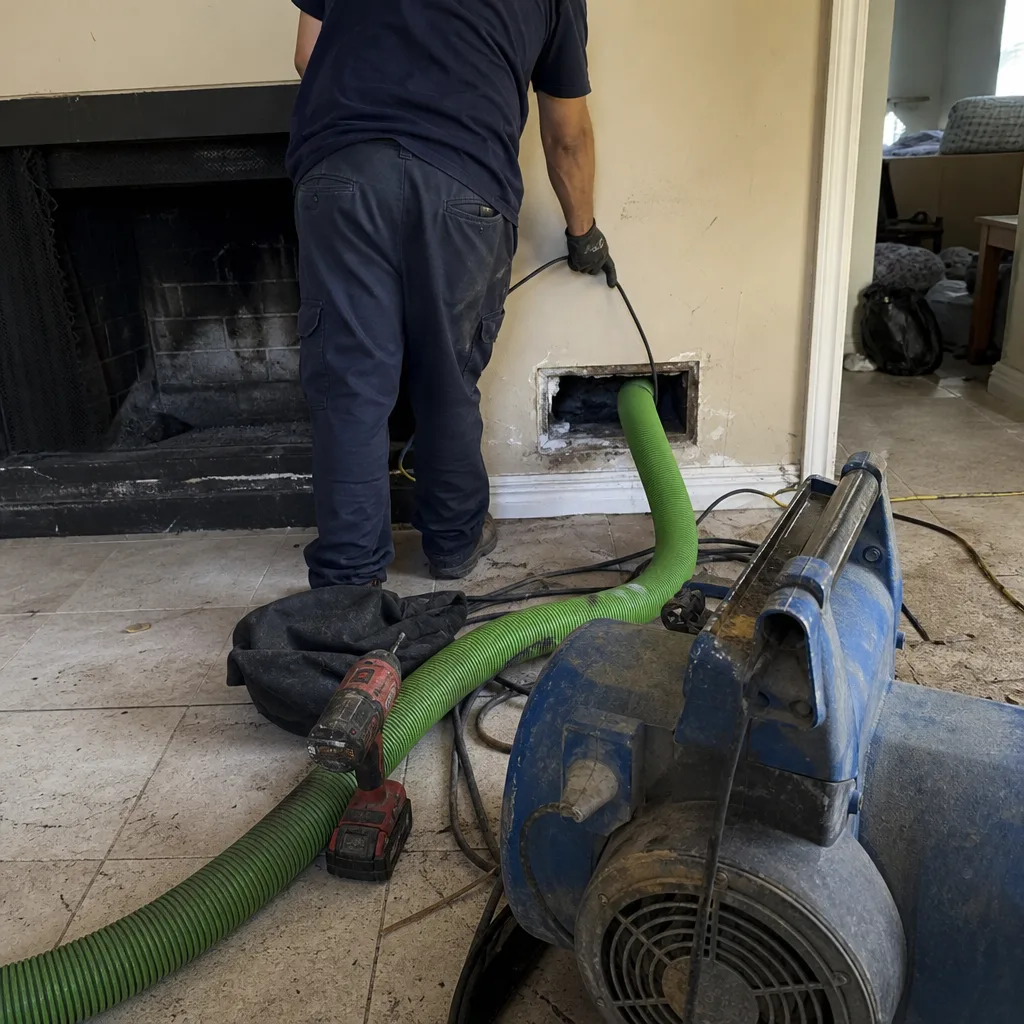
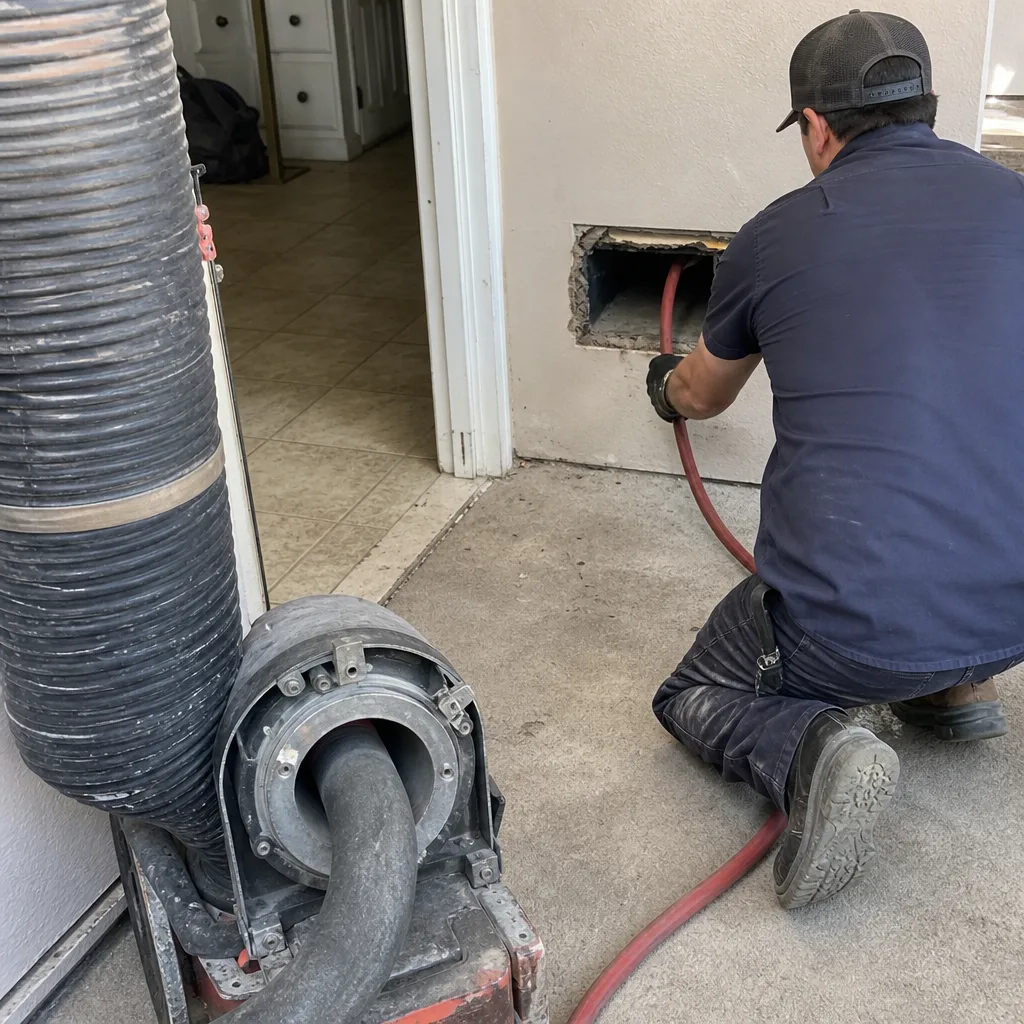
- Contained debris removal. Proper duct cleaning requires negative-air containment so dislodged debris doesn’t enter your living space. Abatement Technologies negative-air systems hold the dust at the cleaning point and extract it outside the home. This is not something a shop vac accomplishes.
- HEPA extraction. Post-cleaning extraction with Nikro HEPA-rated equipment captures the fine particulate a standard vacuum exhausts back into the room. If a company isn’t running HEPA extraction, they’re recirculating some of what they’re supposedly removing.
- Duct repair and reconnection. Disconnected or crushed ducts need to be reconnected, sealed, and sometimes replaced. This is mechanical repair work, not cleaning. It’s also work many cleaning-only companies will walk past because they don’t have repair capability.
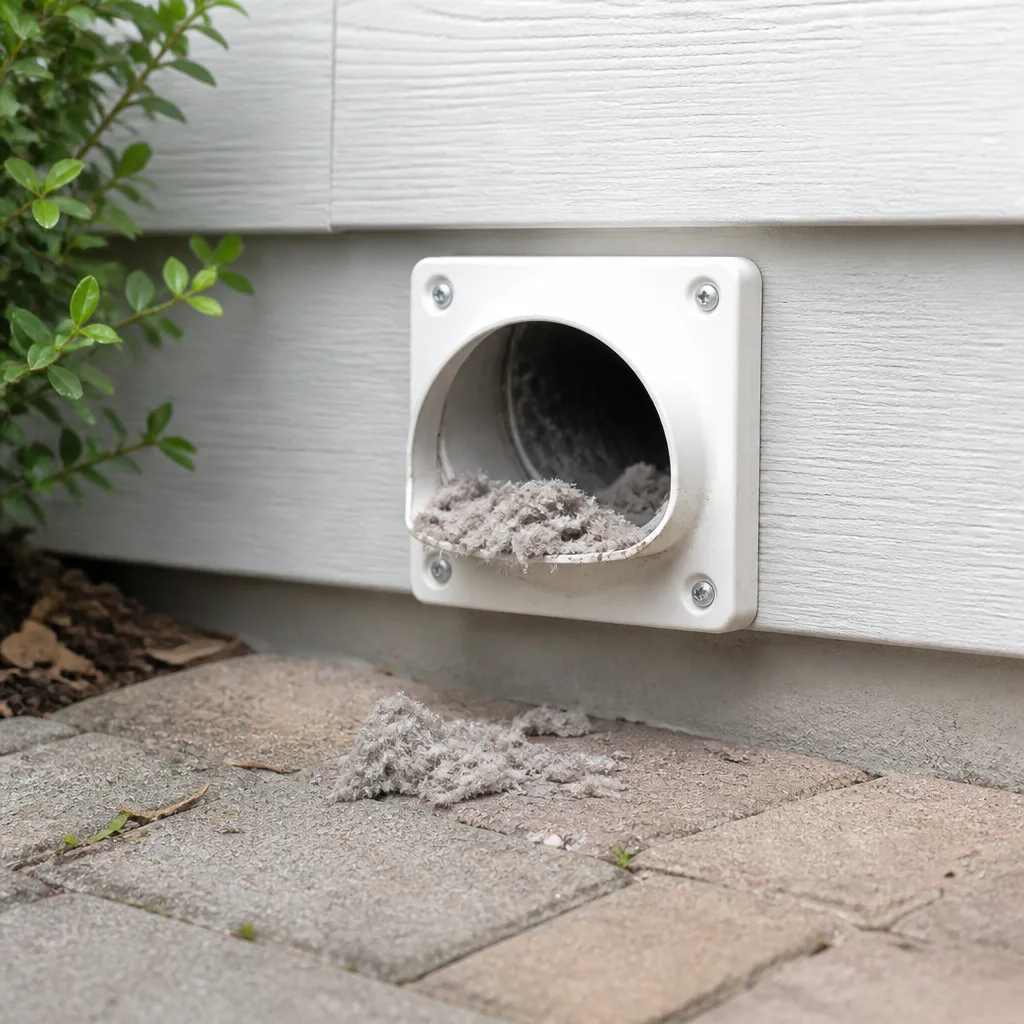
- Dryer vent cleaning. Dryer vent cleaning in Northridge is a distinct service with dedicated equipment. Lint accumulates in the full vent run, not just the part you can reach from the laundry room.
The principle is simple: you can inspect and maintain what you can see and reach. For what’s inside the duct run, you need equipment matched to the job. That’s the difference between a maintenance checklist and a guess.
Northridge Seasonal Considerations: Smoke, Santa Anas, and Summer Heat
Northridge has four distinct seasonal threats to duct health. A generic maintenance calendar ignores all of them. Here’s what we see in our work across the Northridge area, season by season:
Summer: Continuous Operation and Dust Loading
From June through September, Northridge HVAC systems run nearly continuously. That’s hundreds of hours of air moving through your ducts each month. Every hour of operation deposits whatever the filter misses. Summer is also when residents open windows at night, letting in dry Valley dust that enters the return and settles in duct runs. Filter checks should be monthly during summer, not quarterly.
Fall: Wildfire Smoke and Particulate Inundation
September and October are the high-risk fire months. Smoke particulate at 2.5 microns bypasses standard filters and accumulates as a fine film on duct walls, coils, and blower components. After any smoke event visible or smellable from your Northridge home, a duct inspection is warranted. If you ran the system during heavy smoke, you almost certainly need cleaning.
Winter: Santa Ana Winds and Fine Dust
Santa Ana events drive dry, fine dust from the high desert through the Valley. This dust is finer than typical household dust and passes through MERV 8 filters. It coats duct interiors the same way it coats your patio furniture. After a multi-day Santa Ana event, check your filter and wipe a visible duct boot. If the residue is fine and gray, your ducts are accumulating the same material.
Spring: Allergen Season and Transition
Spring in Northridge brings grass and tree pollen that enters through open windows and door traffic. Pollen is relatively large (10 – 100 microns) and gets caught by filters, but it loads them quickly. It’s a good season to upgrade your filter rating temporarily and to do your visual register inspection as the weather warms.
The seasonal point: your duct maintenance calendar should respond to what the Northridge climate is doing, not to a generic national schedule.
The Dryer Vent Addition to Your Checklist
Dryer vents are part of the home’s exhaust system and belong on the same checklist as supply and return ducts. They’re also the highest-stakes item: according to the National Fire Protection Association, dryer vent fires are a leading cause of residential fires, and lint accumulation is the primary cause of those fires.
Here’s the dryer vent portion of your checklist:
- Know your vent run length. A short, straight run to an exterior wall is minimal risk. A long run through the attic or a crawlspace, common in older Northridge homes, is a higher-risk configuration that needs more frequent attention.
- Check the exterior vent opening monthly. Go outside while the dryer runs. Is there strong airflow? A weak flow means lint is accumulated somewhere in the run. That’s a fire hazard, not a nuisance.
- Feel the dryer body temperature. If the dryer is noticeably hot after a normal cycle, the vent is restricting airflow. The dryer is working harder and hotter than designed.
- Schedule professional dryer vent cleaning annually. If your vent run is long, used heavily, or serves a household with pets, do it more often. Dryer vent cleaning in Northridge should be a scheduled service, not an afterthought.
Dryer vents are not a footnote to duct cleaning. They move hot, lint-laden air out of your home, and when they fail, the failure mode is fire. The lint you can see in the trap is only about one-third of what’s generated; the rest moves into the vent run. A professional cleaning with proper equipment removes what your lint trap never catches.
Common Mistakes to Avoid
- Treating duct cleaning as a once-a-decade event. In Northridge’s climate, with its dust, smoke, and continuous HVAC operation, ducts accumulate debris faster than in most regions. Event-based triggers mean “when it’s needed,” not “when the calendar says it’s been long enough.”
- Running MERV 8 filters year-round. Standard filters are fine for routine conditions, but fire season and Santa Ana weeks demand MERV 11 – 13. A filter that can’t catch smoke particulate means that particulate ends up in your ducts.
- Assuming a visible filter change means clean ducts. Your filter catches what passes through it, but everything that bypassed a low-rated filter during a smoke event is now inside the duct run. Changing the filter doesn’t address what’s already accumulated downstream.
- Skipping the visual inspection because “the system works fine.” Your HVAC system can deliver air while ducts are heavily loaded, disconnected, or pulling from an attic space. Performance decline is gradual, and you may not notice the incremental loss of airflow.
- Blocking return vents with furniture or storage. Every Northridge home has at least one return register that’s partially blocked. It starves the system and forces it to pull air from wherever it can, including framing cavities with insulation and dust.
- Using a household vacuum to “clean” what you can reach inside a duct. Consumer vacuums don’t have the reach or extraction power to do anything meaningful inside a duct run. They can loosen debris without removing it, which makes things worse.
- Ignoring the dryer vent because it’s “separate from the HVAC.” The dryer vent is part of your home’s air system and a documented fire risk. Excluding it from your checklist is excluding the highest-consequence item.
When to Call a Professional
Some checklist items are observations, and some are calls to action. Call a professional when you see gray or black residue on register boots that returns within days of cleaning, when airflow from one or more registers is noticeably weaker than others, when you’ve had a smoke event and the system ran during it, when you find rodent droppings or nesting material near or in ducts, when your filter is loaded within weeks of installation, or when family members experience allergy symptoms that track with system use. These patterns indicate conditions inside the duct run that require professional equipment to diagnose and resolve. Air Duct Cleaning Northridge home services include a thorough inspection with every visit, and we use professional-grade equipment matched to what we find. We offer free estimates in Northridge. Call (833) 968-4871 to schedule.
Frequently Asked Questions
In Northridge, most homes need duct cleaning every 2 to 4 years, but the trigger is environmental: after any wildfire smoke event, major renovation, rodent activity, or water intrusion, clean regardless of the last service date. Homes near the Chatsworth hills corridor and those that run systems continuously through summer will be at the shorter end of that range.
MERV 11 is a solid year-round choice for most Northridge homes, balancing filtration with airflow. During fire season and for a month after smoke events, switch to MERV 13 to capture fine smoke particulate. If you’re using a whole-home filtration system from brands like Honeywell or Aprilaire, follow the manufacturer’s filter specifications.
Use the register inspection method: remove a register cover, wipe the boot interior with a white paper towel, and inspect the visible duct run with a flashlight. Gray or black residue on the towel, visible dust clumps, or a visible film on duct walls all indicate accumulated debris. Weak airflow from specific registers can also signal a disconnected or collapsed duct section.
Equipment and scope drive the difference. A company using consumer-grade vacuums and charging per vent is providing a surface-level service, while a professional operation running brush-fed cleaning like Rotobrush, negative-air containment like Abatement Technologies, and HEPA extraction like Nikro is doing a fundamentally different job. Whole-system pricing is standard for professional work. Ask what equipment they run and whether they include repair capability in their scope.
Hardware store kits can remove loose lint from a short, straight vent run, but they can’t clear compacted lint from a long run or navigate bends. They also can’t verify that the entire run is clear. If your dryer vent is long, runs through an attic or crawlspace, or has been neglected for years, professional equipment is warranted. Dryer vents are a fire risk; incomplete cleaning leaves the hazard in place.
Professional duct cleaning in Northridge typically ranges from $450 to $900 for a single-system home, depending on the number of registers, system size, and level of contamination. Homes requiring additional services like dryer vent cleaning or duct repair will be higher. A professional estimate is based on your specific system and condition. Call (833) 968-4871 for a free estimate on your Northridge home.
The Bottom Line
A Northridge duct maintenance checklist should respond to what actually happens inside your home’s HVAC system: wildfire smoke in fall, Santa Ana dust in winter, continuous operation in summer, and the everyday debris that accumulates between professional cleanings. Inspect your registers monthly, change your filter based on season and events, log what you observe, and call for professional cleaning when conditions demand it. Ducts are part of your home’s health system, and what accumulates inside them gets circulated through every room. If your inspection finds problems, or if you’ve had a smoke event and aren’t sure what’s inside your system, call (833) 968-4871. We’ll assess what’s in your ducts, match the right equipment to what we find, and leave your system clean, repaired, and sealed.
Written by the team at Air Duct Cleaning Northridge, serving Northridge since 2014.
See the difference
 Before
 After
 Before
 After
 Before
 After