
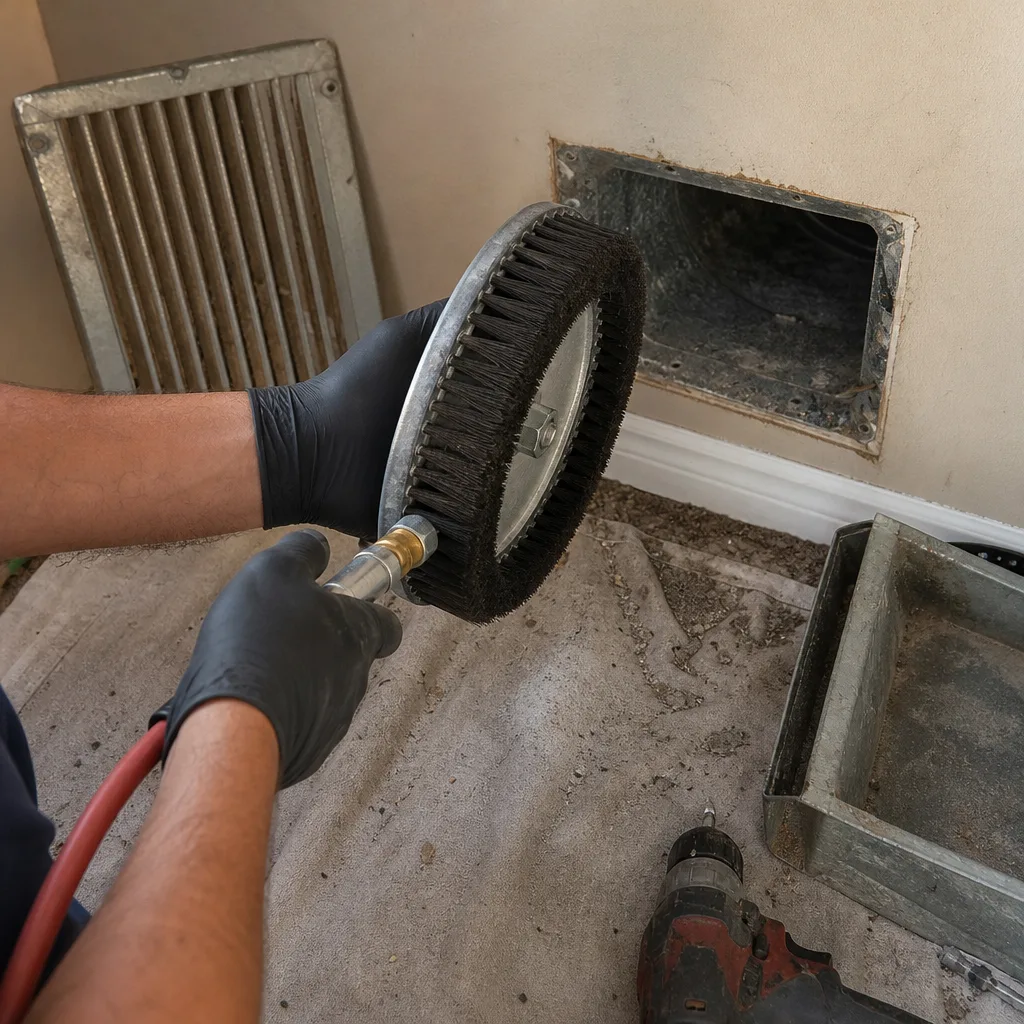
Last updated November 2, 2026
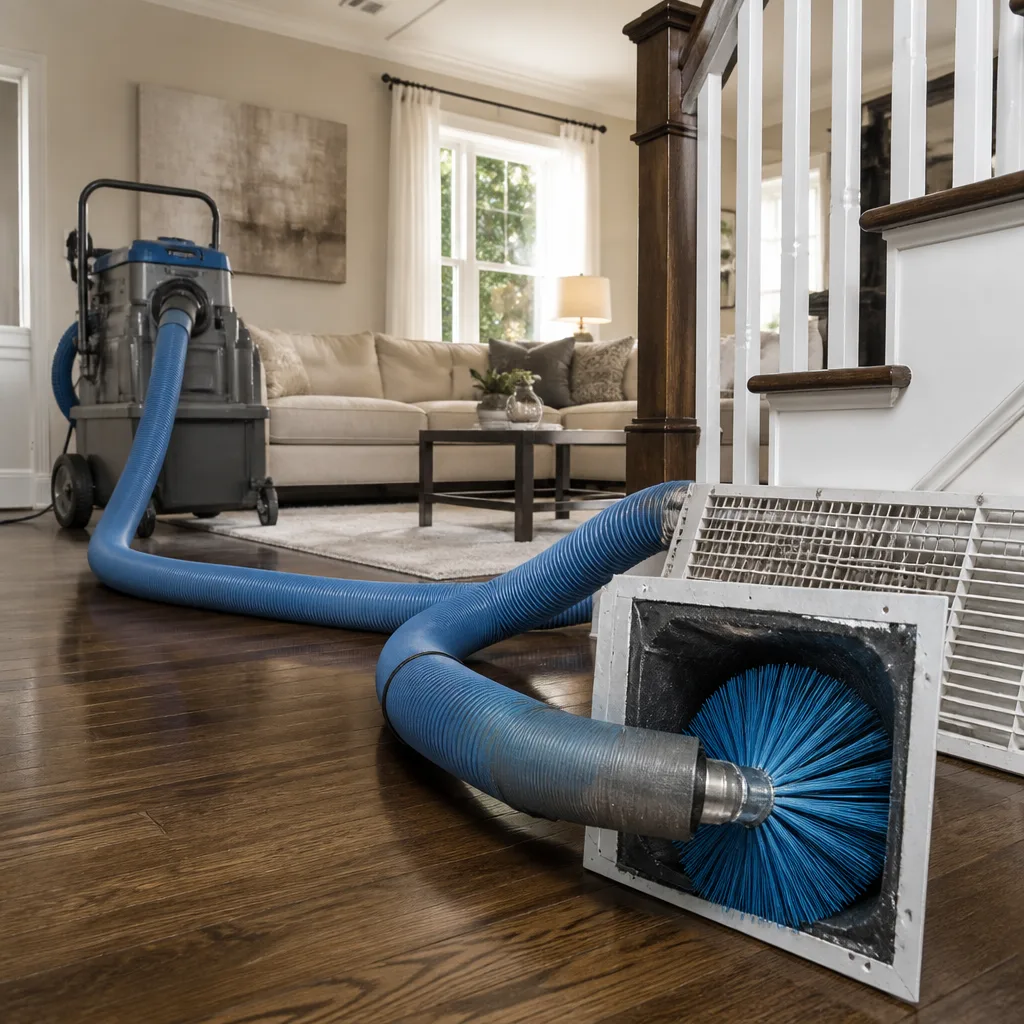 Whole-home duct cleaning
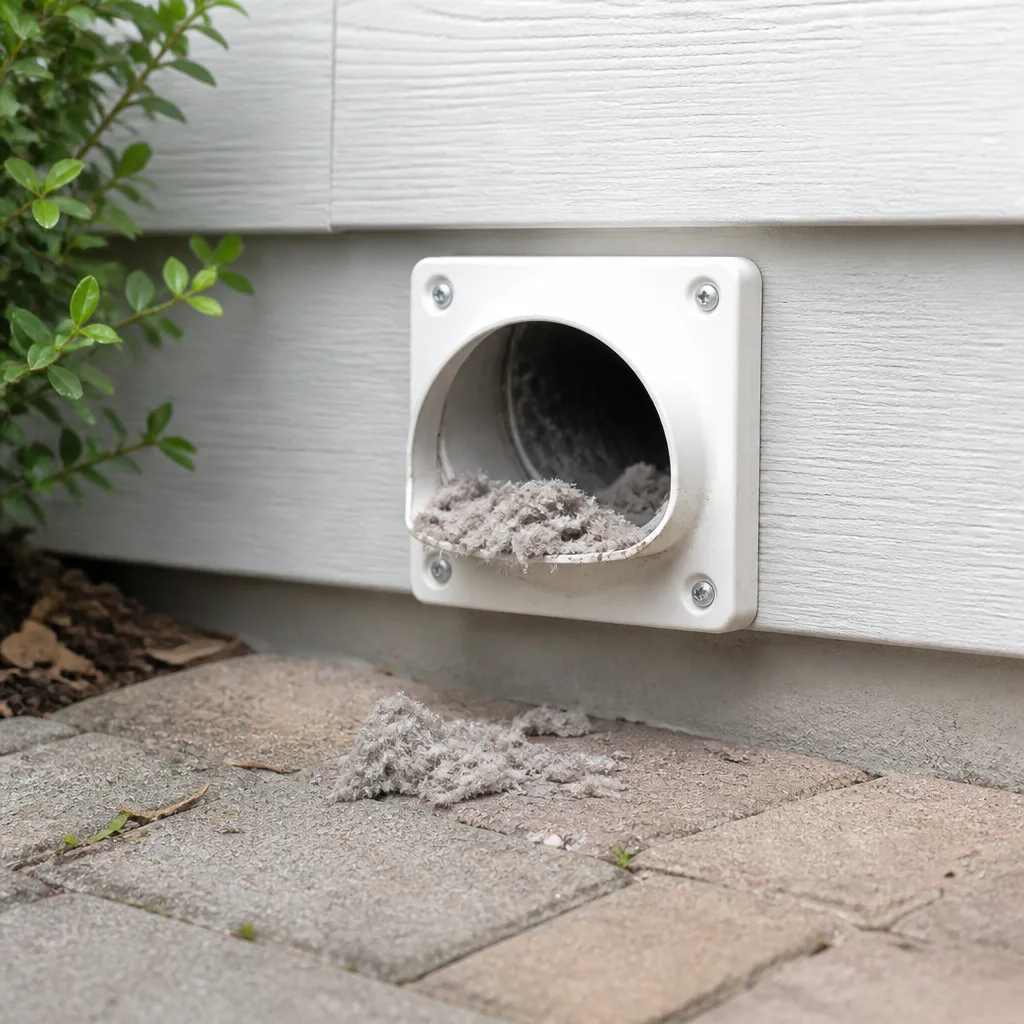 Dryer vent cleaning
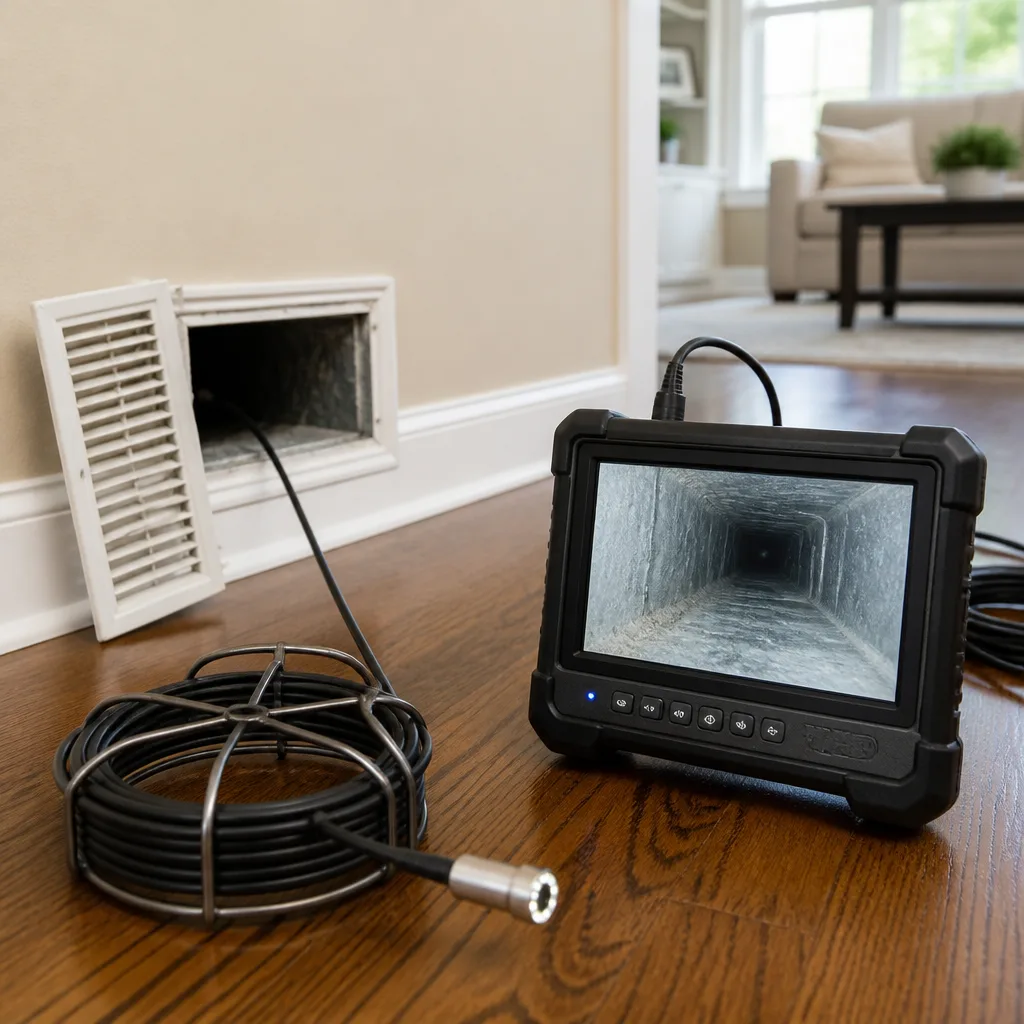 Camera inspection
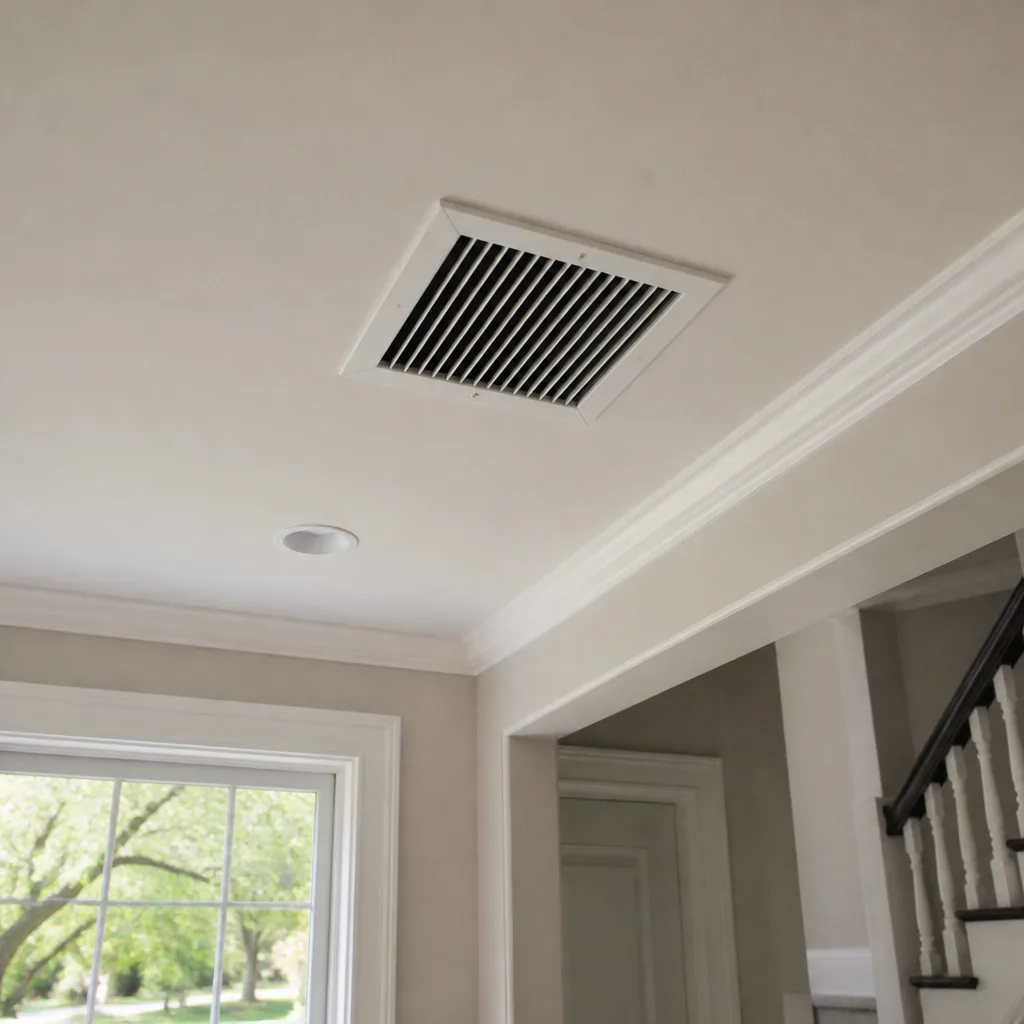 Sanitizing & deodorizing
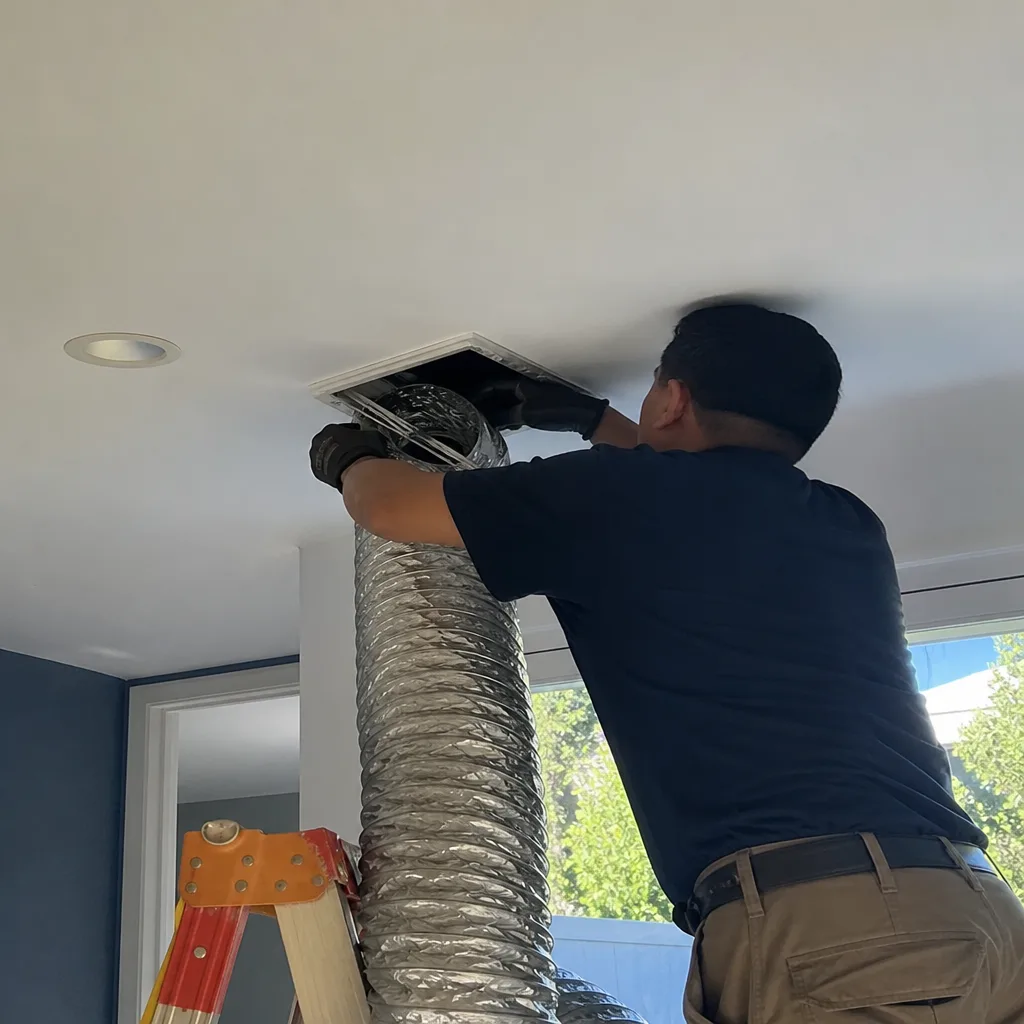
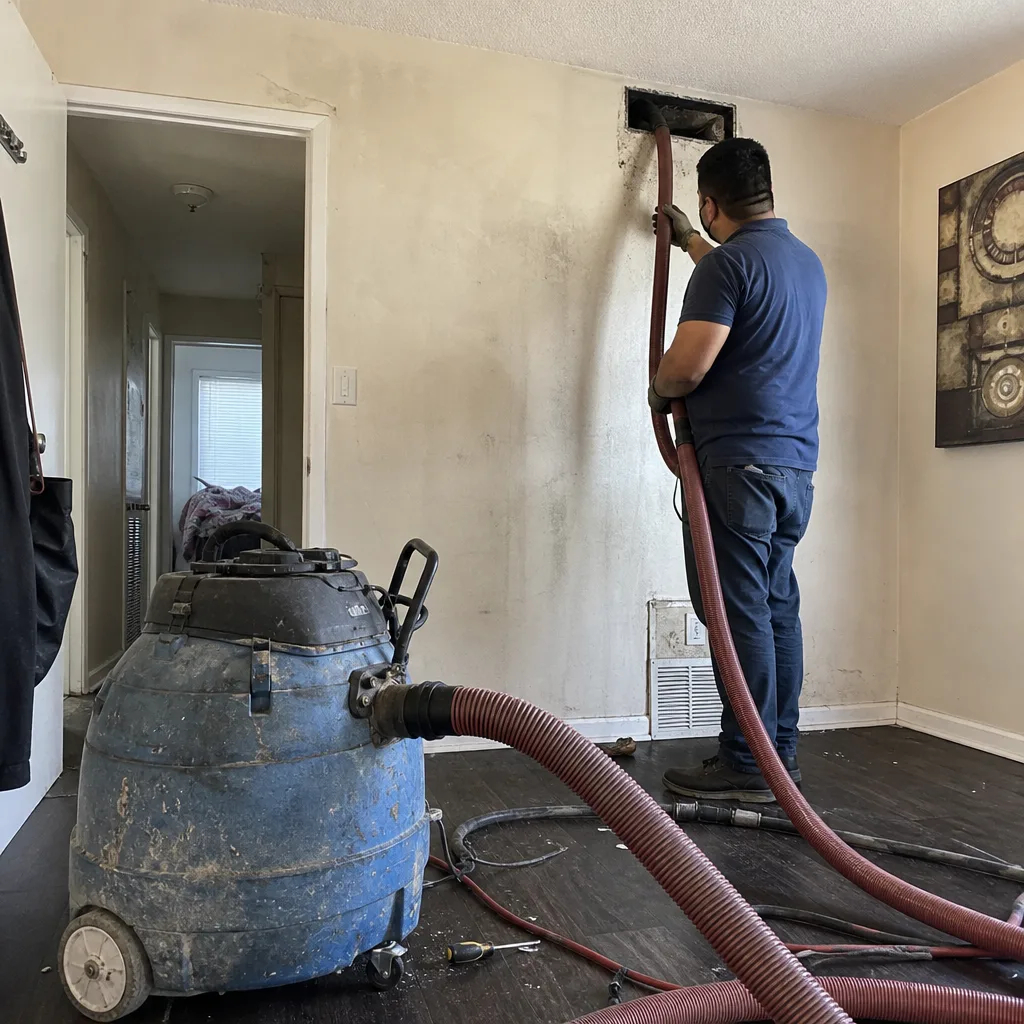
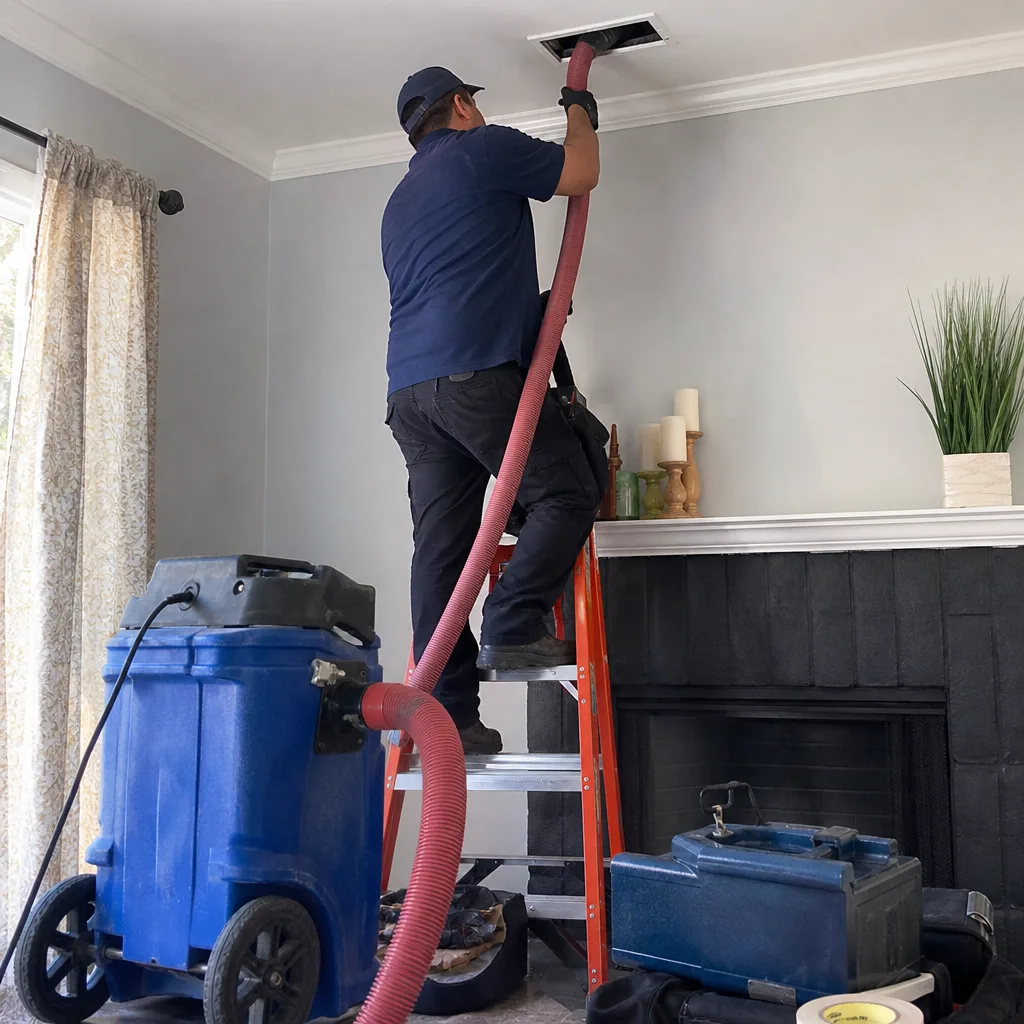
Whole-system duct and dryer vent check with before-and-after photos - you see exactly what came out of your vents
That "$99 whole-house special" is a bait ad - the real number appears once they are in your hallway, or the "clean" is a shop-vac at the register. We photograph the inside of your ducts before and after instead.
Air Duct Cleaning Emergency Preparedness Guide for Northridge Homes
After the 1994 Northridge earthquake, thousands of homes ran their HVAC systems with cracked duct joints, collapsed flex sections, and attic insulation debris inside supply runs. Every forced-air cycle distributed that material through the house for weeks before anyone checked the ducts. And the homeowners who did check were the exception. Most people simply flipped the thermostat back on once power returned and assumed the system was fine. This guide walks through what actually happens to ductwork during Northridge’s two most likely emergency scenarios – earthquakes and wildfire smoke events – and what you should do before, during, and after to protect your home’s air. If you live in Northridge, the question is not whether your ducts will face an emergency event. It’s whether you’ll have a protocol in place when it happens.
Quick Answer
After an earthquake or wildfire smoke event in Northridge, shut your HVAC system off immediately and do not restart it until you have checked the visible ductwork for damage, disconnected joints, or debris intrusion. Post-earthquake duct problems are usually structural – cracked joints, collapsed flex runs, shifted plenums – while post-wildfire issues are particulate and odor-related. Professional Air Duct Cleaning services with HEPA-rated extraction equipment, paired with a documented visual inspection, is the only way to confirm your ducts are safe to operate. Homeowners with a pre-existing duct system record can complete this assessment faster and with stronger insurance documentation.
Styles & brands we work with
- Whole-home duct cleaning
- Dryer vent cleaning
- Camera inspection
- Sanitizing & deodorizing
Table of Contents
- The Northridge Risk Profile: Why Ducts Matter Here
- Creating a Pre-Emergency Duct System Record
- The Post-Earthquake HVAC Shutdown Protocol
- Post-Wildfire Duct Assessment: Smoke Odor and What It Actually Means
- Emergency Duct Cleaning vs. Standard Cleaning: Why the Sequence Matters
- Communicating a Post-Emergency Duct Situation to Your Insurance Adjuster
- Common Mistakes to Avoid
- When to Call a Professional
- Frequently Asked Questions
The Northridge Risk Profile: Why Ducts Matter Here
Northridge sits in a specific overlap zone. The Northridge Fault runs directly beneath the community, and the 1994 magnitude 6.7 earthquake demonstrated what that means for residential construction. Simultaneously, Northridge sits at the edge of the San Fernando Valley’s wildfire corridor, where Santa Ana wind events push smoke from the Santa Susana Mountains and Simi Hills directly over residential neighborhoods. These are not abstract risks. The 1994 quake damaged ductwork in tens of thousands of Valley homes, and seasonal wildfire smoke forces indoor air quality conversations every late summer and fall.
Your forced-air HVAC system is the largest air distribution mechanism in your home. A typical Northridge house moves 1,200 to 2,000 cubic feet of air per minute through ductwork when the system runs. If that ductwork is compromised – cracked, disconnected, or contaminated – every single cycle pushes whatever is in the ducts into your living space. The problem compounds because Northridge homes built before 1994 often have sheet metal ducts with taped joints that have been shifting for decades. Add a seismic event, and those joints separate. Add smoke, and a negative-pressure leak pulls contaminated attic air into the supply stream.
What makes this specific to Northridge rather than a generic Southern California concern is the combination of seismic activity and wildfire exposure in a single location. Many communities face one risk. Northridge faces both, which means the emergency duct protocol needs to cover two distinct failure modes. A homeowner who only prepares for earthquakes will be caught off guard by a smoke event. A homeowner who only prepares for wildfire season won’t know what to check after a tremor.
Understanding this dual-risk profile is the foundation of everything that follows. Your ducts are part of your home’s health system, and in Northridge, that system operates in a higher-risk environment than most of the country.
Creating a Pre-Emergency Duct System Record
The single most useful thing you can do for your future self is follow an Air Duct Cleaning Maintenance Checklist for Northridge Homeowners and document your duct system before an emergency happens. After a 6.7 magnitude earthquake, you will not remember which register connects to which trunk line. After a week of wildfire smoke, you won’t recall what your supply boots looked like before they got coated. A pre-emergency record changes the entire post-disaster assessment process from guesswork to comparison. It also gives you baseline documentation that insurance adjusters understand and accept.
What should the record include? First, photographs. Take clear photos of every visible duct component: the plenum where ducts leave the furnace, any accessible trunk lines in the attic or crawlspace, supply registers in each room, and the return air grille. Photograph the duct joints and connections specifically. These are the points that fail during seismic events. Second, a basic layout map. You don’t need engineering drawings. A simple sketch showing which rooms connect to which runs and where the main trunk line travels through the attic is sufficient. Third, equipment specifications. Note your furnace or air handler model, the type of ductwork (rigid sheet metal, flex duct, fiberboard), and any filtration equipment already installed. If you have a Honeywell media filter cabinet or an Aprilaire whole-home air cleaner, document the model and filter size.
Here is a numbered sequence for building the record in under an hour:
- Photograph every supply register and return grille from 12 inches away, showing the surrounding wall or ceiling. This establishes what “normal” looks like for each opening.
- Photograph the furnace or air handler cabinet with the access panel off, capturing the filter slot and blower area. This shows the system condition before contamination.
- Photograph the plenum and as many duct connections as you can reach safely. Do not enter confined attic spaces without proper safety precautions. A phone camera on a selfie stick can capture a lot without you leaving the access hatch.
- Sketch a rough duct map on a single sheet of paper. Label each room, mark supply register locations, and draw the main trunk line. Photograph the sketch.
- Note the duct type and approximate age. If you know the home was built in 1987 with original flex duct, write that down. If the ducts were replaced in 2015, note that too.
- Store everything digitally in a folder named “Home Duct System” and back it up to a cloud service. A paper copy in the garage will not survive a major earthquake. A cloud copy will.
We have worked on Northridge homes where this type of record made the difference between a two-week insurance assessment and a same-day one. Adjusters respond to documentation. Photographs with timestamps, before-and-after comparisons, and a clear layout map remove the ambiguity that slows down claims.
If you have not created this record yet, do it this weekend. It costs nothing except an hour, and it is the highest-leverage emergency preparation step available for your duct system. If you want a professional assessment as part of your record, an Air Duct Cleaning in Northridge service visit includes a full system inspection you can photograph and keep as your baseline.
The Post-Earthquake HVAC Shutdown Protocol
The moment the shaking stops in a Northridge earthquake, the protocol begins. Step one is immediate and non-negotiable: turn your thermostat to the OFF position and switch the HVAC breaker off at the electrical panel. Do not wait to see if the system “seems fine.” Forced-air systems conceal damage. The furnace in your garage or attic may look untouched while the ductwork in your attic has separated at three joints. Running the system before inspection is how you turn a contained duct problem into a whole-house contamination event.
After the system is off, wait for conditions to be safe (check for gas odors, structural damage, and downed power lines before re-entering any area), then follow this numbered sequence:
- Visually inspect the exterior compressor unit. Look for physical displacement, damaged refrigerant lines, or debris blocking the coil. If the unit shifted, do not run it.
- Visually inspect the furnace or air handler. Open the access panel if you can do so safely. Look for disconnected ducts at the plenum, shifted components, or insulation that has fallen onto internal parts. Do not reach into the cabinet.
- Check accessible attic duct runs. From the attic access hatch, use a flashlight to inspect visible ductwork. Look for sagging flex runs, separated joints, and insulation that has collapsed into the duct path. In our experience in Northridge, the most common post-earthquake failure is flex duct pulling away from a supply boot or trunk connection.
- Check each supply register inside the house. Remove the register cover with a screwdriver. Shine a flashlight into the boot. Look for drywall dust, insulation debris, or visible disconnection. Debris in the boot means the run is compromised.
- Check the return air grille and filter. Remove the filter and inspect it. A filter that is suddenly coated in dust or debris after an earthquake indicates the return path pulled in attic material.
If you find any of these indicators – separated joints, sagging runs, debris in boots, displaced equipment – keep the system off and call a professional who can perform Air Duct Repair in Northridge. A complete repair scope includes reconnecting separated runs, replacing crushed flex sections, sealing joints with mastic (not tape alone), and then cleaning the system to remove what entered during the event. The sequence matters: repair first, then clean. Cleaning a system with open joints simply pulls more debris in during the process.
One point we emphasize to every Northridge homeowner: the earthquake itself rarely causes the worst damage. The worst damage comes from operating the system for days or weeks with undetected breaks. The 1994 Northridge earthquake taught this lesson at scale. Homes that ran their HVAC immediately after the quake had particulate distributed through every room. Homes that shut down and inspected first had a contained, repairable problem.
Post-Wildfire Duct Assessment: Smoke Odor and What It Actually Means
When wildfire smoke settles over Northridge, the indoor air quality conversation shifts. Smoke particles enter homes through every gap: windows, doors, soffit vents, and the HVAC system itself if it is running during the event. Homeowners often assume that if the house smells like smoke, the ducts are the source. That assumption is frequently wrong. Smoke odor in the living space usually comes from surface deposition – particles that landed on carpets, furniture, walls, and curtains. The ducts may be largely unaffected, or they may be significantly contaminated. You cannot tell from smell alone.
Here is how to assess whether your ducts actually need professional attention after a smoke event:
- Check the air filter first. If the filter is discolored or gray after an event, the system pulled smoke through it. That is expected. Replace it. A filter that was clean before the event and is now loaded with particulate is evidence the HVAC system was running during the smoke event.
- Look at register boots, not just the register covers. Remove a few register covers and check the inside of the supply boot with a flashlight and a white cloth. Swipe the interior with the cloth. If it comes back gray or black, the supply runs contain smoke residue.
- Consider the pressure differential issue. If your home’s duct system has any leaks on the return side – even small ones – running the HVAC during a smoke event pulls smoky attic air into the ducts and distributes it throughout the house. This is a cascade failure: the exterior smoke infiltrates the attic, the return-side leaks pull it into the system, and the supply side distributes it.
- Evaluate the odor timeline. If the house still smells like smoke two weeks after the event with windows closed and the HVAC off, and you have cleaned surfaces and replaced filters, the ducts are a more likely source and should be assessed professionally.
Professional assessment after a smoke event should include visual inspection of the return and supply sides, filter evaluation, and, where indicated, cleaning with HEPA-rated extraction equipment. The key distinction is verification. A company that quotes cleaning over the phone without inspecting is guessing. A company that inspects first and then recommends based on findings is doing the job correctly. We match the equipment to the job, and after a smoke event, that means HEPA extraction on both the cleaning unit and the containment side to prevent cross-contamination of the living space during the process.
Emergency Duct Cleaning vs. Standard Cleaning: Why the Sequence Matters
Emergency duct cleaning is a different procedure from standard duct cleaning, and the differences matter for both outcomes and cost. A standard cleaning removes accumulated dust, debris, and allergens that build up over years of normal operation. An emergency cleaning addresses contamination from a specific event – seismic debris, smoke particulate, or both – and requires additional steps that standard cleaning does not.
Here is the sequence breakdown:
- Containment before cleaning. In an emergency scenario, the contaminants being removed may include fiberglass insulation particles, drywall dust, or smoke residue. Running cleaning equipment without containment can push these materials into the living space. Abatement Technologies negative-air methodology is designed specifically for this situation: it creates negative pressure in the duct system so that dislodged particulate is drawn to the extraction unit rather than escaping into the house.
- Inspection and repair assessment. Emergency cleaning cannot proceed effectively if the duct system has open joints or disconnected runs. The system must be repaired or temporarily sealed before cleaning begins, otherwise the cleaning process pulls in new contamination. This is why repair capability matters in a duct cleaning company. A company that can only clean will either skip the repair step (and do an ineffective job) or refer you out and reschedule the cleaning (delaying your return to normal operation).
- Targeted agitation. Standard cleaning uses brush agitation or air sweeping to loosen normal dust accumulation. Emergency cleaning after a seismic event often requires more aggressive mechanical agitation to dislodge embedded debris. This is where equipment selection matters. Rotobrush brush-fed cleaning systems are designed for exactly this type of mechanical removal in residential duct systems, and they pair with the HEPA extraction side to capture what gets dislodged.
- Post-cleaning verification. After emergency cleaning, the system should be re-inspected. This is not optional. You need visual confirmation that the repair work is holding and the cleaning removed the contamination. Before-and-after photography of register boots, plenum connections, and return ducts provides this verification.
The sequence always follows the same logic: contain, repair, clean, verify. Skipping any step compromises the others. Cleaning without containment spreads contamination. Cleaning without repair is temporary and incomplete. Cleaning without verification leaves you guessing whether the problem was actually solved.
For Northridge homeowners, this sequence is especially relevant after earthquakes because the damage is structural before it is particulate. A cleaning-only company cannot address the structural component. Repair capability is the difference between a system that is clean, repaired, and sealed versus one that is superficially cleaned but still leaking and loose.
Communicating a Post-Emergency Duct Situation to Your Insurance Adjuster
Insurance claims for duct damage after earthquakes or wildfire events succeed or fail based on documentation and communication. Adjusters process hundreds of claims after a major event. Yours needs to stand out with clarity and evidence. The goal is to make the adjuster’s job easy: give them a clean, well-documented claim that answers their questions before they ask them.
Here is what we have learned from working with Northridge homeowners through post-event HVAC claims:
- Submit your pre-emergency record if you have one. This is the strongest documentation possible. The adjuster can compare before-event photos against after-event photos and see the damage directly. A pre-existing duct system record turns subjective claims (“the ducts seem damaged”) into objective evidence (“here are the joints before, here are the same joints after”).
- Document the HVAC shutdown immediately. Write down the date and time you turned the system off after the event. This shows you acted to prevent further damage, which adjusters look for favorably. Failure to shut the system down quickly can be cited as negligence that worsened the damage.
- Photograph everything before any repair or cleaning work begins. Do not let anyone touch the system until you have comprehensive photographs of the damage. Once a repair is made, the evidence is gone. This is especially critical for disconnected joints, sagging runs, and debris inside boots.
- Get a written assessment from a qualified duct professional. The assessment should describe the damage, the likely cause (seismic event, smoke infiltration, or both), the recommended repair and cleaning scope, and a cost estimate. Attach this to your claim. A professional assessment adds credibility that a homeowner description alone cannot.
- Use the language of causation. Describe the damage in terms of cause and effect: “The earthquake shifted the flex duct at the connection to the master bedroom supply boot, causing a disconnection that allowed attic insulation to enter the supply run.” This is more effective than “the ducts are broken.”
- Request that the adjuster inspect the attic, not just the equipment. Many adjusters will look at the furnace or air handler but never examine the duct runs themselves. Ask directly for an attic inspection if the damage is in the ductwork.
A final note: do not begin non-emergency repairs before your adjuster has had the opportunity to inspect. Emergency mitigation to prevent further damage – like shutting the system off and documenting – is always appropriate. But full repair or replacement work should wait for approval unless your policy explicitly permits it. Your duct professional can help you navigate this and can often provide the written documentation the adjuster needs.
Common Mistakes to Avoid
- Restarting the HVAC system immediately after an earthquake without inspection. Seismic damage to ductwork is invisible from the thermostat. Every cycle with a disconnected joint distributes attic debris through the house. Shut down first, inspect second, restart third.
- Assuming smoke odor means the ducts are contaminated. In most post-wildfire cases, the odor is coming from surface deposition in the living space, not the duct system. Inspect before cleaning. A professional assessment will tell you whether the ducts are actually the source.
- Running the HVAC during a wildfire smoke event as a comfort measure. If your return side has any leaks, running the system pulls smoky attic air into the supply stream and distributes it. During active smoke events in Northridge, run the system only if you have high-efficiency filtration installed and the system is in good condition. Otherwise, consider shutting down and using portable HEPA filtration in occupied rooms.
- Skipping the repair step before cleaning. Cleaning a duct system with open joints or disconnected runs is like washing a car with the windows down. Containment and repair must precede cleaning, or the process redistributes contamination and leaves the system structurally compromised.
- Failing to document the pre-event condition of the duct system. Without baseline photos and records, insurance claims become subjective disputes. One hour of documentation before an event saves weeks of claim back-and-forth after one.
- Hiring based on price alone for post-emergency work. Emergency duct cleaning with professional-grade equipment costs more than a standard cleaning because the process includes containment, repair assessment, and verification. A low bid usually means skipped steps – steps that determine whether the problem is actually solved.
- Treating dryer vents as a separate, lower-priority concern after an event. Dryer vents are a fire risk, not a maintenance footnote. After an earthquake, check the dryer vent run for disconnections or blockages before using the dryer. A disconnected dryer vent dumps hot, lint-laden air into the wall cavity or attic. A dedicated Dryer Vent Cleaning in Northridge service addresses this specific risk.
When to Call a Professional
Some post-emergency duct situations are manageable with a visual inspection and a filter change. Most are not. Call a professional when you find any of the following: visible separation at duct joints or connections, debris inside supply boots or returns, sagging flex duct runs, a furnace or air handler that has shifted physically, a filter that became suddenly loaded with particulate after an event, or persistent smoke odor two weeks after cleaning surfaces and replacing filters. Also call if you simply cannot access your ductwork safely – attic inspections after an earthquake are not worth a fall.
Air Duct Cleaning Northridge offers free estimates for post-emergency assessments in Northridge. Call (833) 968-4871 to schedule an inspection. We bring professional-grade equipment to every job, and our assessment will tell you exactly what your system needs – repair, cleaning, or both.
Frequently Asked Questions
Damage indicators include visible separation at duct joints, sagging flex runs, debris inside supply boots, sudden filter loading, and new noises or vibration when the system runs. The only way to confirm damage is to inspect the ductwork visually, particularly in the attic, which requires a professional if you cannot access it safely. Northridge homes with original pre-1994 ductwork are at highest risk because aging flex duct and taped joints fail more readily under seismic stress.
You should not run your HVAC system during active heavy smoke in Northridge unless you have high-efficiency filtration installed and the system is verified leak-free on the return side. Return-side leaks pull smoky attic air into the system and distribute it through the supply registers. If you choose to run the system, use the highest MERV filter your system can handle and replace it after the event. If your system is older or you are unsure about its condition, shut it down and use portable HEPA filtration in occupied rooms.
Emergency duct cleaning in Northridge typically costs more than standard cleaning because it includes containment, assessment, and often repair work. Standard whole-home duct cleaning in the Northridge area generally ranges from $400 to $900 depending on home size and system complexity. Emergency work adds costs for containment setup and any repairs needed before cleaning can be performed. Call (833) 968-4871 for a free estimate specific to your system and situation.
Coverage depends on your specific policy and the nature of the damage. Earthquake damage to ductwork is covered under earthquake insurance, which is a separate policy from standard homeowners insurance in California. Wildfire smoke damage may be covered under standard homeowners insurance if it causes physical damage to the system or makes the home uninhabitable. Documentation is the determining factor in most claims. Submit pre-event records, post-event photographs, and a professional written assessment to strengthen your claim.
Inspect as soon as it is safe to do so. The risk of damage does not diminish over time – it compounds if you run the system with undetected breaks. Keep the HVAC system off until a professional inspection confirms the ductwork is intact. In Northridge, most professional duct companies prioritize post-emergency inspections and can schedule within days of a major event. Call (833) 968-4871 to schedule an assessment.
No. Duct cleaning requires professional equipment to be safe and effective. Consumer-grade tools cannot reach the full duct run, cannot provide HEPA-rated extraction, and cannot create the negative-air containment that prevents cross-contamination during cleaning. After a smoke event, the particulate you are trying to remove includes materials you do not want to aerosolize into your living space. Professional cleaning with HEPA extraction protects your home during the process and verifies the result afterward.
The Bottom Line
Northridge homes face a dual duct risk that most of the country does not: seismic activity that structurally damages ductwork, and seasonal wildfire smoke that contaminates it. Preparedness comes down to three practices. First, build a pre-emergency duct system record with photographs and a layout map. Second, shut down and inspect before running your HVAC after any earthquake or smoke event. Third, when professional help is needed, choose a company that can contain, repair, clean, and verify – not just clean. The protocol is simple, but it only works if you apply it consistently. The next emergency is not hypothetical in Northridge. It is a question of when, not if. Have your documentation ready, know the shutdown sequence, and keep the phone number for a qualified duct professional where you can find it: (833) 968-4871.
Written by the team at Air Duct Cleaning Northridge, serving Northridge since 2014. Visit our more guides & resources for additional homeowner information.
See the difference
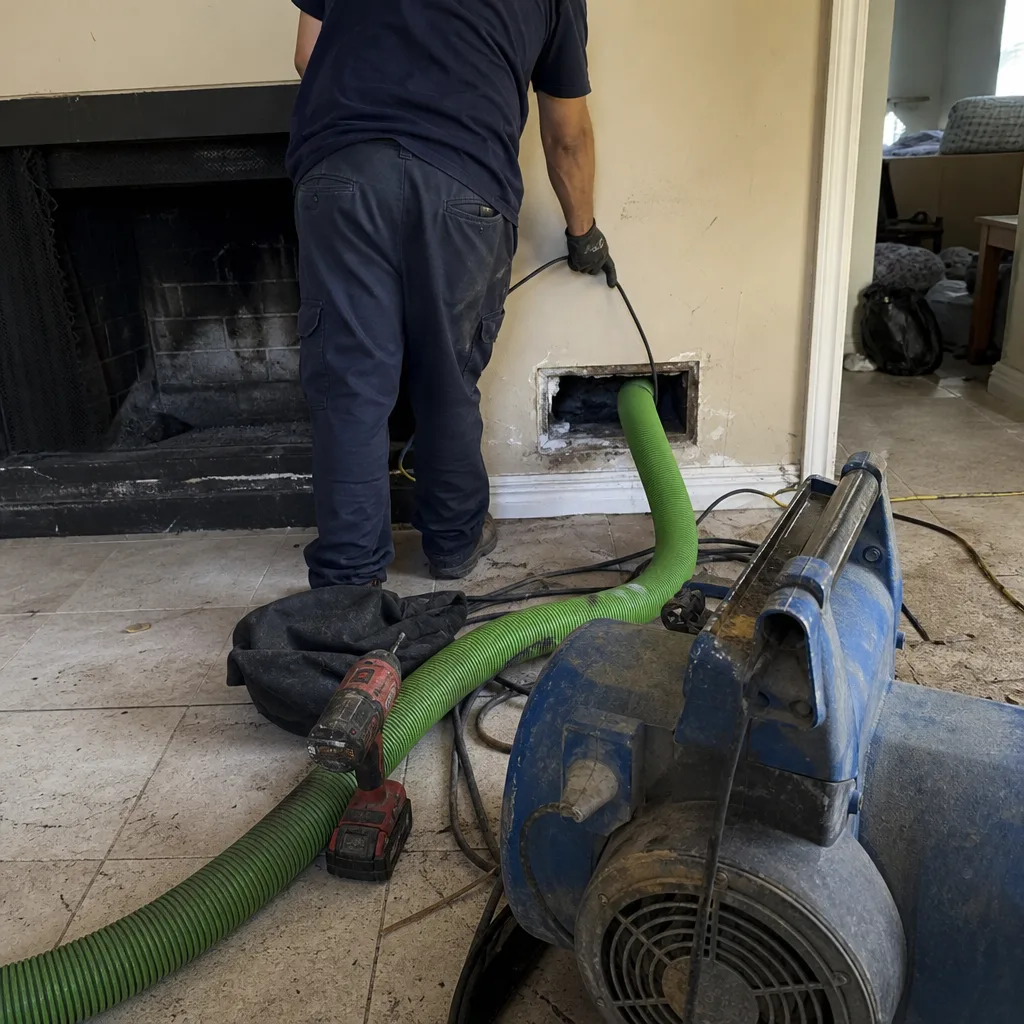 Before
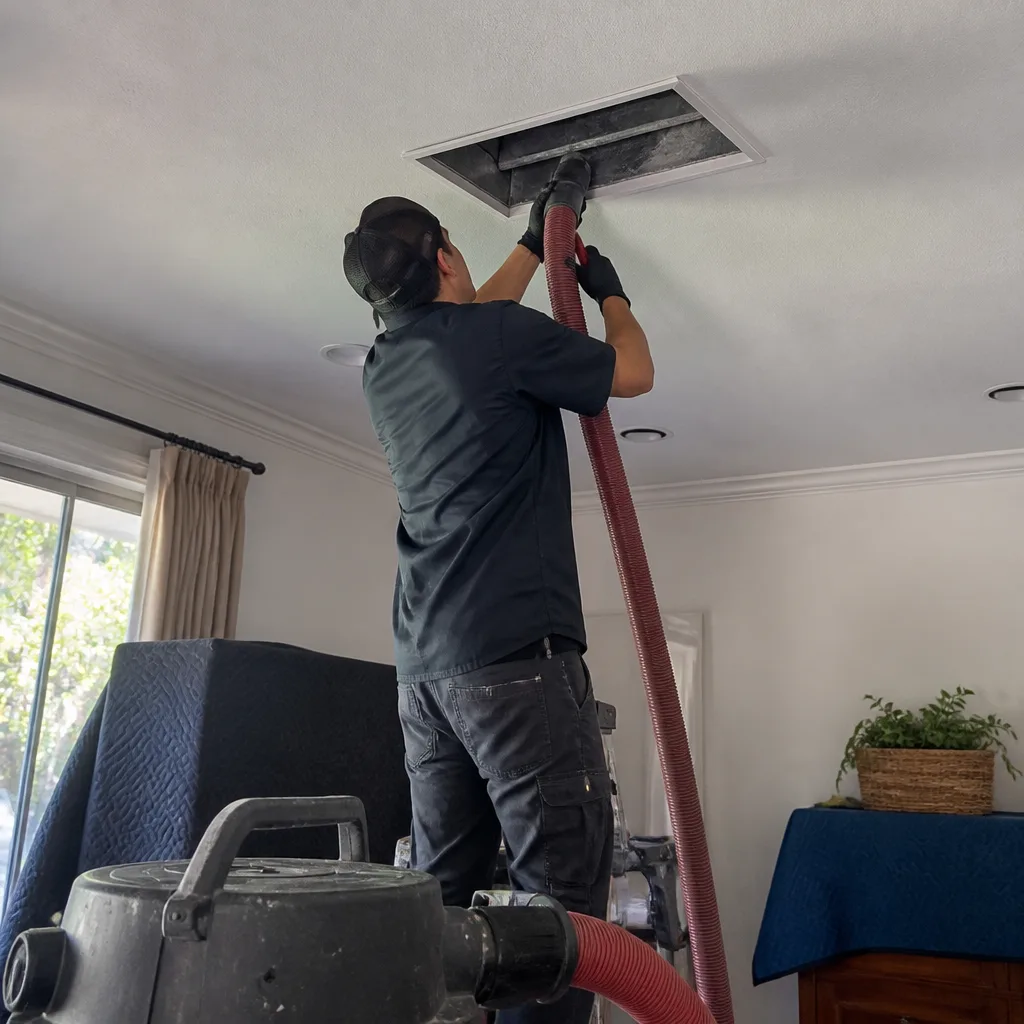 After
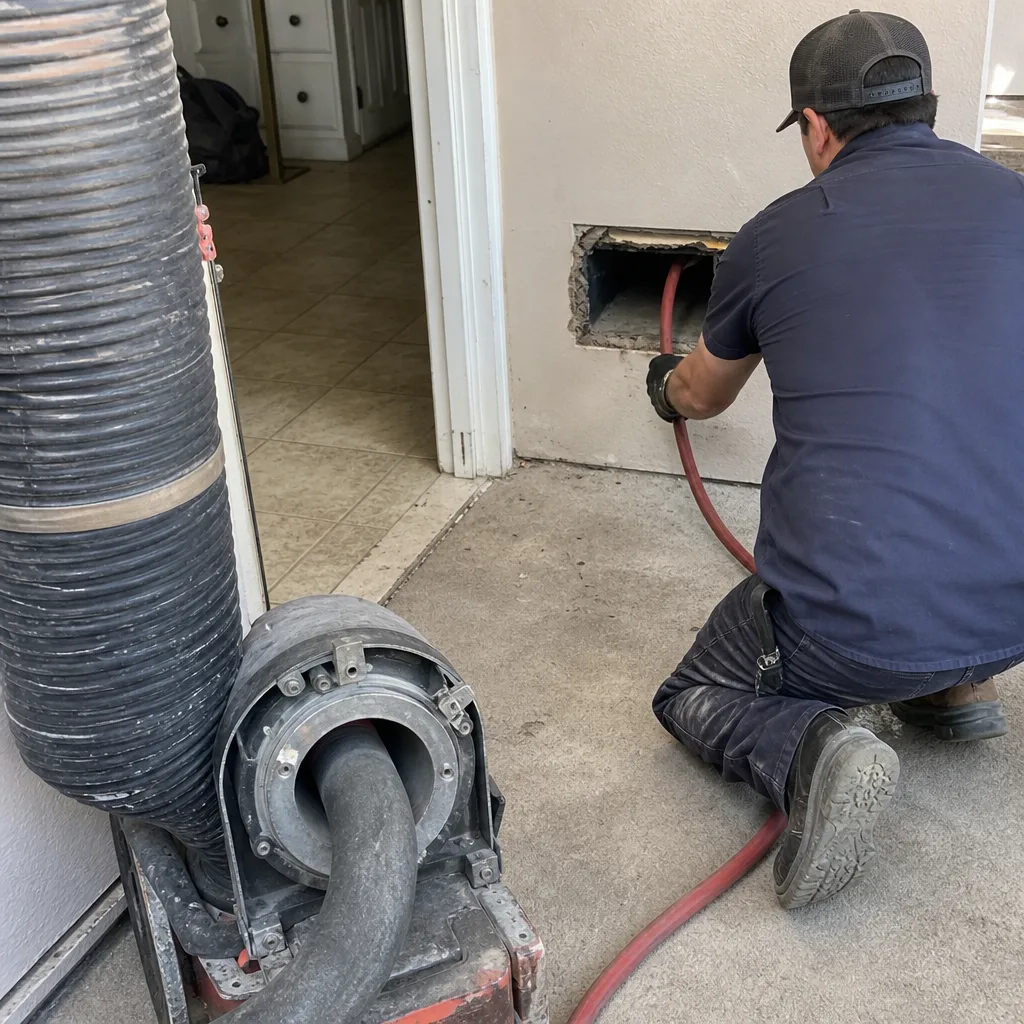 Before
 After
 Before
 After